The PuLi Shanghai: More Than a Stay, An Immersion in Objects d’Art
The beauty of the objects d’art seen throughout The PuLi Shanghai have absorbed time and craftsmanship. Each piece is not just decoration it reflects a steady attention to process. Millimeter-level precision, repeated polishing, slow and patient work. The result is restrained, understated, yet warm and composed.
Bronze Mirror: Radiance Hidden Within
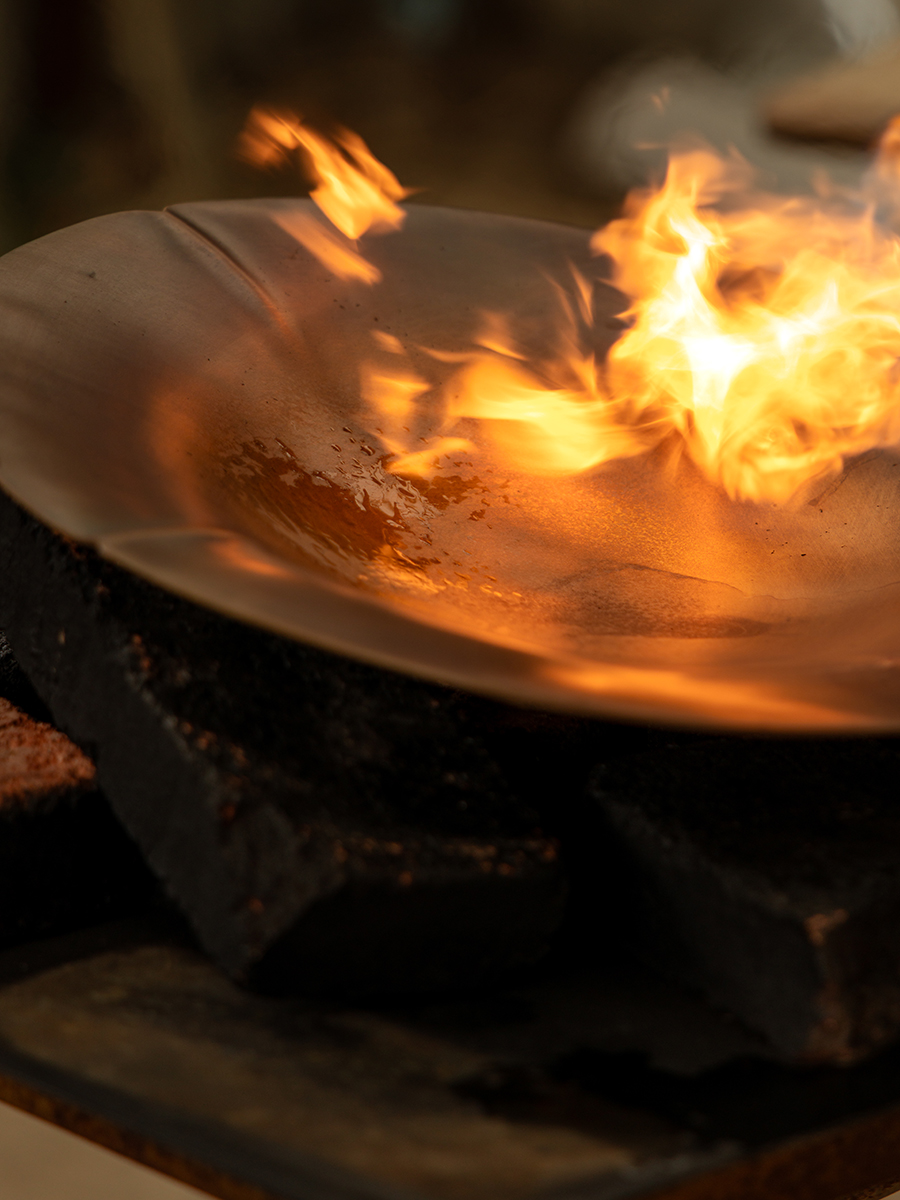
A bronze mirror starts with a heat of 1,300°C. Molten copper is skimmed of impurities spoon by spoon, no excess left. The timing, flow, and angle of the pour come from repeated trials. A slight deviation, and the piece fails. Once cooled and released from the mould, the mirror shows no brilliance only the scars of fire. It is rough and dim, like uncarved jade.
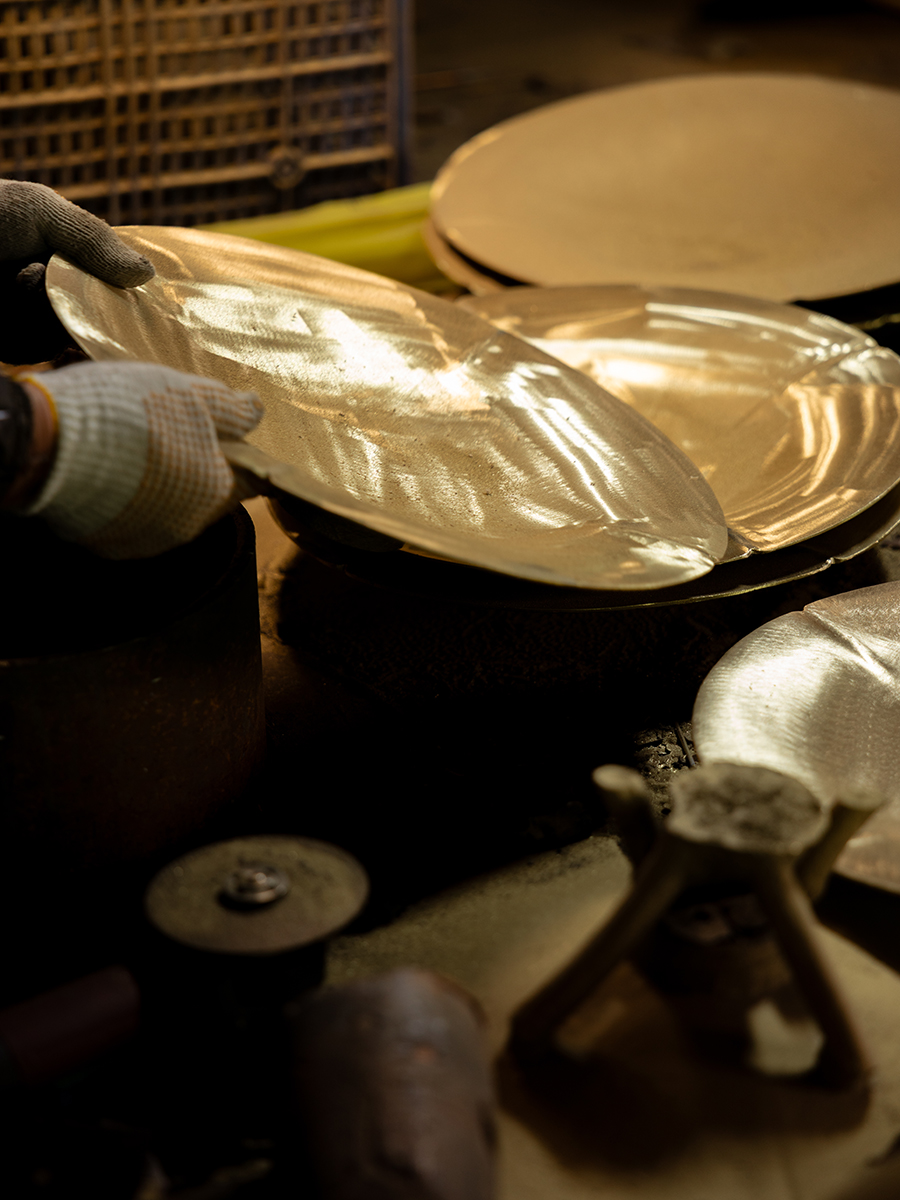
Polishing is a patient process in stages. Coarse grinding removes the rough exterior. Fine grinding follows the grain. Precision grinding brings out the hidden warmth. Sandpaper moves from coarse to fine grit, passed from hand to hand no words needed. Then the mirror returns to the flame, not to reshape, but to temper the bronze making it denser and tougher against wear.
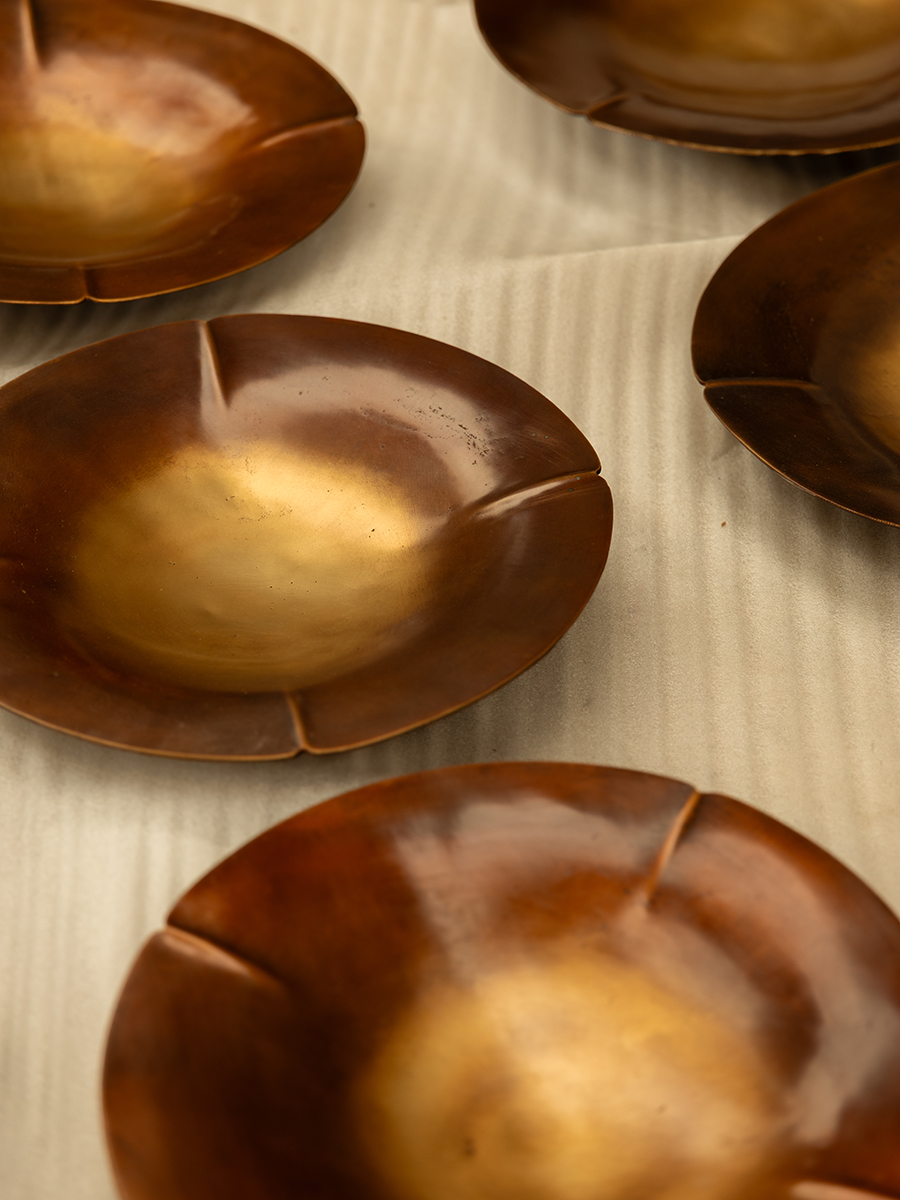
Time rewards patience. The mirror is left to oxidise naturally. One day, two days, ten days, twenty days its shine gradually shifts from sharp to mellow, like wine losing its youthful edge and gaining depth. Finally, a soft cloth with wax gently seals the process. The finished mirror gives a warm, subdued light no sharpness, just the quiet accumulation of time.
Foo Dog: Spirit Within the Carving
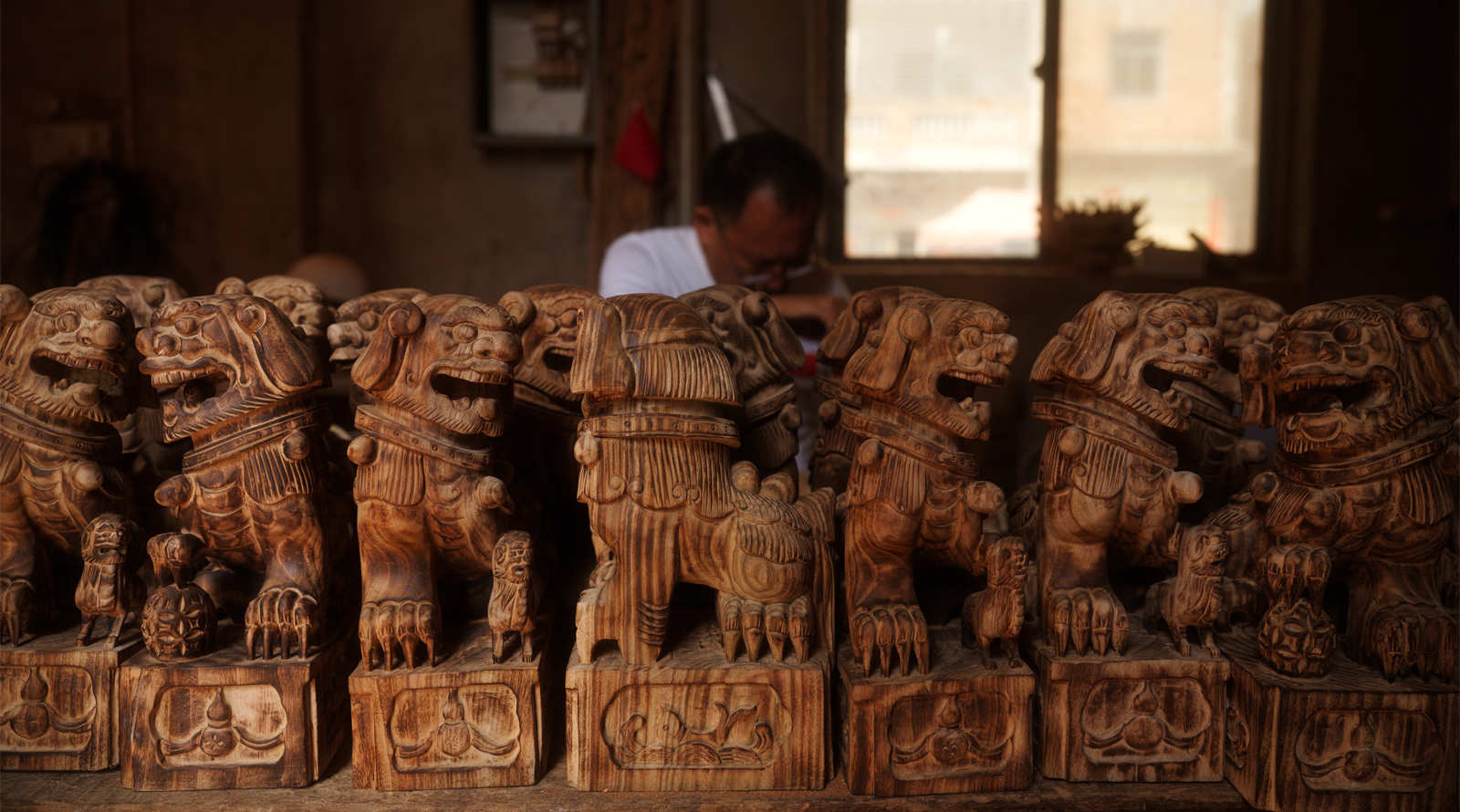
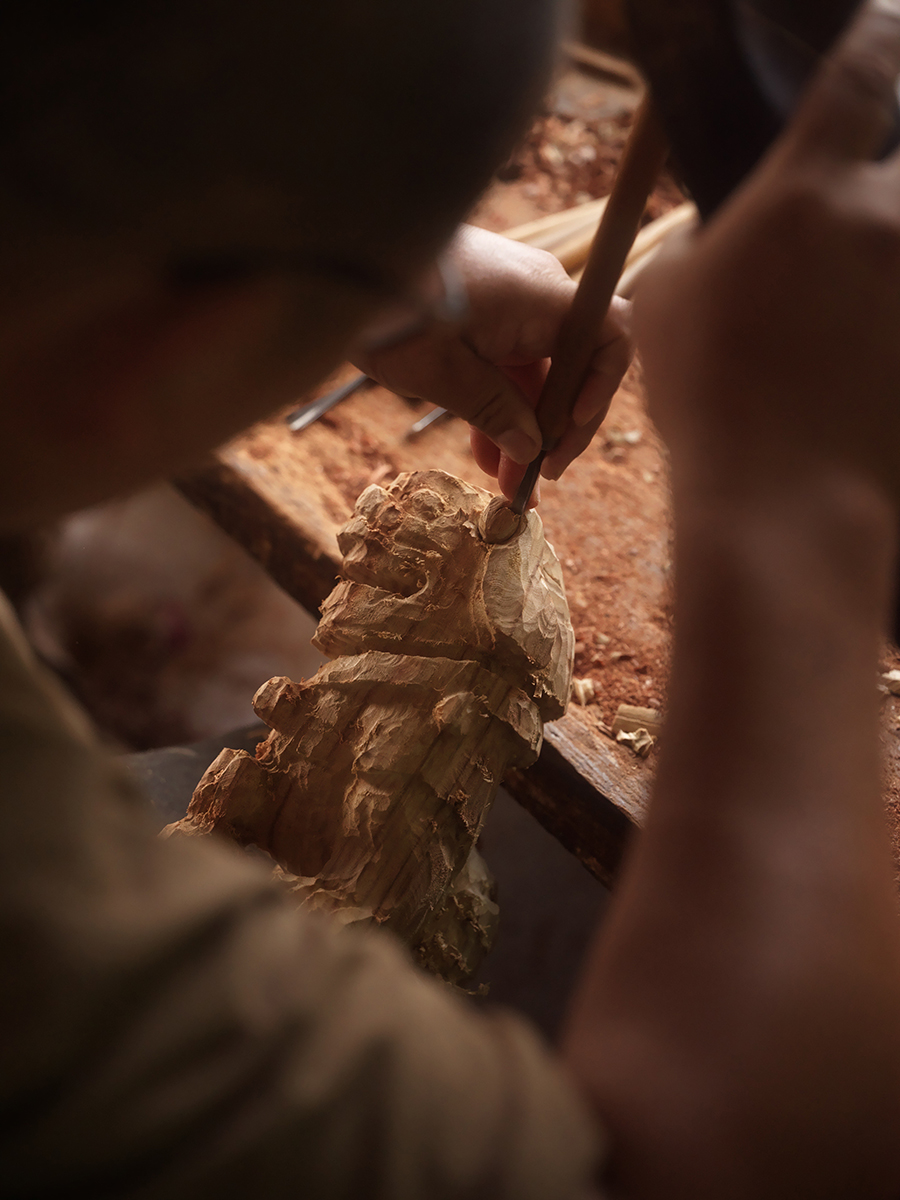
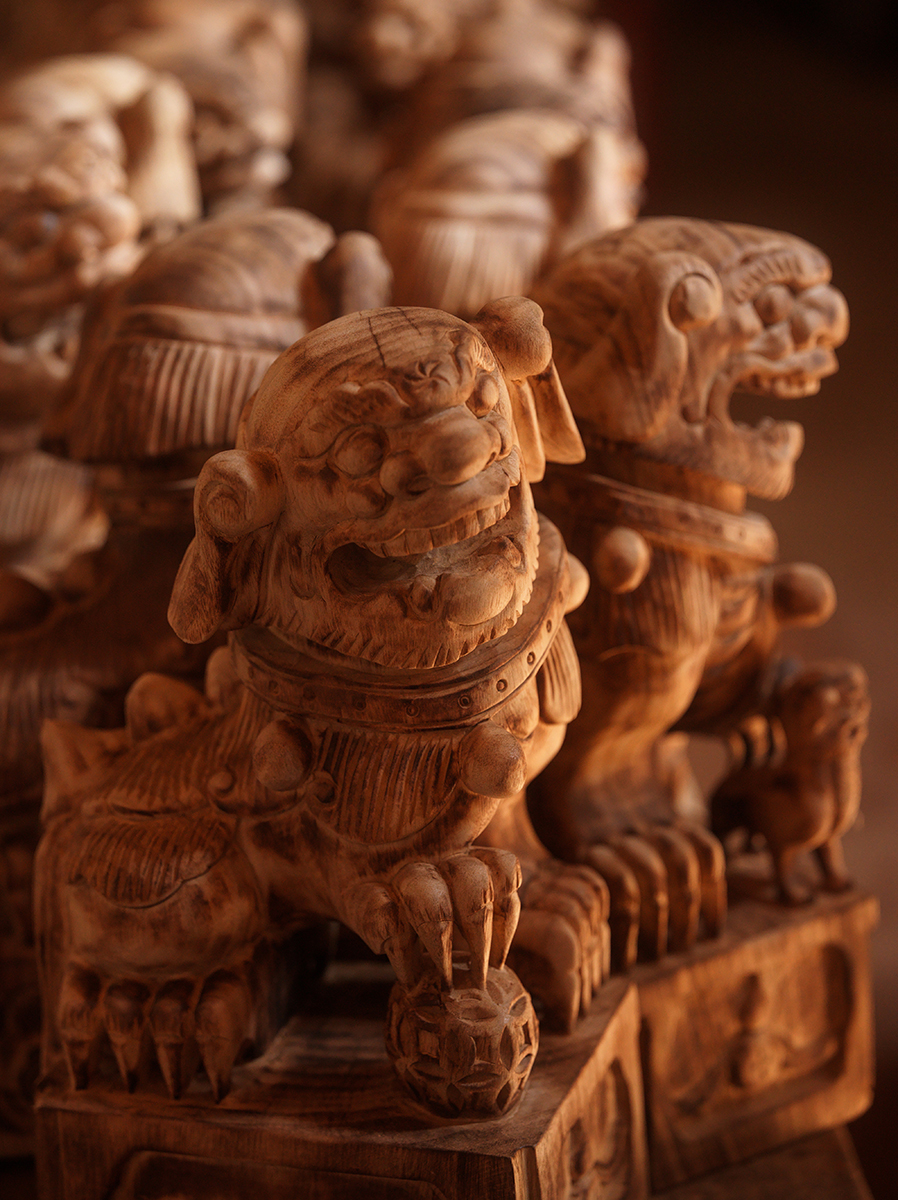
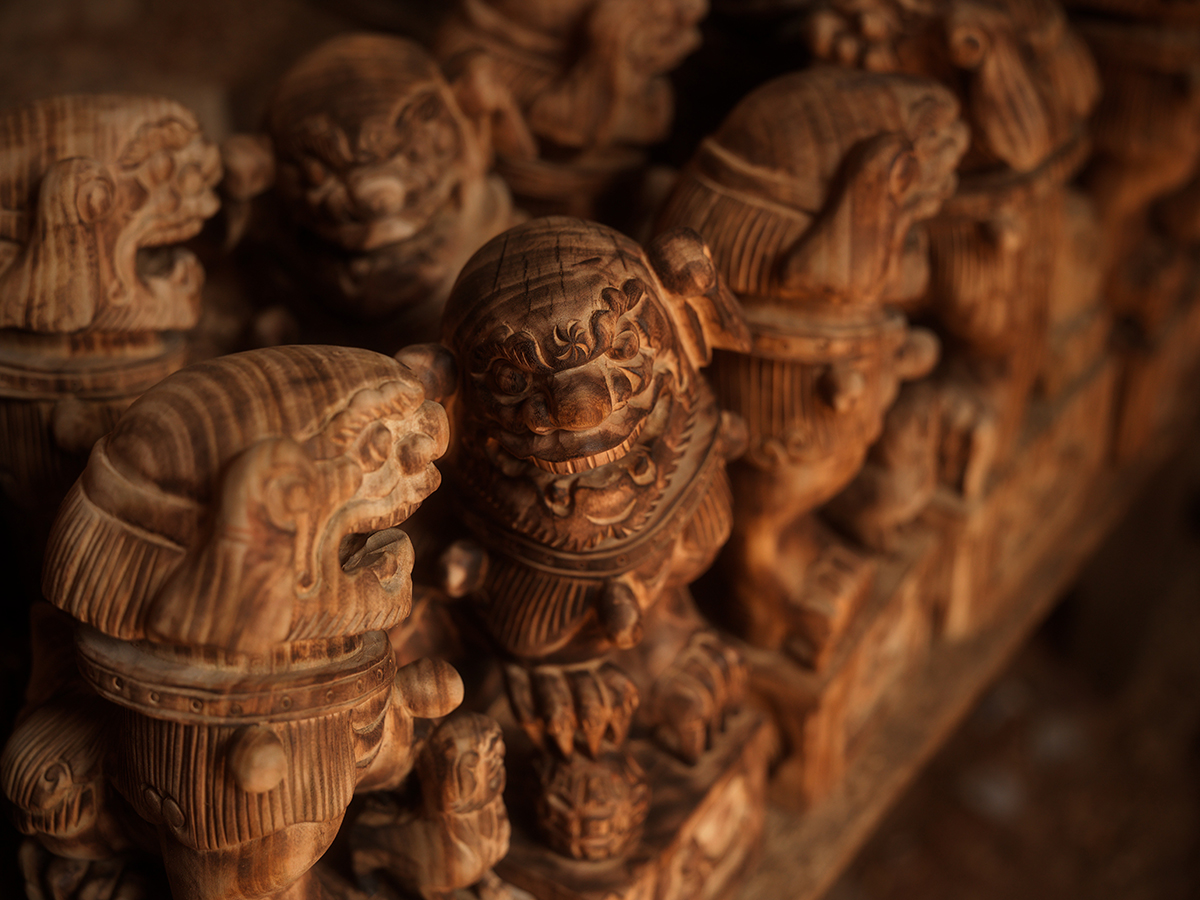
Camphor wood gives a cool, gentle fragrance. The Foo Dog has its rough shape, but still carries the coarseness of raw wood. Carving begins with “opening the form.” A wooden mallet taps the chisel, following the grain. Each strike removes a fragment, revealing the silhouette. Then different chisels take over — broad strokes for the body, fine cuts for texture. Wood shavings rise with each cut, carrying the scent of camphor.
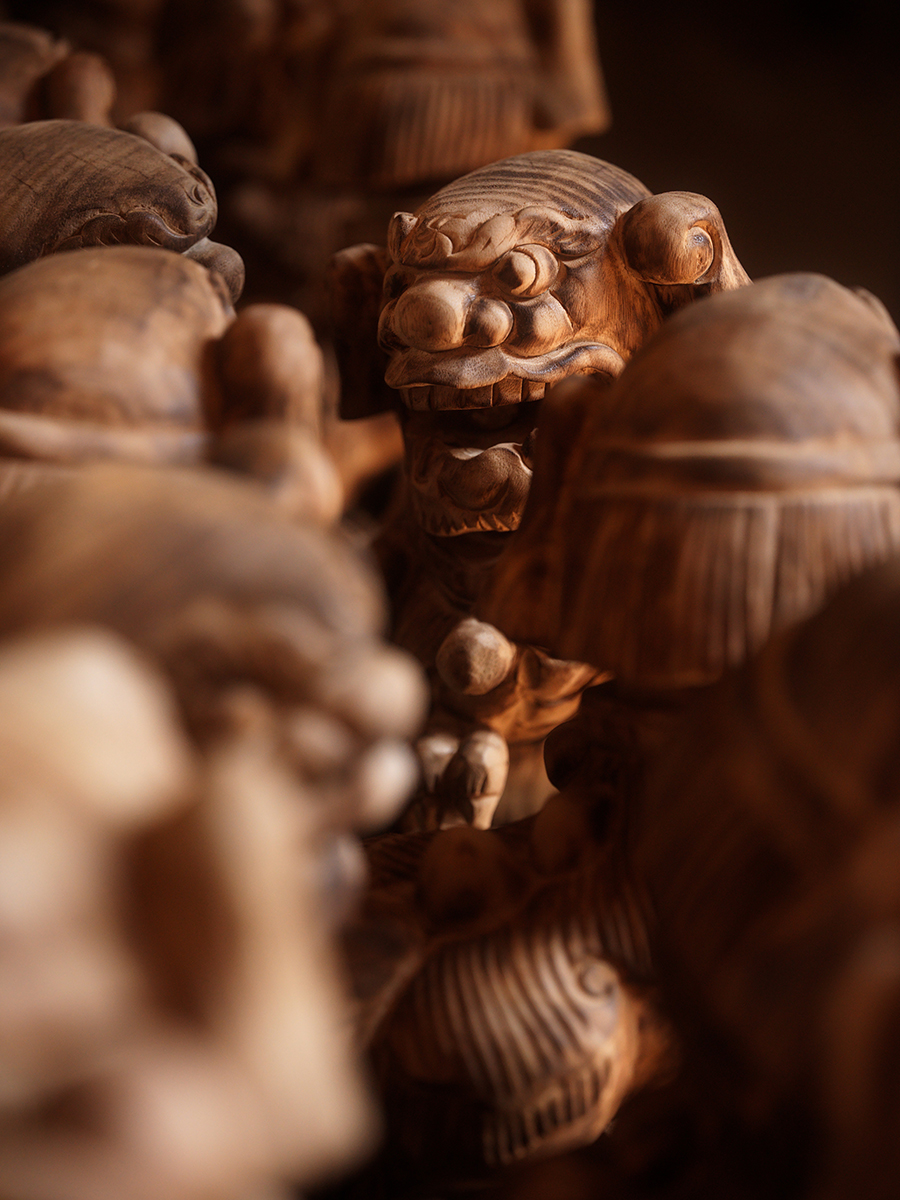
When the shape is set, polishing begins. Finer knives smooth sharp edges into rounded softness, letting the wood grain show quietly. The most difficult part is the eyes. They are not added at the end, but slowly deepened over days and weeks first two shallow hollows, then gradually deeper, the eyeballs rising, the corners lifting slightly. Each touch is light, slow, precise.
When polishing is complete, the eyes carry a stillness that feels alive. Not a spirit deliberately added rather, when the skill is full, the spirit reveals itself.
Chinese Lacquer Tea Box: A Breathing Vessel
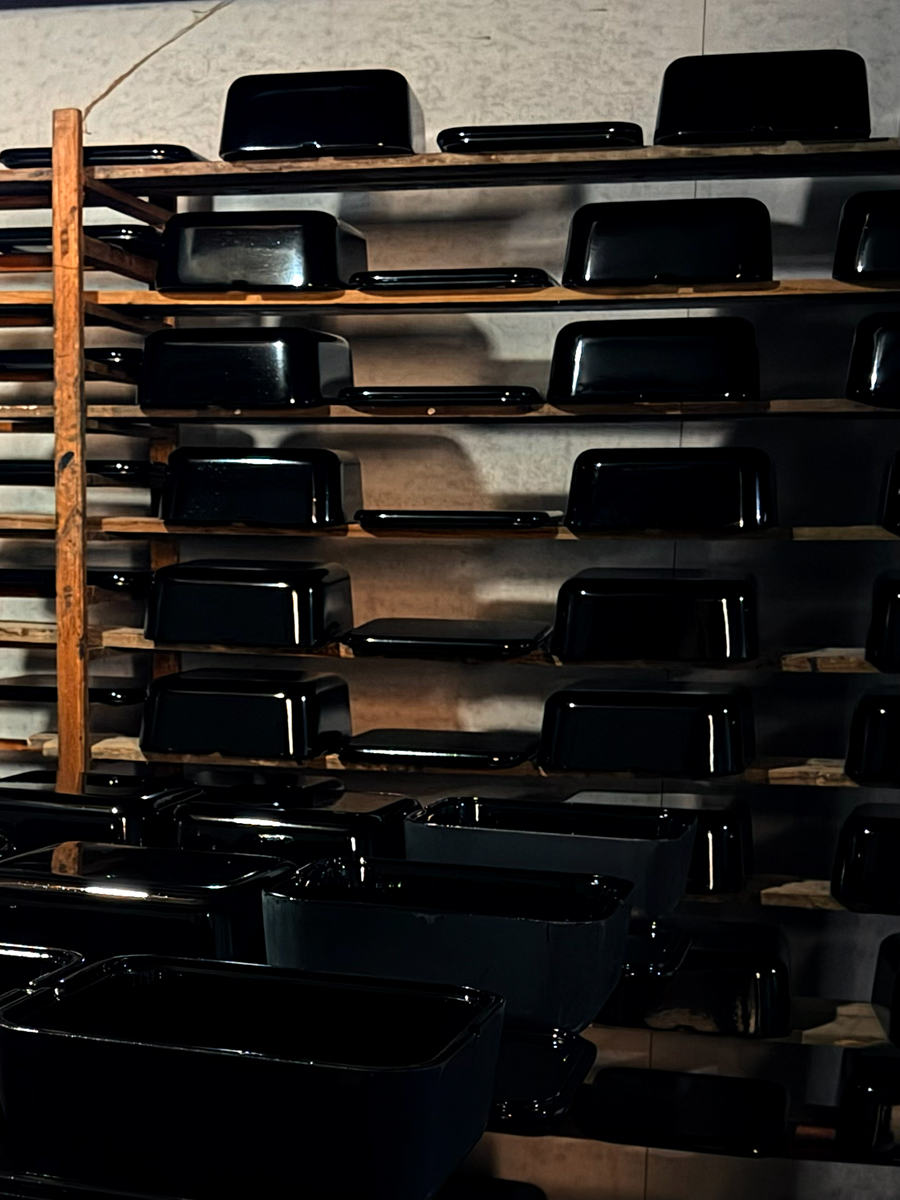
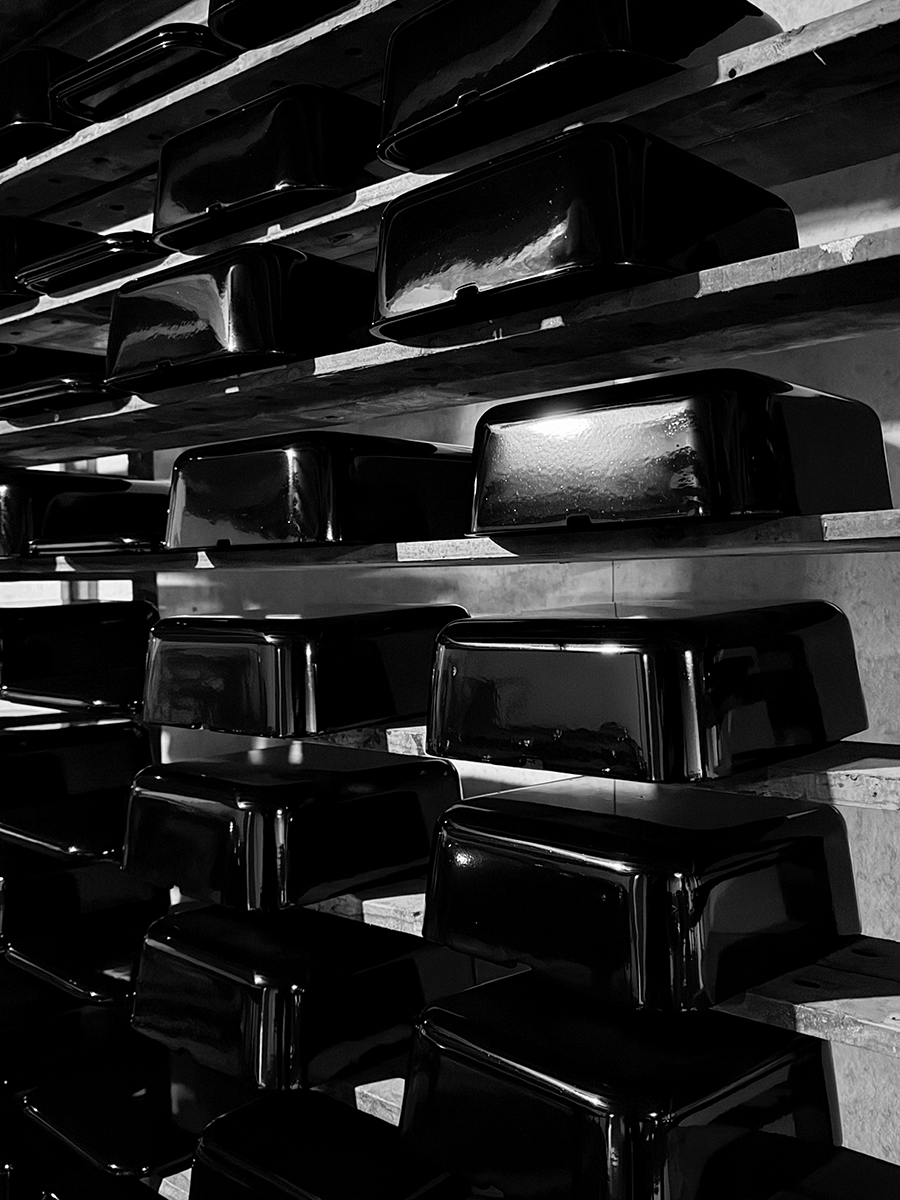
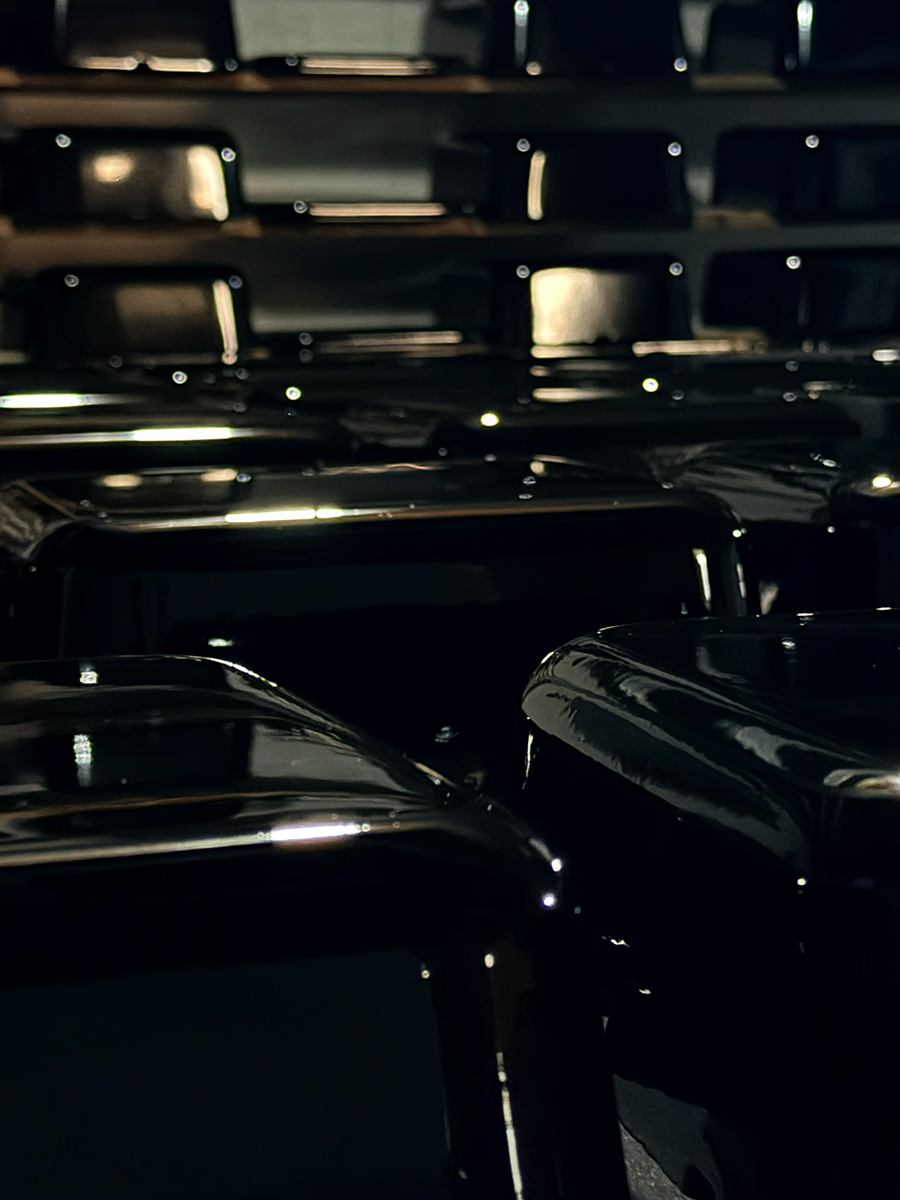
On the shelf, tea boxes stand in their basic form, still unfinished. Layers of black lacquer are applied over the body — warm, but deep. A soft glow spreads across the surface, quiet and inward. It seems to absorb the noise of the world, then slowly release the calm of time.
This “unfinished” quality gives the vessel a living presence. Raw lacquer breathes it carries the rhythm of time and nature. Each layer needs natural drying. No rush. Just waiting. This quiet composure is the foundation of the craft.
Polishing is gentle. Sandpaper brushes against the lacquer light pressure, steady rhythm. One layer polished away, a degree of warmth emerges. Another layer applied, then polished again. Lacquering and polishing, back and forth until the surface is as smooth as jade, silken to the touch, quietly elegant. Every inch holds the marks of time and the maker’s care.
Following the nature of the craft patient, disciplined, neither restless nor rushed. Treat each step with care. Leave the rest to time. That devotion will eventually echo back a warm, gentle glow, not loudly displayed, but sunk deep into the texture. Restrained. Quiet. Carrying the sediment of time.
The vessels do not speak, but they hold their stories in the folds of their textures, in the turns of their grain. Each line carries the balance between skill and restraint. Each inch of shine is a quiet deposit of time. Different crafts, different materials but a shared order: no grand gestures, only quiet depth. Time leaves its marks, shallow and deep, but never wears away the essence. Instead, the warmth and depth grow stiller and more beautifully restrained as the years pass.