Yading The Last Sacred Ground
The High-Altitude Kingdom at the Edge of Sichuan
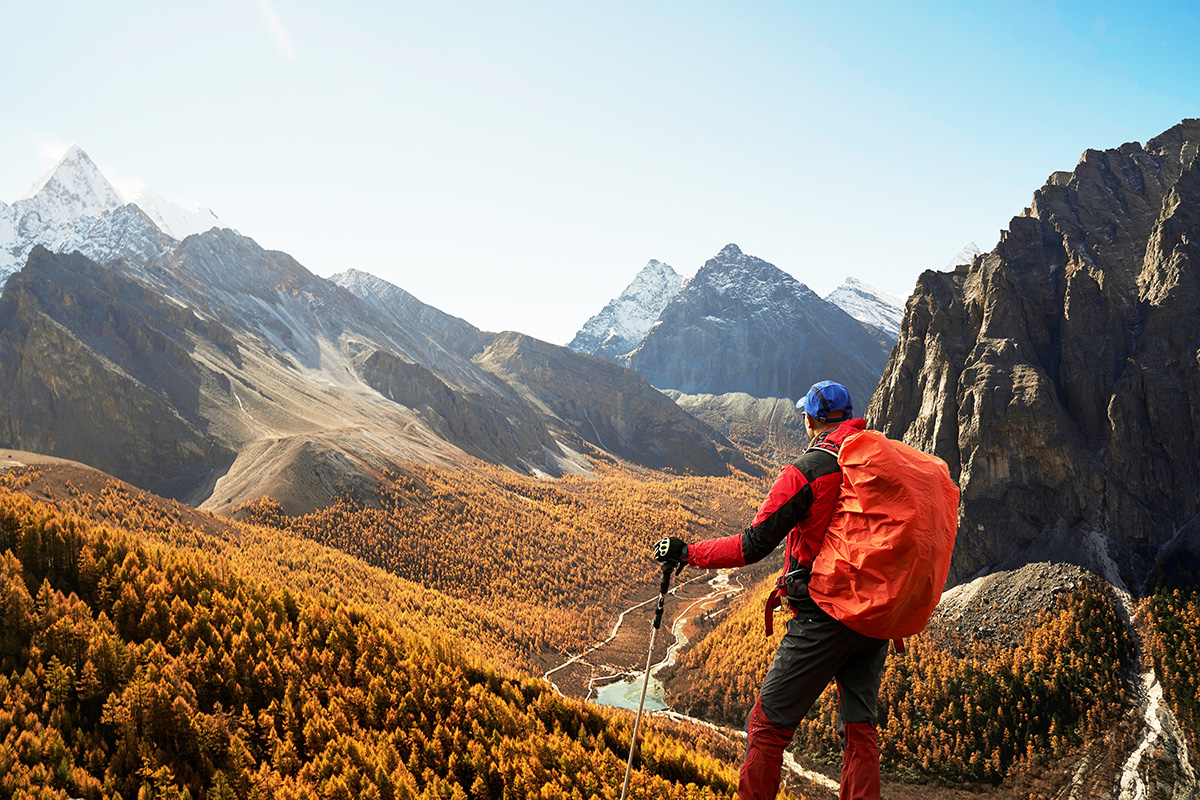
The bus from Shangri-La Town drops you at a wooden gate just past dawn. Beyond it, a boardwalk trails into a valley so vast and so still that your first instinct is to lower your voice. Three snow-capped peaks occupy the sky in a way that ordinary mountains simply do not. They are not part of the horizon. They are above it, hovering, as though the plateau has lifted them separately from the rest of the earth. Pilgrims in burgundy-and-saffron robes move steadily along the path, prayer beads clicking, lips barely moving. A yak raises its enormous head and stares at you with the unhurried dignity of something that belongs here far more than you do. This is Yading. And within a few hundred metres, most visitors stop speaking altogether.
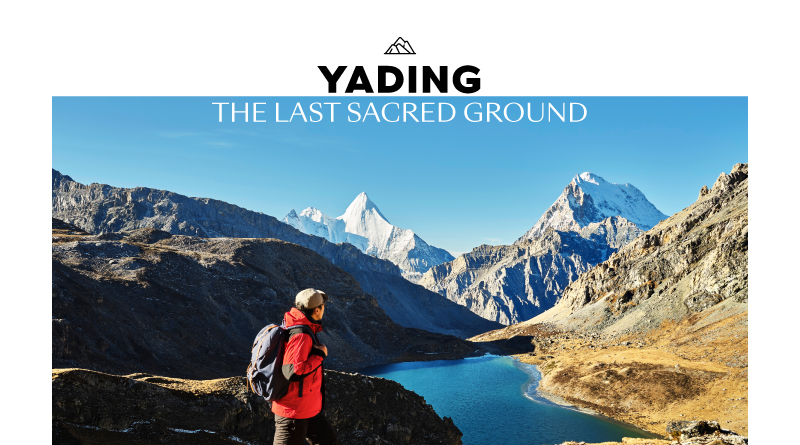
Located in Daocheng County within the Ganzi Tibetan Autonomous Prefecture of western Sichuan, Yading Nature Reserve sits between 2,900 metres at the valley floor and 6,032 metres at the summit of Mount Chenrezig. The reserve is framed by three sacred peaks that Tibetan Buddhists have venerated for centuries: Chenrezig, known in Chinese as Xiannairi, representing the bodhisattva of compassion; Jambeyang (Yangmaiyong), the bodhisattva of wisdom; and Chanadorje (Xianuoduoji), the bodhisattva of power. Together, they form a trinity that pilgrims circumambulate in an act of devotion that predates any map of this territory. The American botanist and adventurer Joseph Rock encountered this valley in 1928 and wrote that nothing in his years of Himalayan exploration had prepared him for it. The sentiment, more than nine decades on, remains entirely accurate.
Three sacred peaks that pilgrims have circumambulated for centuries, rising above a valley Joseph Rock called the most beautiful place he had ever seen.
WHY VISIT
There is a practical case and a spiritual one. The practical case is this: Yading is now more accessible than at any previous point in history. Daocheng Yading Airport (DCY) sits at 4,411 metres, making it the world’s highest commercial airport, and direct flights from Chengdu Tianfu take roughly one hour and forty minutes, compressing what was once a two-day overland slog into something a long-weekend itinerary can accommodate. Inside the park, well-maintained boardwalk trails connect the principal viewpoints, electric shuttle buses run between the entrance and the upper pastures, and a new generation of considered properties has arrived to meet the demand of travellers who want altitude without suffering.
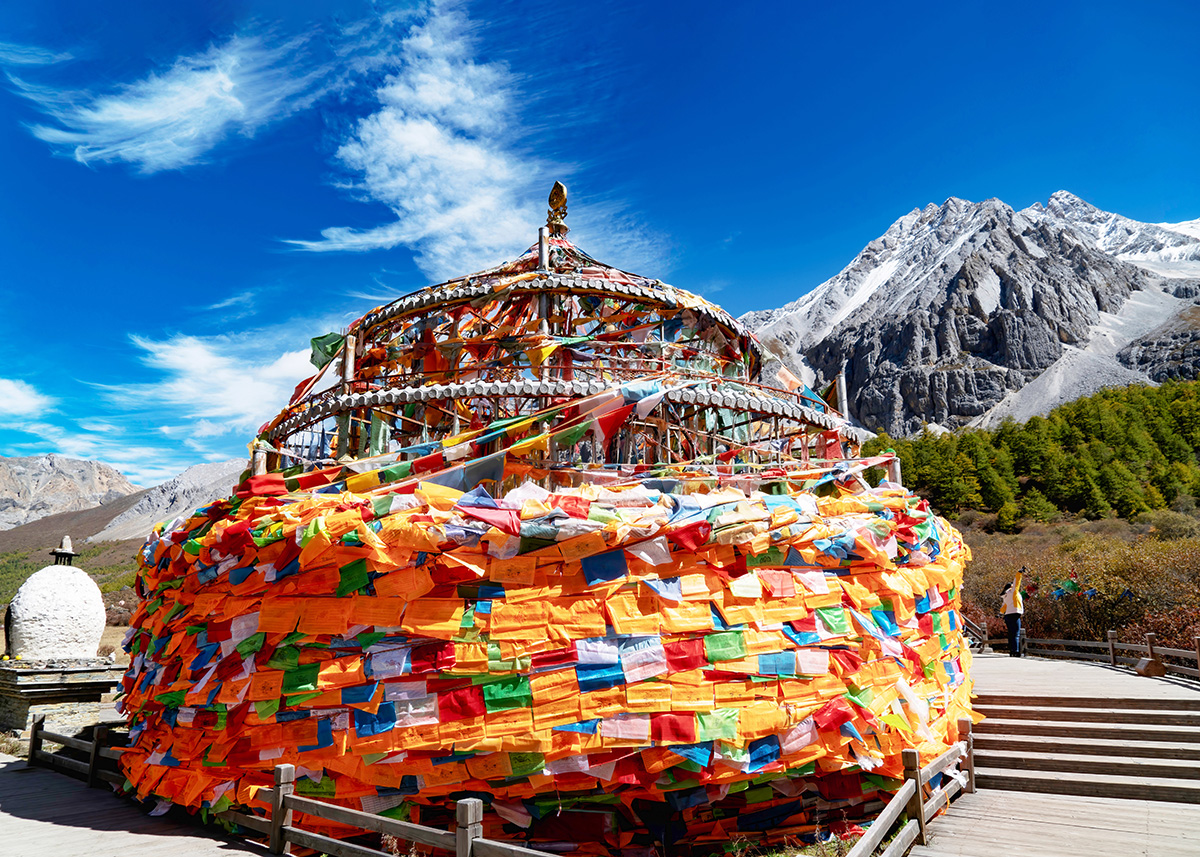
The spiritual case is harder to articulate but easier to feel. Yading is a place where the landscape functions as active geography for a living religious tradition. The trails that hikers walk are kora routes. The cairns they photograph are prayer cairns. The temple at Chonggu is not a heritage site kept open for visitors; monks live and practise there daily. The flags strung across every pass carry prayers into the wind. The reserve covers 1,344 square kilometres and maintains one of the most intact alpine ecosystems in China. There are old-growth conifer forests at the lower elevations, high alpine meadows thick with wildflowers in June, glacial lakes whose colours change by the hour, and snowfields that have never been disturbed by anything more significant than weather. The combination of ecological completeness and unbroken spiritual significance is, in the modern world, almost impossible to find. Yading is one of the very few places left that delivers it.
A note for 2025 travellers: overnight camping inside the reserve has been prohibited since 2024 and multi-day trekking within the park boundaries is no longer permitted. All visits are now day-use from the accommodation belt around Yading Village and Shangri-La Town. This has, perhaps counterintuitively, improved the experience for most visitors, as the trails are less congested and the landscape at the upper elevations is noticeably cleaner.
TOP EXPERIENCES
01 Pearl Lake and Chonggu Temple at First Light
The Short Route, as the park map calls it, runs approximately three kilometres from the shuttle drop-off near Chonggu Temple to Pearl Lake at 4,100 metres and takes between two and three hours at a comfortable pace. Begin it as early as the first bus will allow. Pearl Lake in morning light is one of those views that photographs circulate globally without attribution because no single image can claim to have done it better than any other. The surface of the lake mirrors the north face of Mount Chenrezig in a reflection so precise and so still that the mountain appears to grow downward into the water as much as it rises into the sky. The Chonggu Temple, set on a rocky promontory above the river junction, has been a place of Tibetan Buddhist worship since the seventeenth century. The current structure was rebuilt after damage and consecrated in its present form in the early 2000s, but the site’s sacred status predates any architecture. Pause here before continuing to the lake. Sit on the stone steps and watch the monks open the morning service.
Tip
At over 3,800 metres above sea level, Chonggu Temple serves as an important acclimatisation stop before continuing towards Milk Lake and Five Colour Lake. Take time to adjust to the altitude, stay hydrated, and keep a windproof jacket on hand, as weather conditions on the Tibetan Plateau can change rapidly throughout the day.
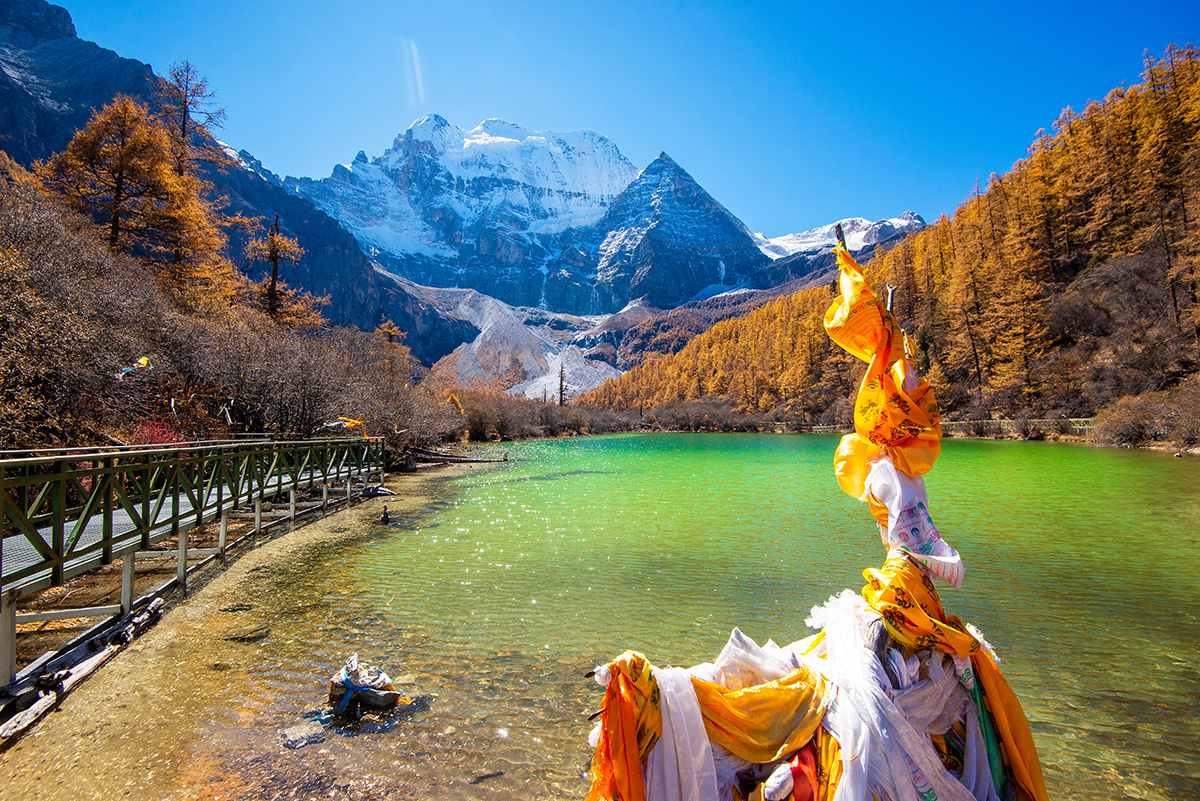
02 The Long Route: Milk Lake and Five-Colour Lake
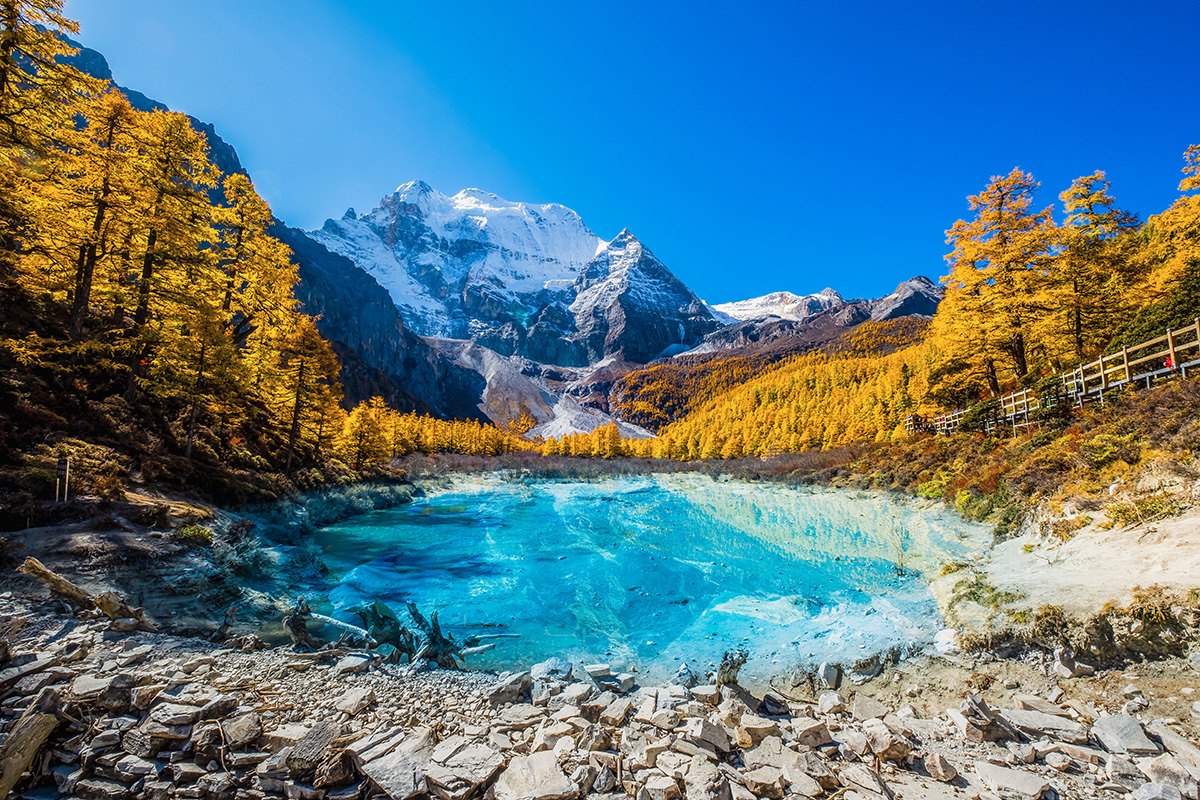
This is what most visitors come for, and it justifies every step. The Long Route runs ten kilometres return from Luorong Cattle Farm (4,150 m), climbing to Milk Lake at 4,600 metres and then on to Five-Colour Lake at 4,700 metres, and takes between six and eight hours depending on pace and the body’s response to altitude. An electric shuttle bus covers the flat lower section from the park entrance, saving roughly seven kilometres of walking and preserving energy for the climb. Milk Lake sits in a natural stone bowl beneath the south face of Chanadorje, its waters fed entirely by glacial melt and shifting from opaque white to deep turquoise as the minerals in suspension respond to the angle of the light. Thirty minutes further, Five-Colour Lake displays a palette so improbable, emerald bleeding into lapis, cobalt into jade, that the eye initially refuses to accept it as natural water. Carry more than two litres. The altitude is not negotiable.
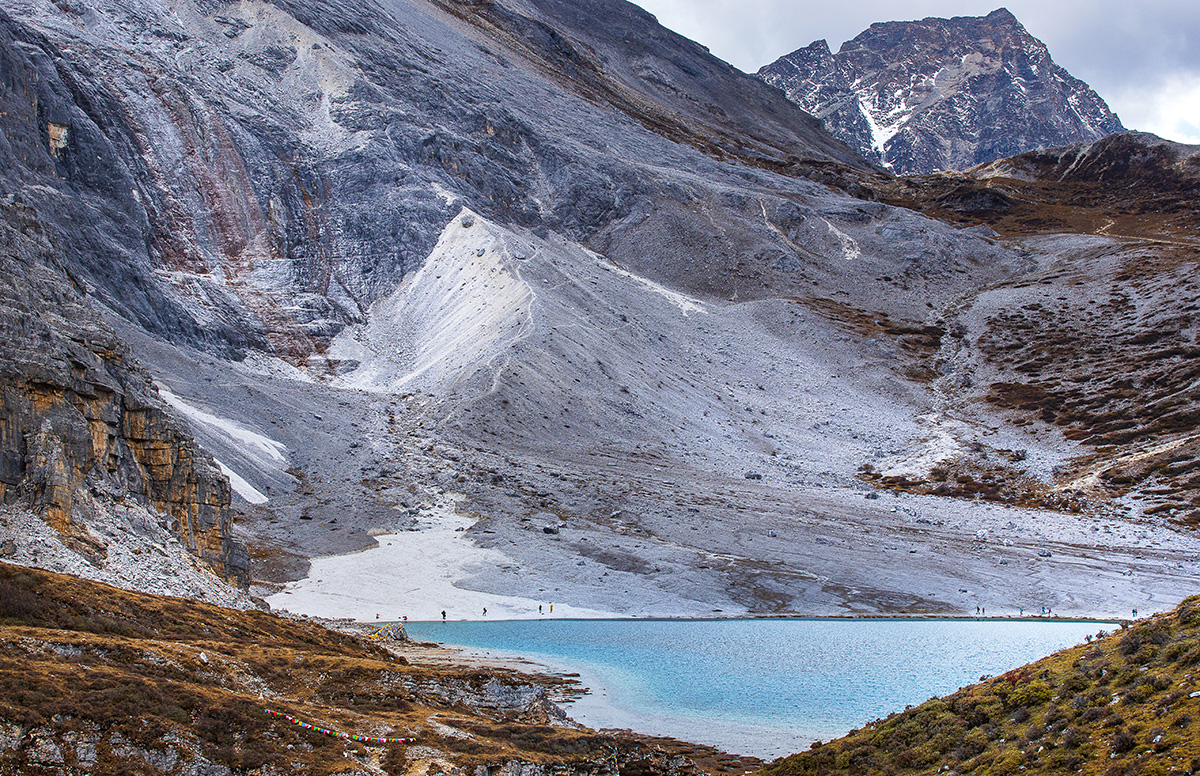
03 Luorong Cattle Farm Before the Crowds Arrive
Take the first electric shuttle of the morning to Luorong Cattle Farm and simply stop. Do not continue to the lakes immediately. Stand in the upper pasture in the half-hour before the crowds from the second bus arrive, and observe what Yading does with ordinary morning light. The three sacred peaks are all visible from this position. Yaks graze across a meadow floor that changes colour through the growing season, from pale straw in spring to deep green in midsummer to the burnished amber of late October. The valley walls rise in terraced bands of forest, rock and permanent snow. There is no structure in the sightline except a few stone herders’ shelters. This might be the most photographed view in western Sichuan, and it earns every frame.
Tip
At over 4,000 metres above sea level, Luorong Cattle Farm is best visited early in the morning when the air is crisp, the crowds are few, and the sacred peaks of Yading glow in the first light of day. Walk at a relaxed pace, stay hydrated, and allow time to acclimatise to the altitude for the most rewarding experience.
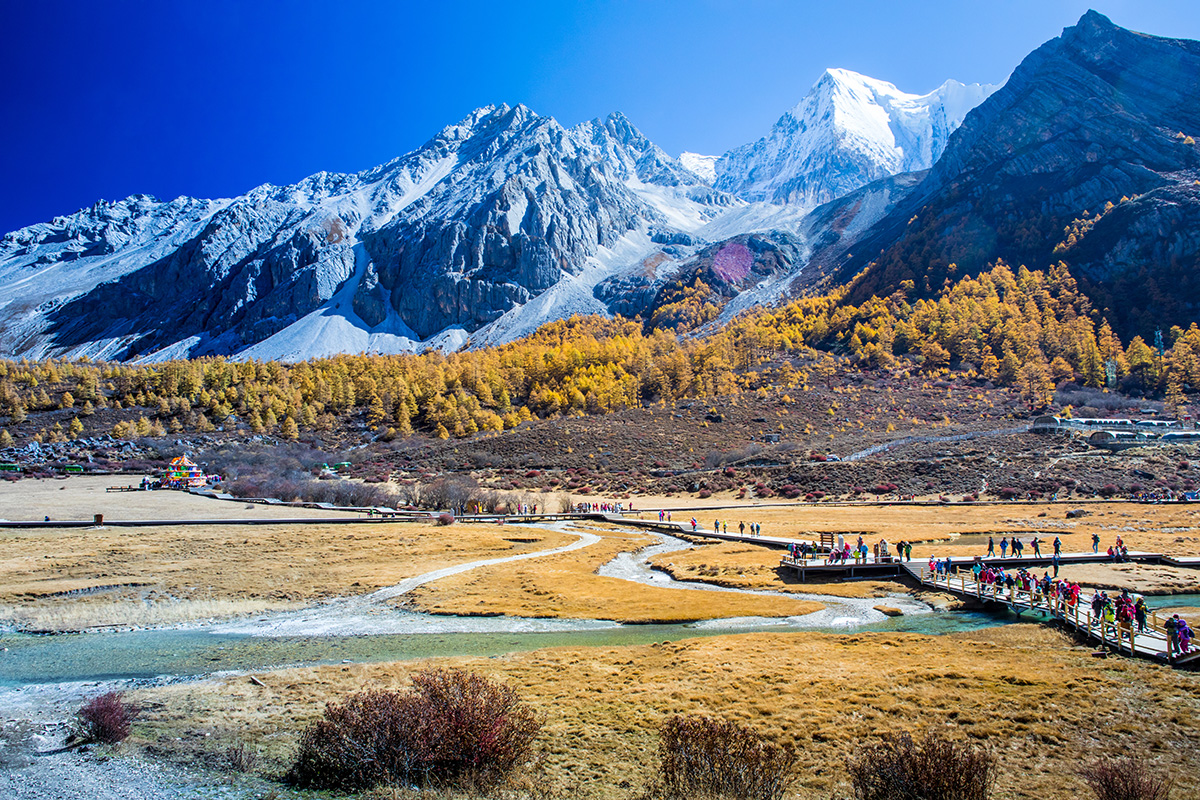
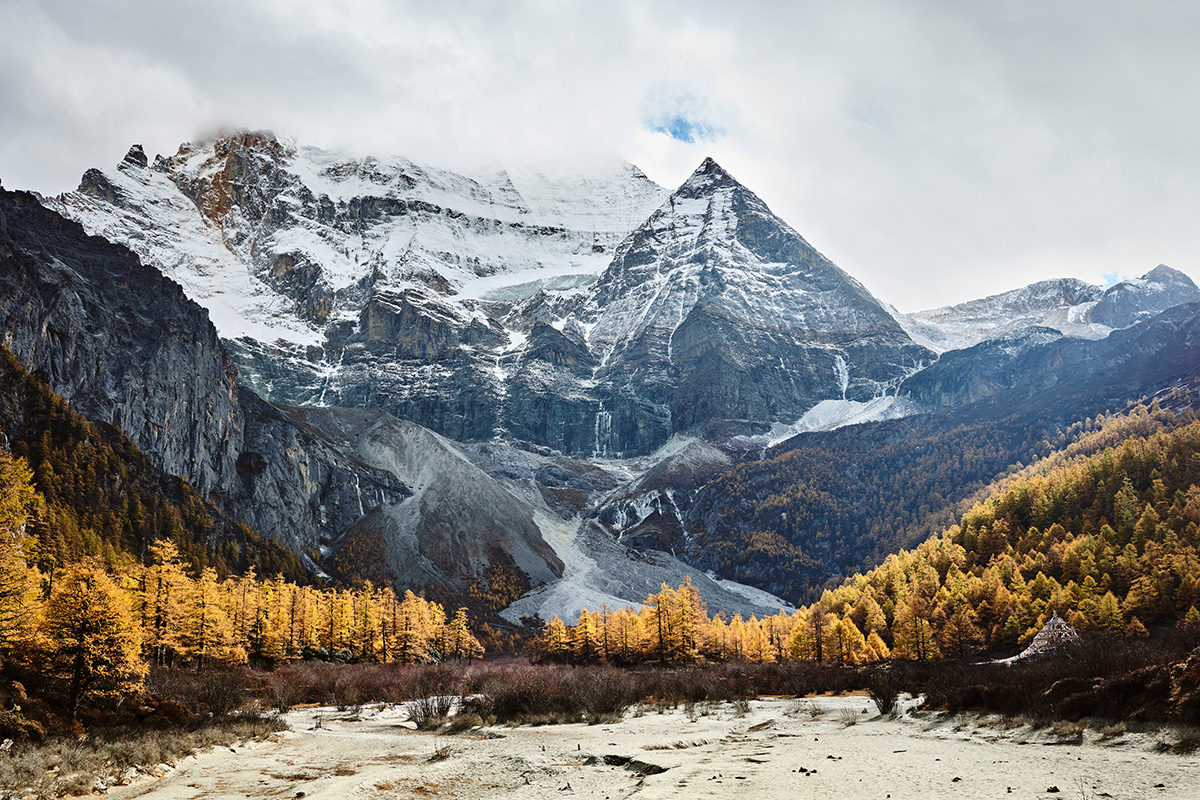
04 Mount Xiannairi
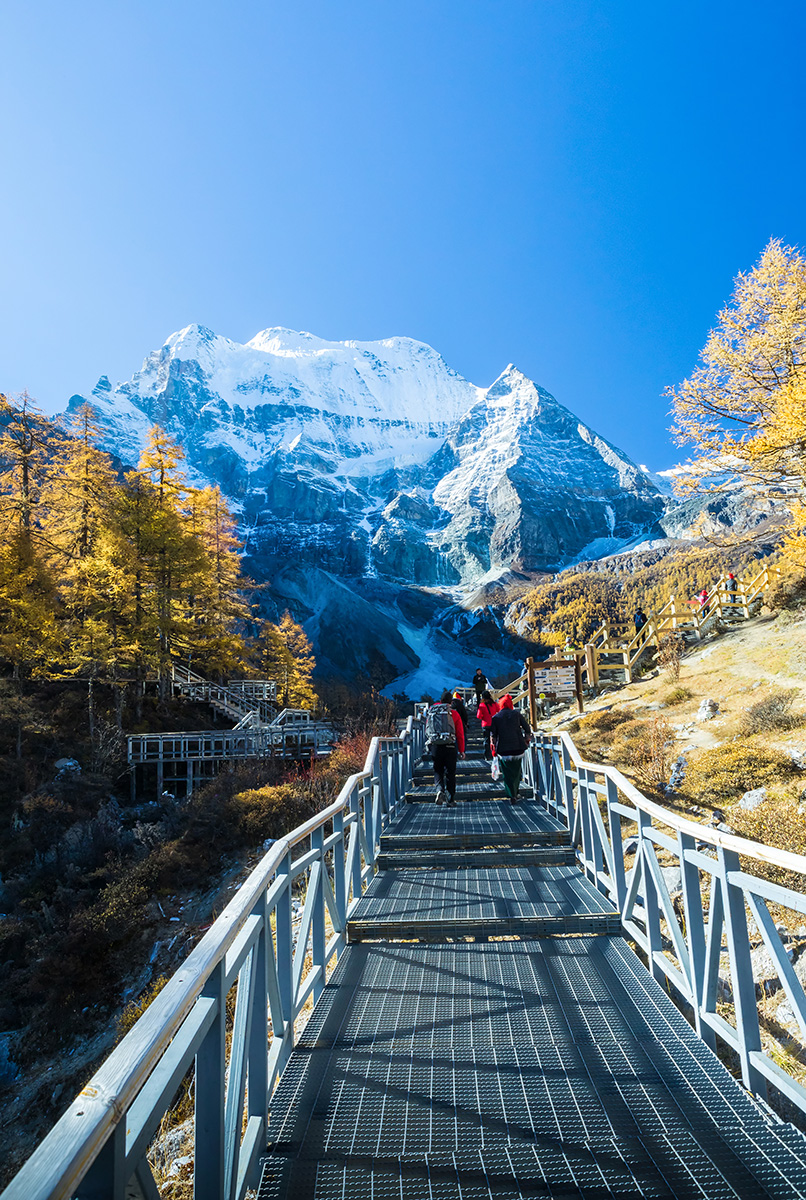
Towering 6,032 metres above Daocheng Yading, Mount Xiannairi is the northern and highest of the reserve’s three sacred peaks, revered in Tibetan Buddhism as the embodiment of compassion. Its perfectly sculpted, snow-covered summit dominates the landscape year-round, rising above ancient forests, alpine meadows, and glacial streams. As the first sacred mountain encountered upon entering the reserve, Xiannairi sets the tone for the extraordinary scenery that has earned Yading its reputation as the “Last Shangri-La.”
The most rewarding way to experience the mountain is the gentle trail leading from Chonggu Monastery to Pearl Lake, a short walk through conifer forests and open meadows. On calm mornings, the emerald waters reflect Xiannairi’s gleaming summit with remarkable clarity, creating one of the most iconic views in western Sichuan. Visit early in the day to enjoy the soft golden light, fewer visitors, and the tranquil atmosphere that has drawn Tibetan pilgrims and photographers here for generations.
05 Autumn Colour Season
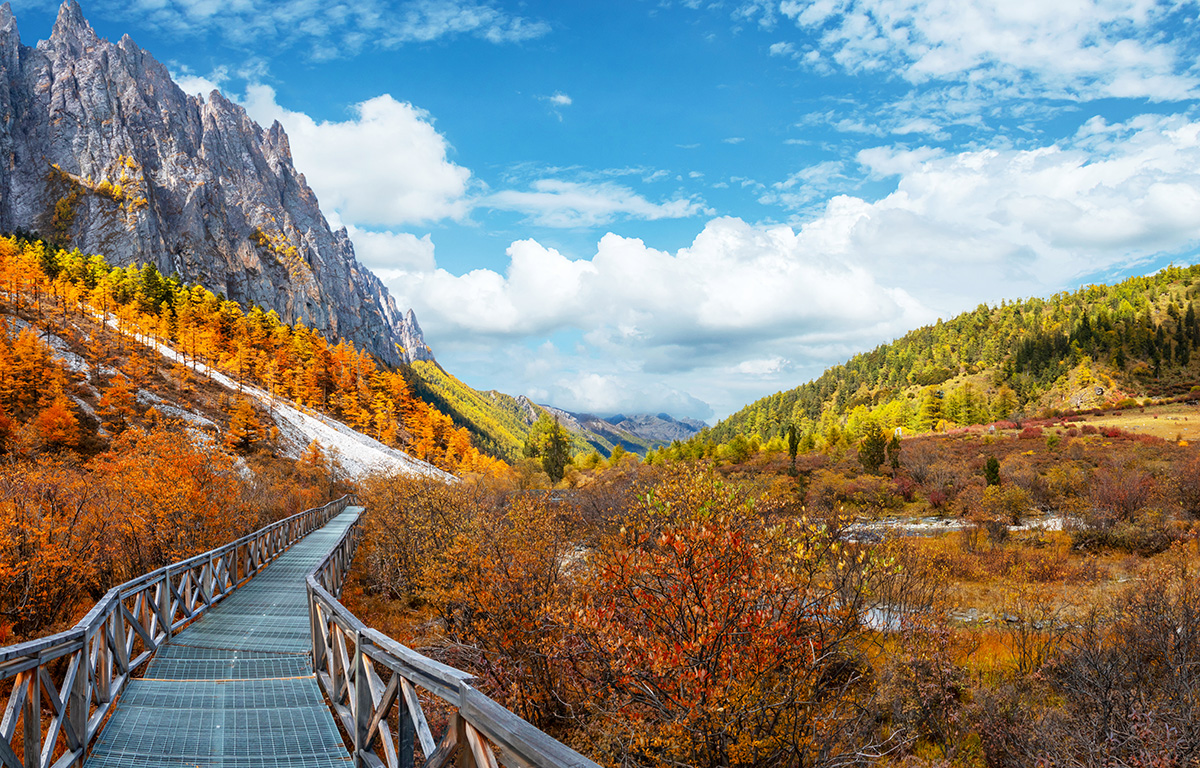
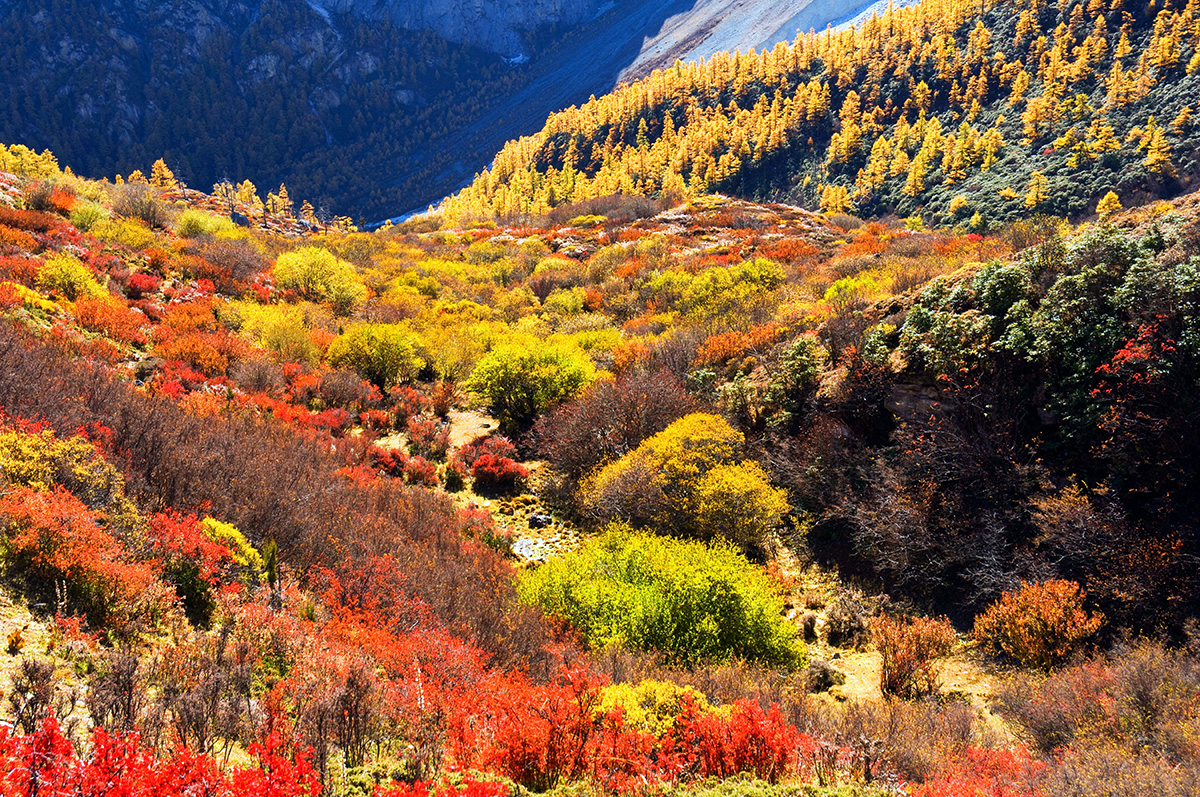
If there is a single reason to arrange an entire journey around a particular calendar window, autumn at Yading is that reason. From late September to mid-October, the larch forests below the snowline shift to gold and copper while the upper meadows transition through amber and rust. The permanent white of the peaks and the high-season blue of the sky provide a contrast of such intensity that the valley feels lit from within rather than from above. This is also the period when Tibetan pilgrims arrive in the greatest numbers for the kora, adding layers of cultural texture to the visual spectacle. Reserve accommodation no later than April for this window. Properties that are available in August are not available in October.
Tip
Late September to late October is Yading’s most spectacular season, when golden forests and crisp mountain air create perfect conditions for viewing the region’s sacred snow-capped peaks.
WHERE TO STAY
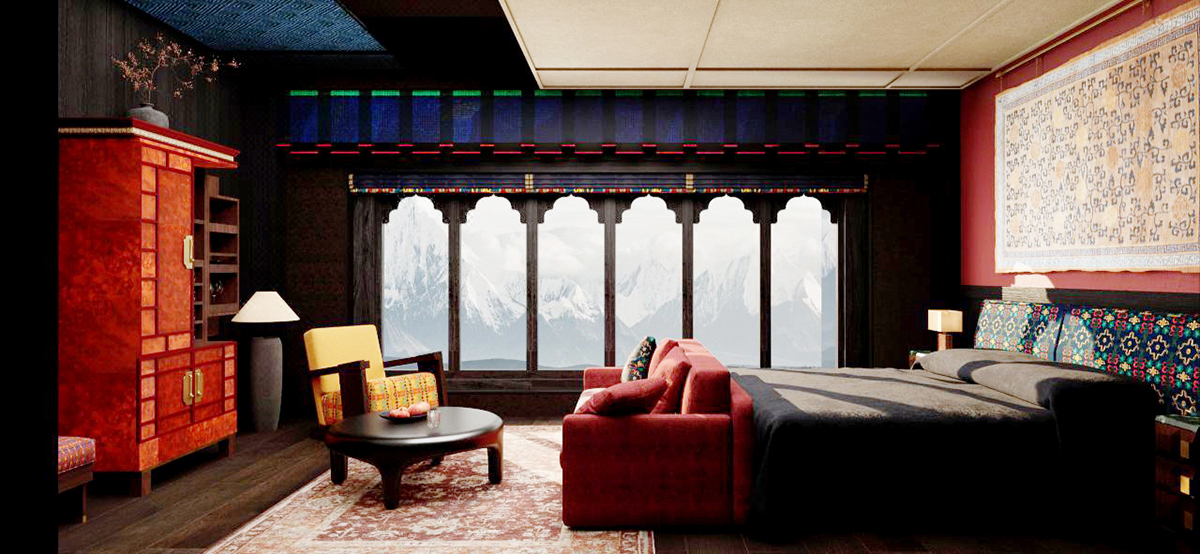
Yading BORE Secret Realm Hotel
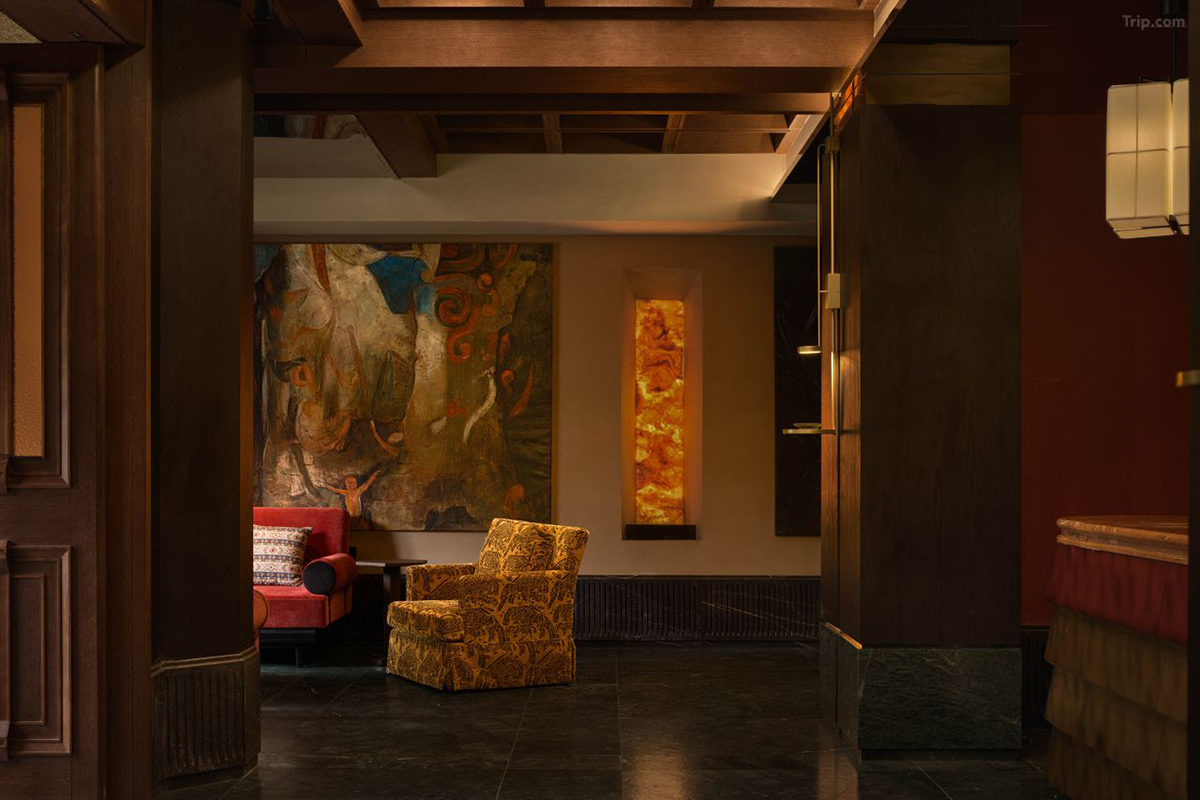
Opened in 2025, the BORE Secret Realm Hotel is, without question, the most significant arrival in Yading accommodation in years. BORE takes its name from the Sanskrit word for wisdom, and the brand’s commitment to positioning its properties exclusively at World Cultural and Natural Heritage sites gives this hotel a philosophical seriousness that most luxury properties lack. Located at Station 5 inside Yading Village, at the heart of the reserve, it occupies a position no other property can claim. Rooms range from 55 to 150 square metres and have been designed to frame the surrounding peaks through generous glazing and thoughtful orientation. The suites with private outdoor soaking tubs facing the canyon are the rooms to request. Amenities include a sauna, massage room, executive lounge, horse riding, and guided hiking. The location eliminates the need for early-morning bus queues, which alone justifies the premium. Rated 10.0 on Trip.com from its first season of reviews.
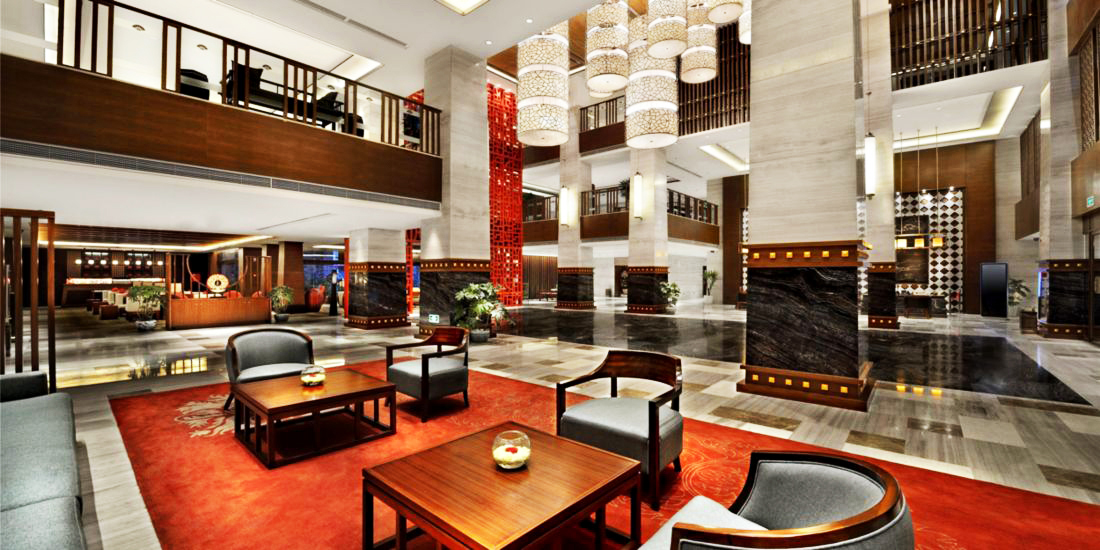
Crowne Plaza Yading by IHG
The arrival of an IHG flag in Shangri-La Town signals that Yading has reached a new tier of international recognition, and the Crowne Plaza executes its mandate with the professional reliability the brand is known for. Set in a traditional courtyard structure with a central fountain and mountain-facing room wings, it offers the full international hotel infrastructure including twenty-four-hour front desk service, a restaurant, and valet parking. Rooms are spacious and well-appointed. The location in Shangri-La Town, at 2,900 metres, is strategically useful: sleeping at this lower elevation before ascending to the park in the morning is the single most effective strategy for managing altitude sickness, a fact that the hotel’s front desk staff will remind you of at check-in. Rated 9.5 on Trip.com.
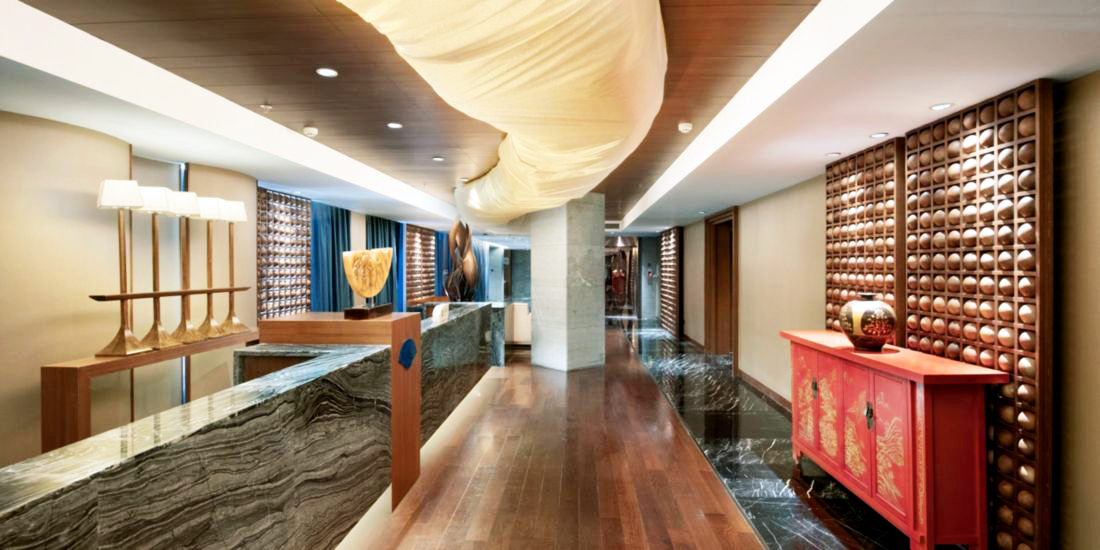
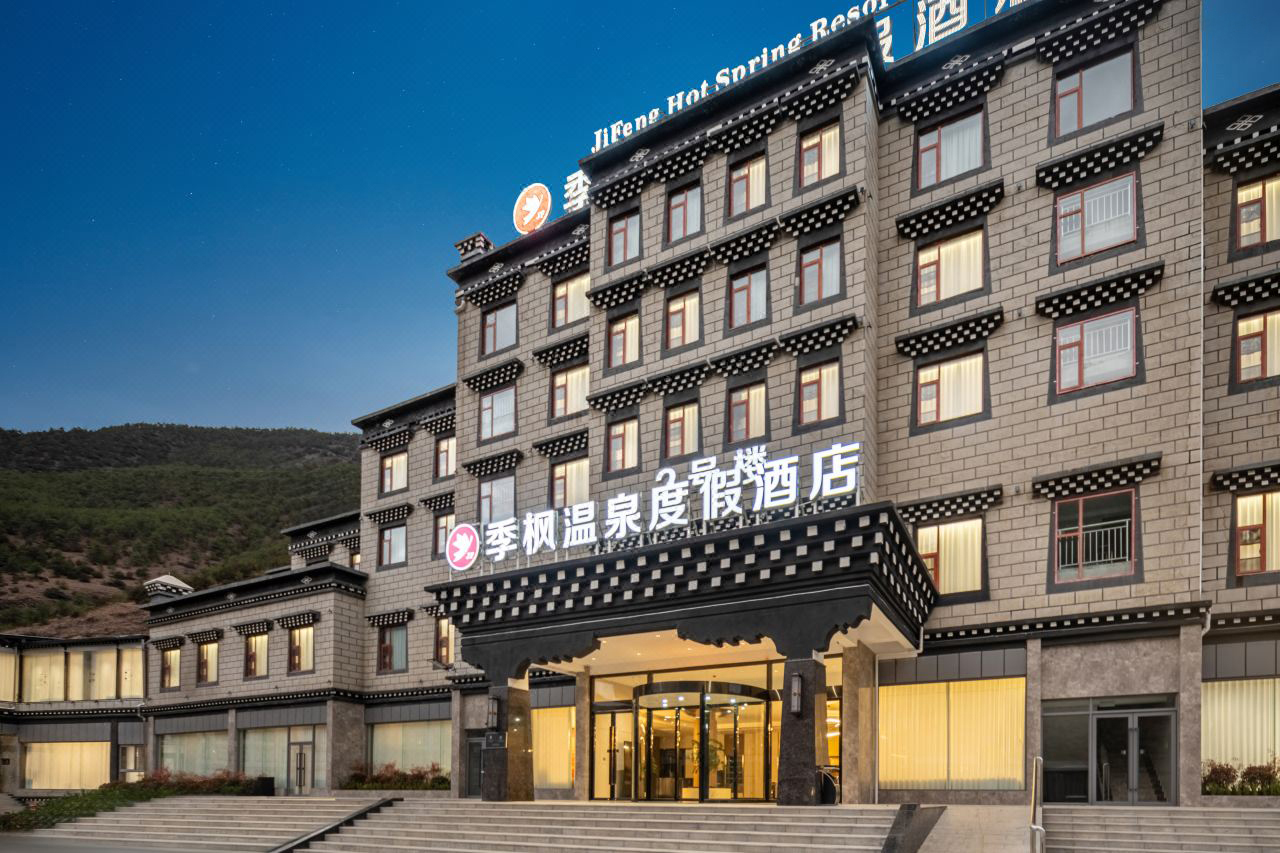
Daocheng Jifeng Hot Springs Resort Hotel
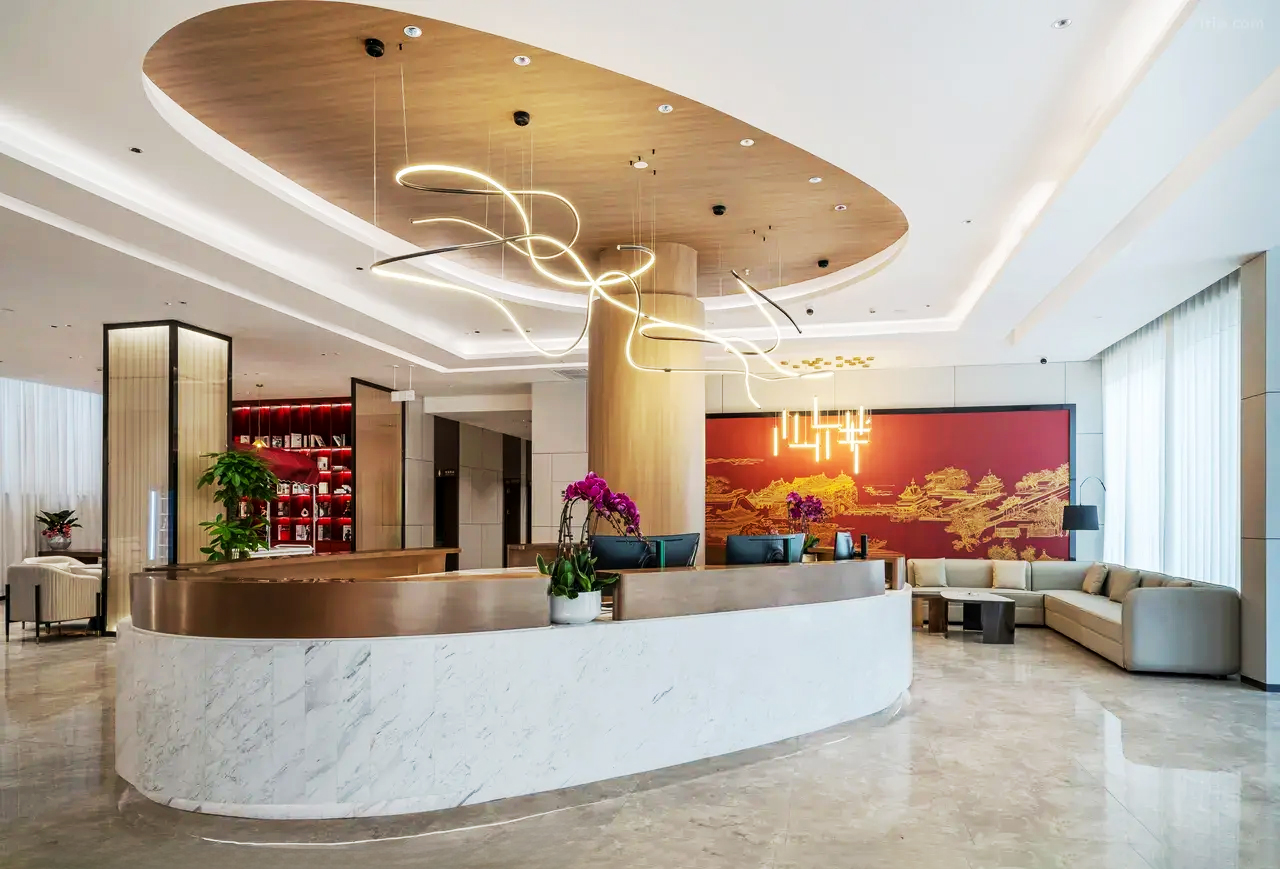
Approximately fourteen kilometres from the park entrance in Rimei Village, this resort has collected over five hundred reviews on Trip.com with a consistent score of 9.1, driven almost entirely by one feature: the hot spring pools. After a day of high-altitude hiking, immersing in geothermal water under a sky full of Tibetan plateau stars is a recovery experience that no spa service can replicate. The rooms are comfortable rather than luxurious, but the setting, a river valley flanked by forested ridges, is genuinely beautiful. This is the right base for travellers who want the Yading experience but prefer to decompress at lower elevation each evening. Book the private pool suite if it is available.
WHERE TO EAT
Tibetan highland cuisine bears almost no relationship to the Sichuan food most international travellers associate with the province. The mala heat and the wok-tossed complexity of Chengdu cooking are not principles here. At 4,000 metres, food is fuel made beautiful by context, and the best meals in Yading’s orbit are defined by their ingredients rather than their technique.
The restaurants and guesthouses clustered around Yading Village and Shangri-La Town serve a repertoire built around yak: slow-braised yak ribs, hand-stretched yak butter noodles, yak bone broth ladled into clay bowls and consumed while looking at a snow peak. Tsampa, the roasted barley flour that is the nutritional foundation of Tibetan life, appears in flatbreads baked on iron plates each morning and in the butter tea that local families prepare in wooden churns. Ordering butter tea from a Tibetan family rather than a tourist restaurant is a ten-minute interaction that is more culturally instructive than most museum visits.
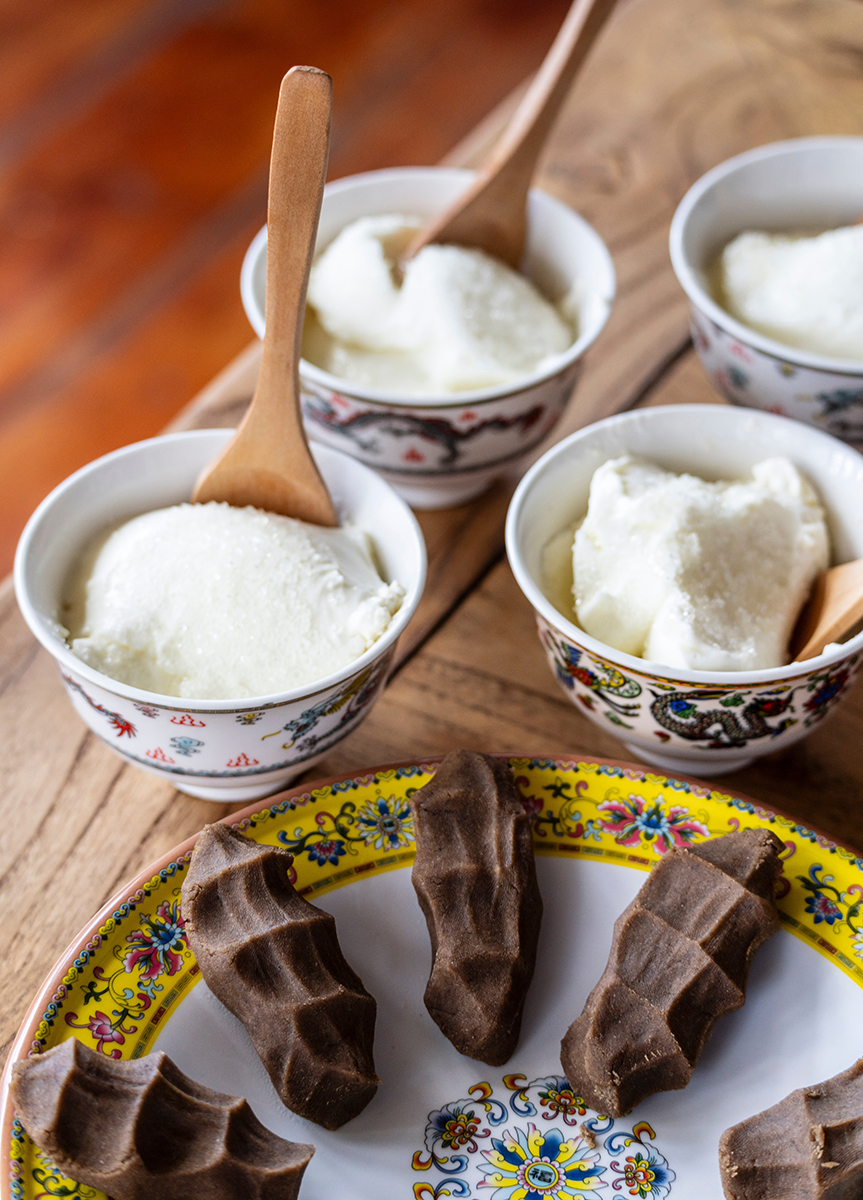
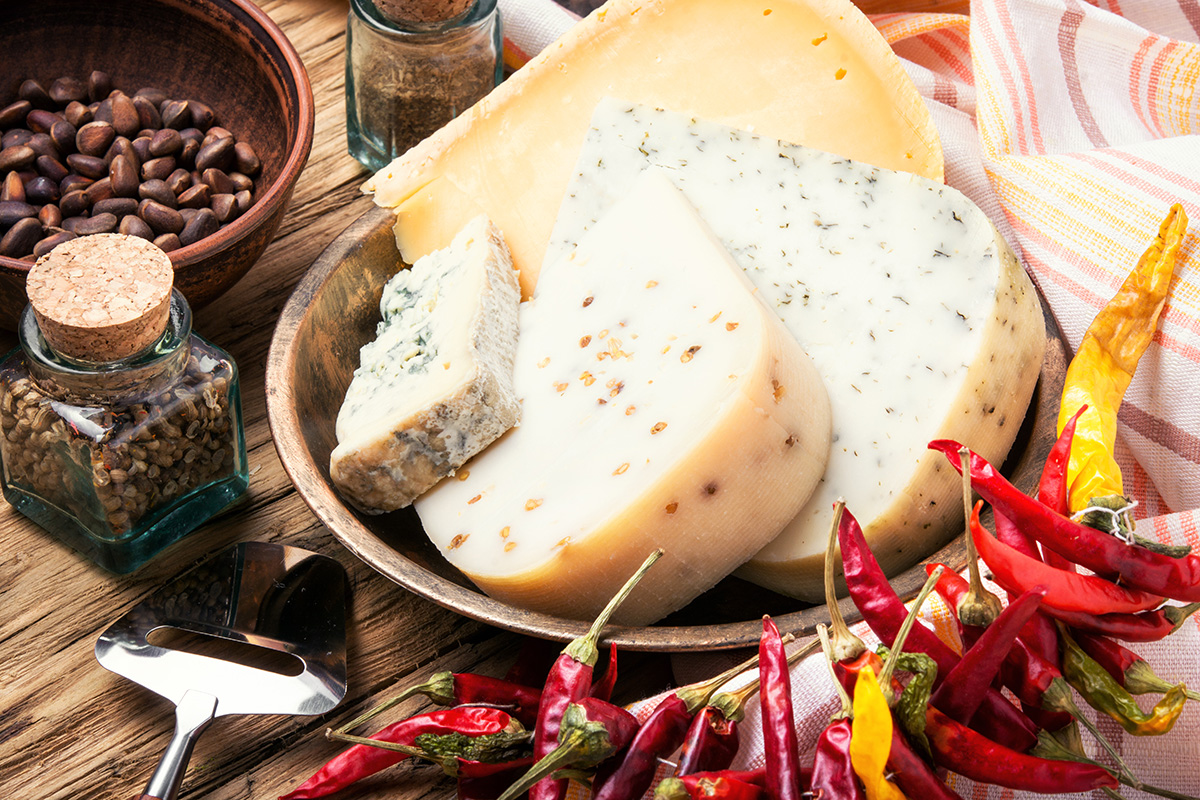
In Daocheng town, the morning market that assembles along the main street from around 7 a.m. is the best food experience available in the county. Vendors from surrounding villages sell hand-pressed yak cheese in rounds the size of a fist, dried apricots from orchards in the lower valley, roasted barley flatbreads still warm from the griddle, and Tibetan pork bacon cured with salt and altitude in a way that produces a depth of flavour unlikely anywhere below 3,000 metres. Buy provisions here for the trail. The combination of yak cheese, flatbread and dried apricot eaten at 4,600 metres on the approach to Milk Lake, with Chanadorje’s north face occupying the entire upper third of your visual field, is an experience that has very little competition in the category of meals remembered.
For an evening meal with more structure, several family-run guesthouses in Shangri-La Town now operate small dining rooms open to non-staying guests, serving fixed menus of four or five dishes that change weekly depending on what has arrived from Chengdu. The cooking is Tibetan-inflected Sichuan, less fiery than the city equivalent and more reliant on the grassland ingredients immediately to hand: lamb from local herders, foraged mushrooms from the forest edges below the reserve, and seasonal greens dressed with yak butter and salt. The rooms are warm and small. The food is invariably better than what the decor suggests it will be.
TRAVEL NOTES
Getting There
Fly Chengdu Tianfu (TFU) to Daocheng Yading Airport (DCY). Flight time approx. 1 hr 40 min. Overland from Chengdu via Kangding and Xinduqiao is recommended for acclimatisation (2 days).
Entrance Fee
CNY 146 per person (peak season April 15 to November 19). CNY 120 low season. Electric shuttle bus CNY 80 return.
Altitude
Valley floor 2,900 m. Pearl Lake 4,100 m. Milk Lake 4,600 m. Five-Colour Lake 4,700 m.
Best Seasons
Late April to early June (spring wildflowers, fewer visitors). Late September to mid-October (autumn colour, peak pilgrim season).
Note
Overnight camping inside the reserve is prohibited since 2024. All visits are day-use from accommodation outside park boundaries.