Five Summits. One Country That Earns Every Superlative.
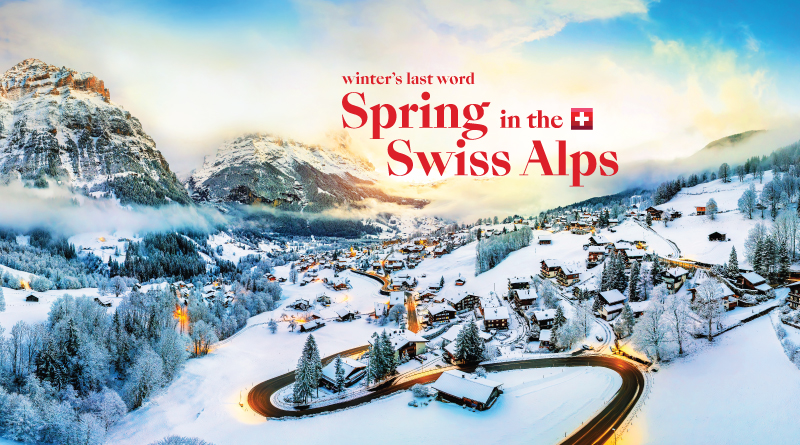
THE SWISS ALPS. A SEASON REFUSING TO LEAVE. most seductive misreadings. From a distance, from a mood board, from a brochure assumption, it suggests transition of valleys waking up, wildflowers edging toward the treeline, a season that asks little of you. The reality, Switzerland’s spring is one of travel: the pastoral ease ’s worth of ’s encountered properly, is far more interesting than that. The Jungfrau region this year has not consulted the calendar. It has, instead, offered something rarer: the Alps in full winter command, with none of winter’s crowds.
What followed was eight days across five distinct Swiss landscapes, the civilised lakeshore elegance of Zurich, the medieval theatre of Lucerne, the vertiginous theatre of Mount Pilatus, and then deeper into the Bernese Oberland: Grindelwald, Wengen, the Jungfraujoch summit at 3,454 metres, and finally the cliffedge villages of Murren and Gimmelwald suspended beneath the Schilthorn. The entire journey unfolded by train, cable car, gondola, post-bus, and lake steamer. Switzerland’s public transport system is not as some assume, a concession to practicality. It is, in its quietly confident way, one of the most refined luxury experiences available in contemporary travel. The private transfer, by comparison, would have been the lesser choice.
“Winter has not finished with the Alps this year. Above 1,400 metres, the mountain faces remain powder-white, the cold indifferent to the calendar.”
DAY ONE - ZÜRICH
Where Precision Meets Pleasure: Zürich on Arrival
The city that does understatement better than anywhere else in Europe, and knows it.
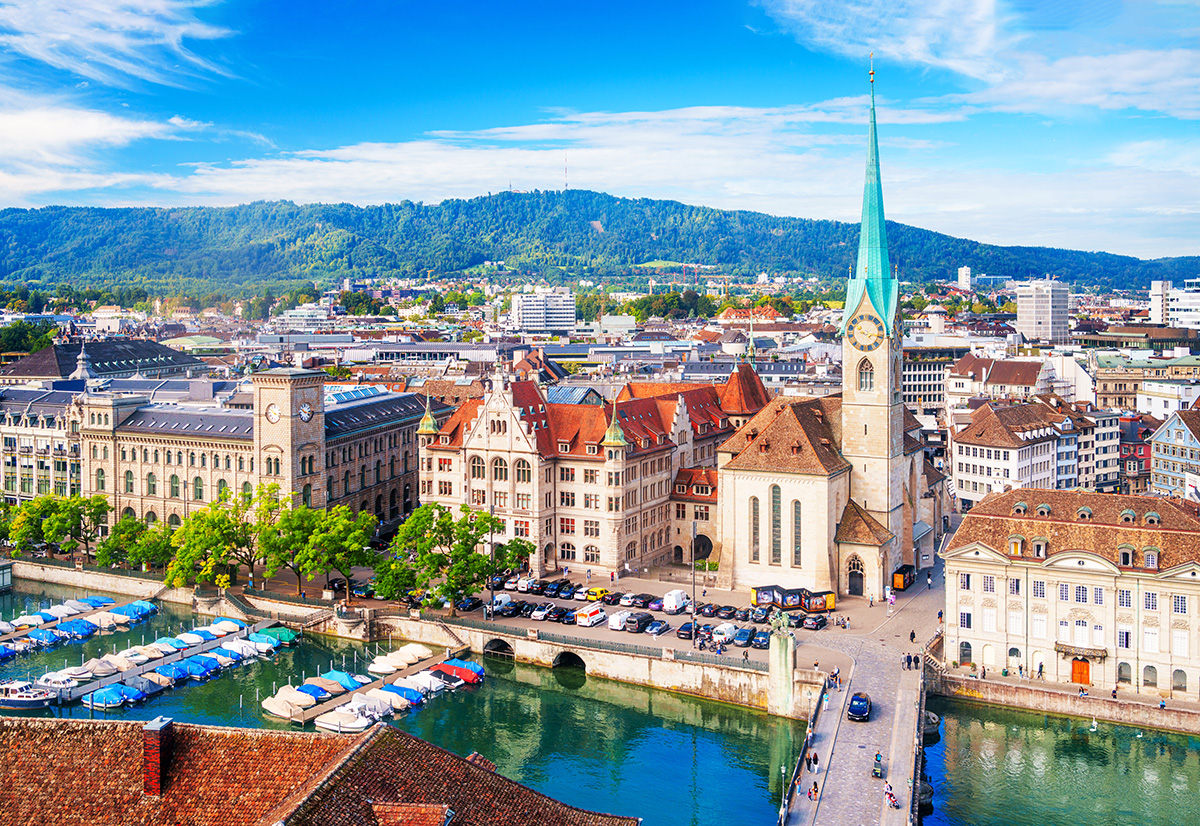
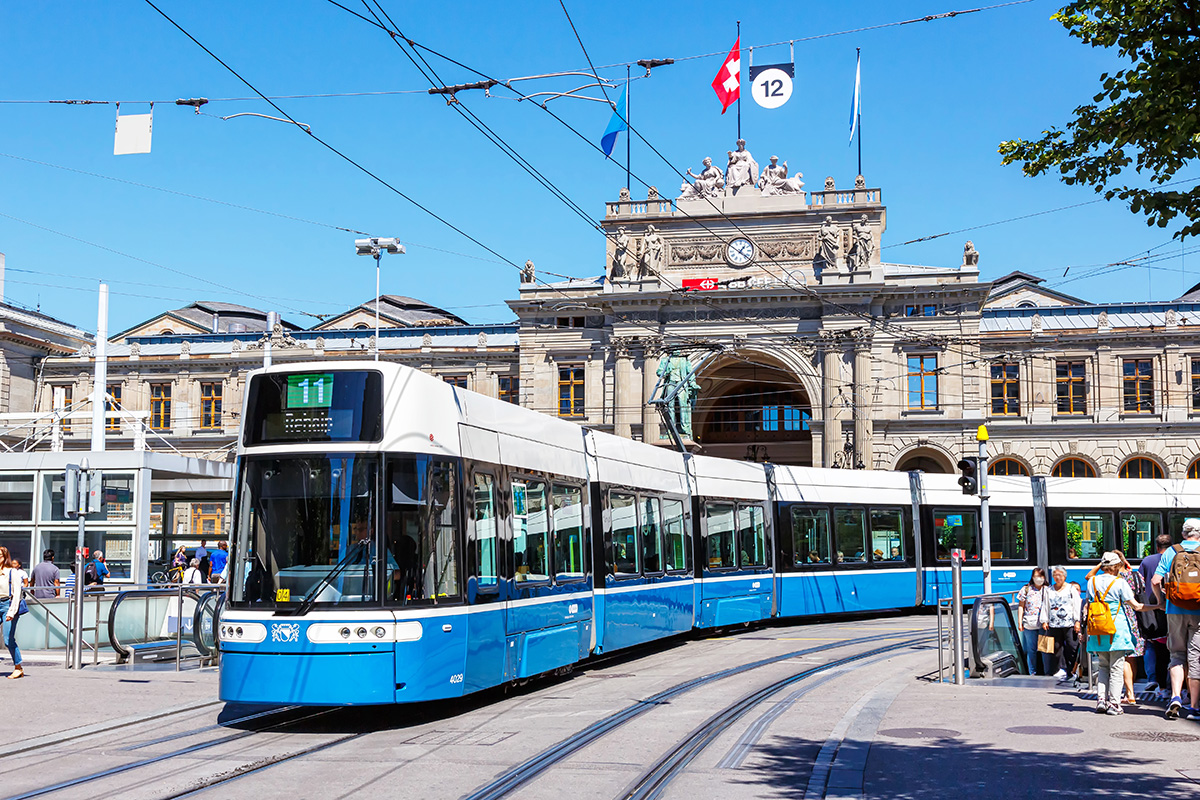
Zurich arrives by train from its own airport in under fifteen minutes, one of those facts that sounds mundane until you’ve spent forty-five minutes in a taxi anywhere else in Europe. The city delivers itself efficiently, without ceremony, and then waits for you to catch up.
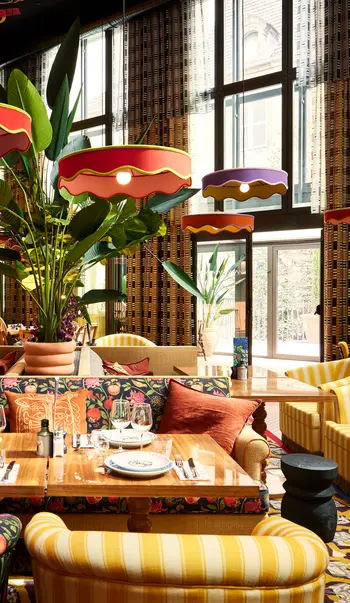
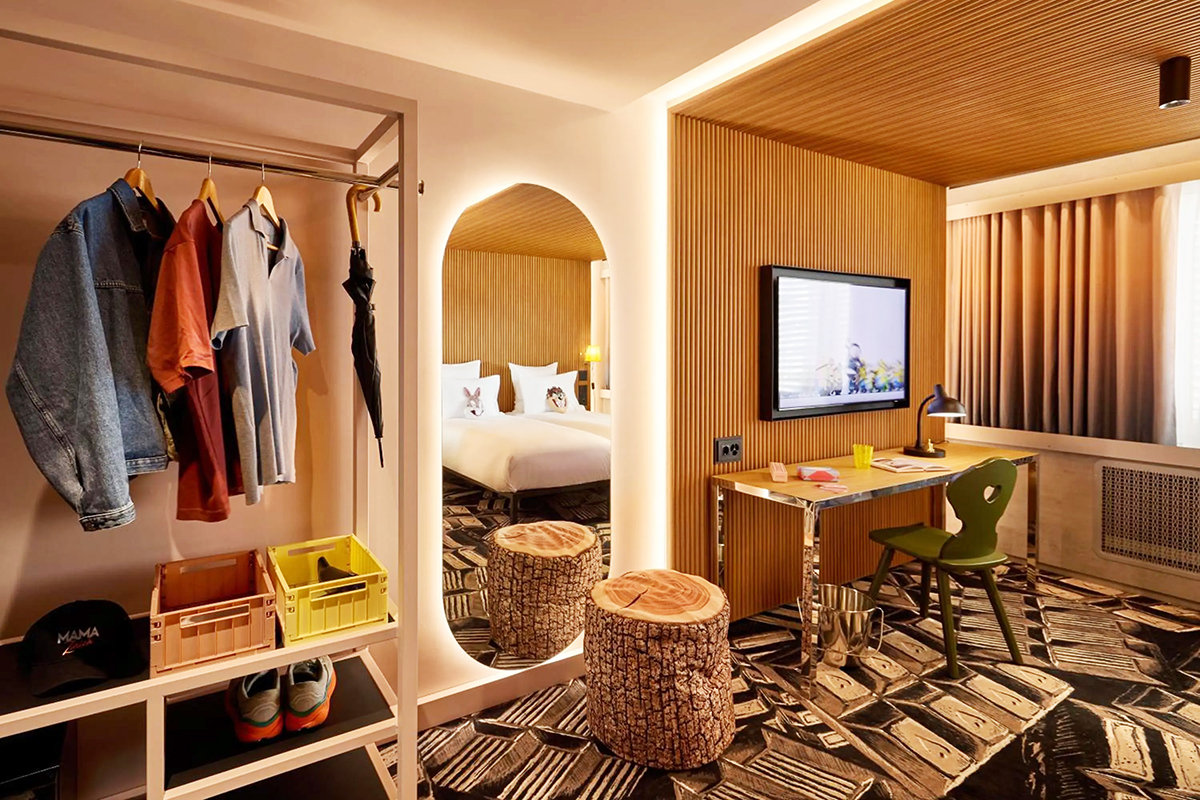
Mama Shelter Zurich on Schulstrasse refuses the old Switzerland entirely. Pop-art painted ceilings, a bar already mid-conversation on arrival, rooms designed by someone who has clearly never owned anything beige, it sets precisely the right tone for a journey that refuses to be postcard-predictable. The hotel occupies a converted industrial building in the Oerlikon district, its communal spaces animated by a democratic energy that feels genuinely Zurich, the city’s creative class and international arrivals sharing the same tables without formality.
Mama Shelter Zürich
THE VERDICT
Mama Shelter belongs to the French hotel group known for turning unlikely spaces into destinations. The Zürich property delivers on that brief with confidence. Rooms are compact but intelligent, every surface doing something useful, the beds firm and precisely made, the blackout curtains absolute. The pop-art aesthetic is committed rather than ironic, and it ages better than minimalism. The bar is the hotel’s real centre of gravity: open late, loud enough to feel alive, quiet enough for a conversation.
STANDOUT DETAILS
The rooftop terrace in clear weather offers a genuine surprise Zürich’s skyline and the distant Alps visible from the fourth floor. Breakfast is better than a hotel at this price point has any right to produce. The location in Oerlikon, a ten-minute S-Bahn from the Hauptbahnhof, places you at the city’s edge rather than its centre, which turns out to be the better position for understanding what Zürich actually is when it’s not performing for visitors.
ESSENTIAL INFORMATION
Mama Shelter Zürich Address: Schulstrasse 44, 8050 Zürich Website: mamashelter.com
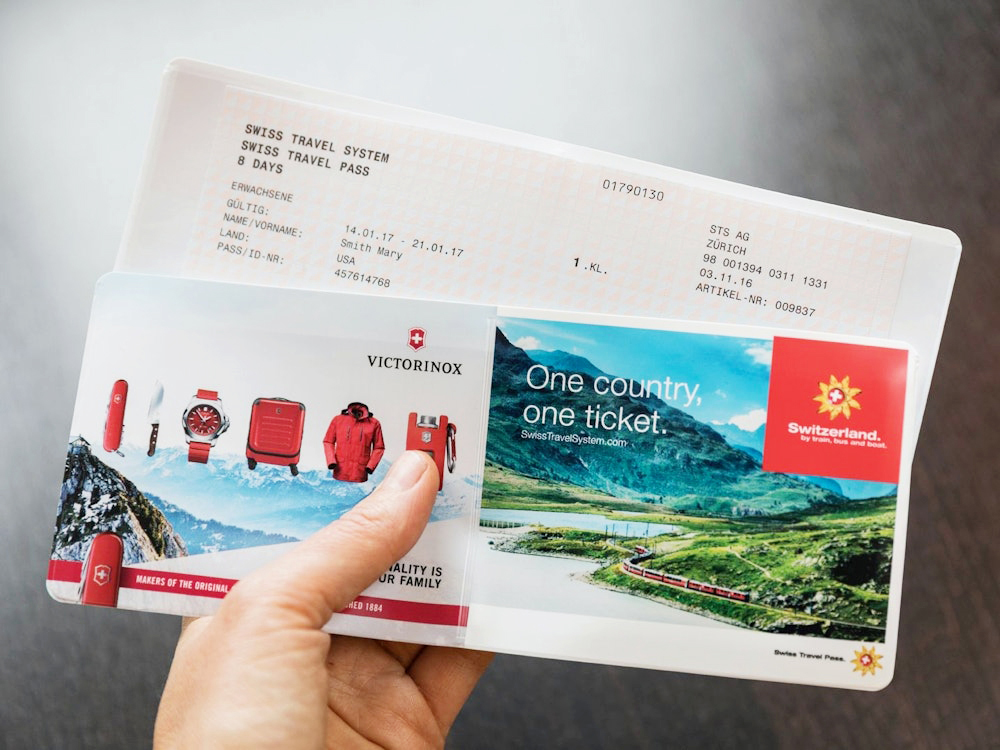
The Swiss Travel Pass, collected at the airport, covered everything from this point forward – every train, every boat, every city tram, and entrance to over 500 museums. Movement through Switzerland became frictionless in a way no other country has managed to replicate. You simply board, sit, and watch the landscape unfold.
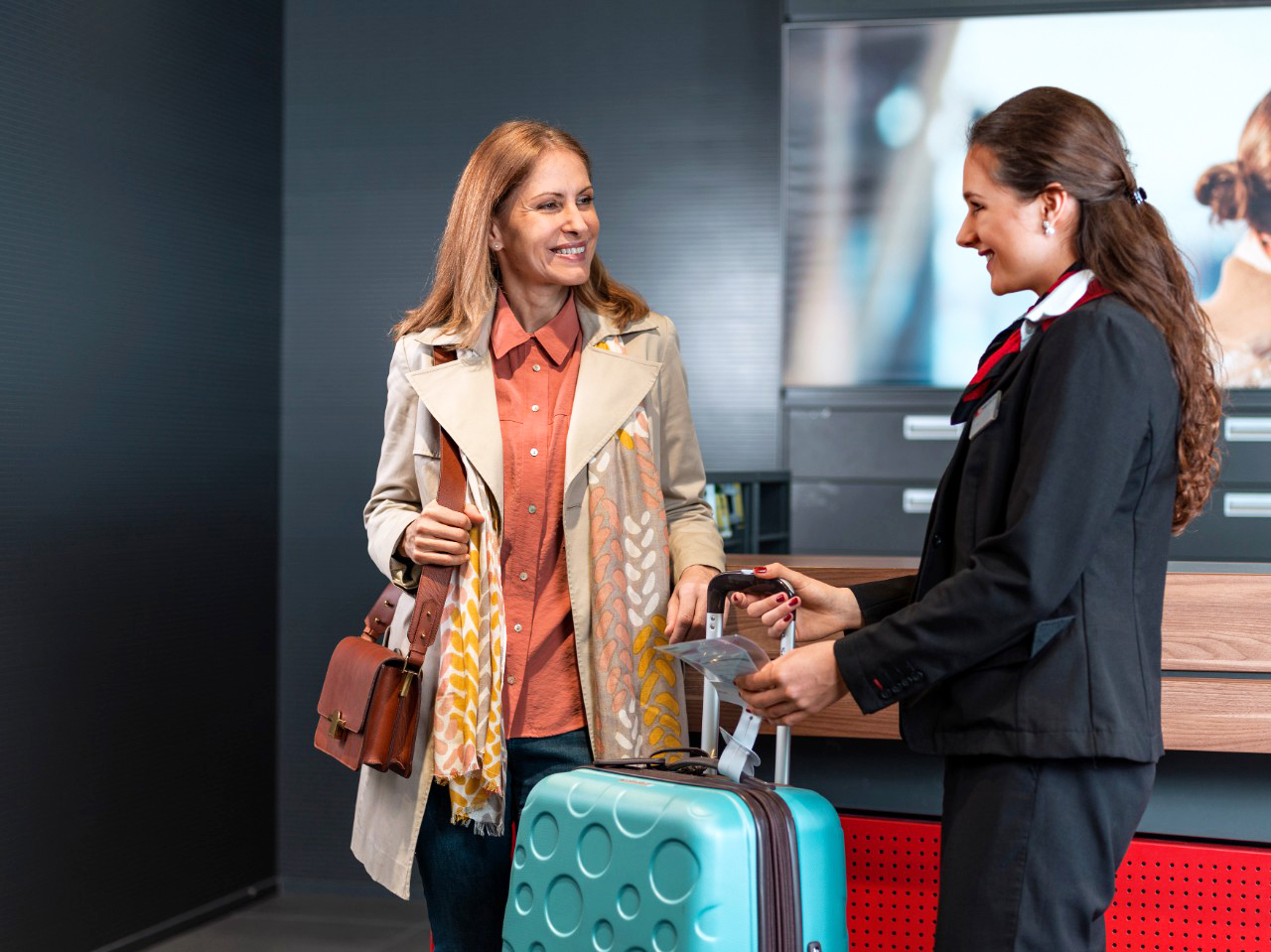
More quietly extraordinary was the SBB door-to-door luggage service, which materialised as a polite transaction at the hotel concierge each morning. Cases were handed over, a destination specified, and by 18:00 they were waiting at the next hotel. For eight consecutive days of moving between mountain villages, some accessible only by cable car, this was less a convenience than a structural necessity. It is infrastructure designed by people who understand that the point of travel is not the management of luggage.
DAY TWO - MOÜNT PILATÜS
The Dragon Awakes: A Night at the Summit
One of the Great Alpine Ascents Begins from a Suburban Bus Stop, And Ends Above The Clouds.
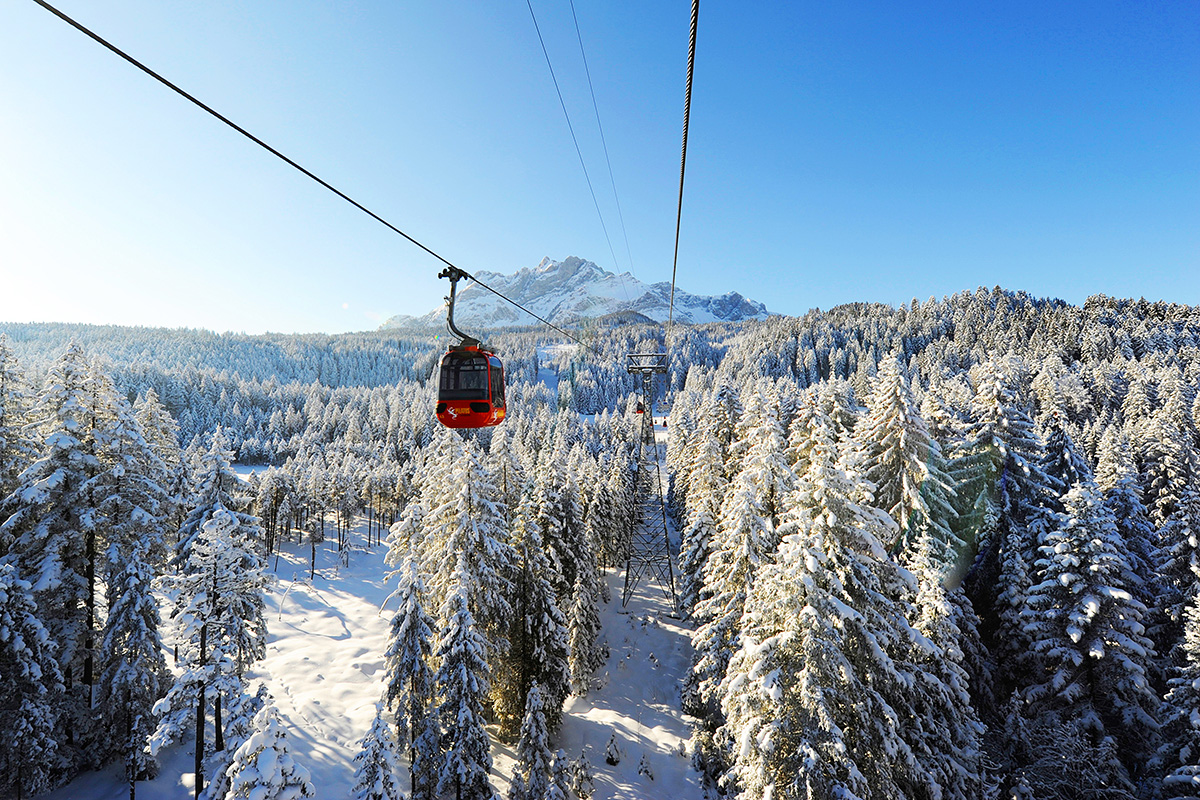
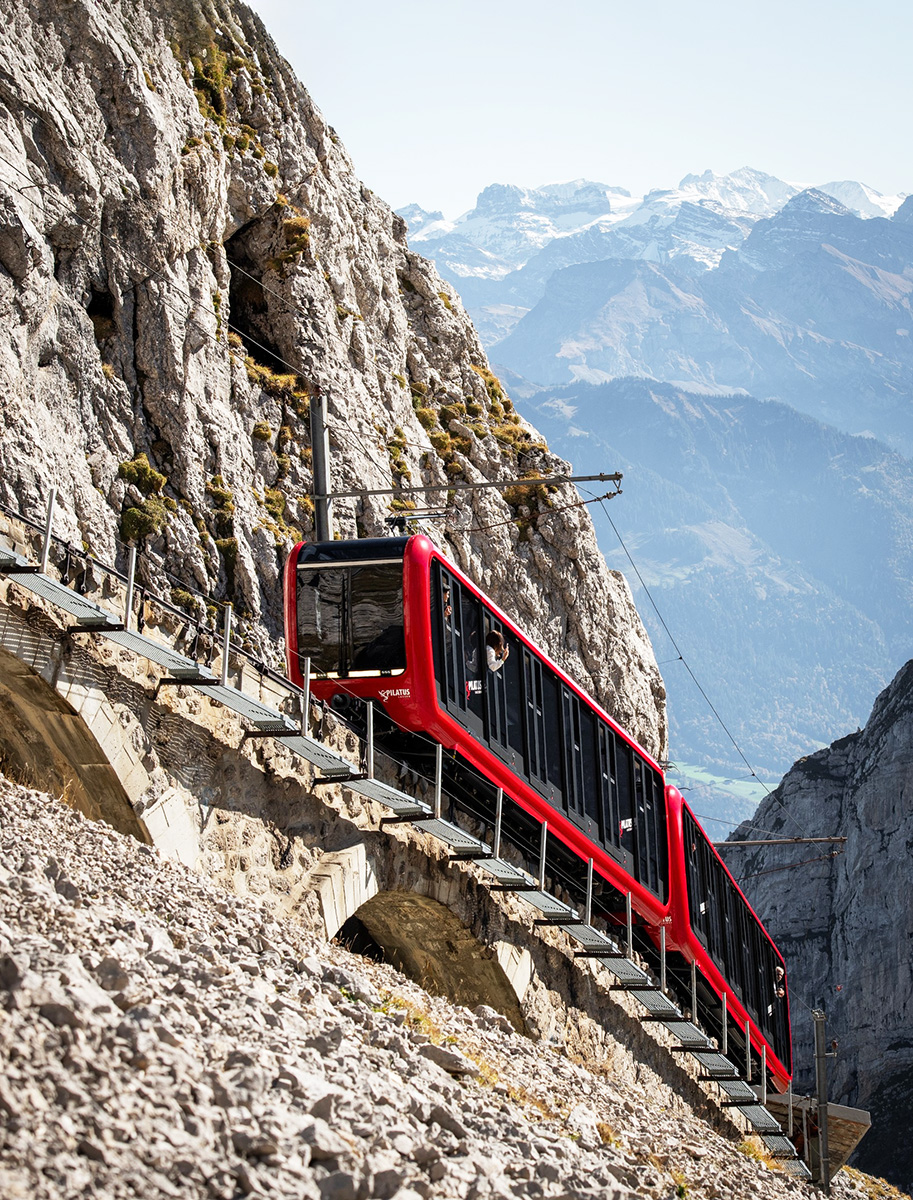
Bus B1 from Luzern Bahnhof to Kriens Zentrum takes eleven minutes and deposits you in a quiet suburb from which, improbably, one of the great Alpine ascents begins. The Panorama Gondolas from Kriens to Frakmuntegg float upward through mixed forest and open meadow, the Lake Lucerne basin assembling below in gradual revelation.
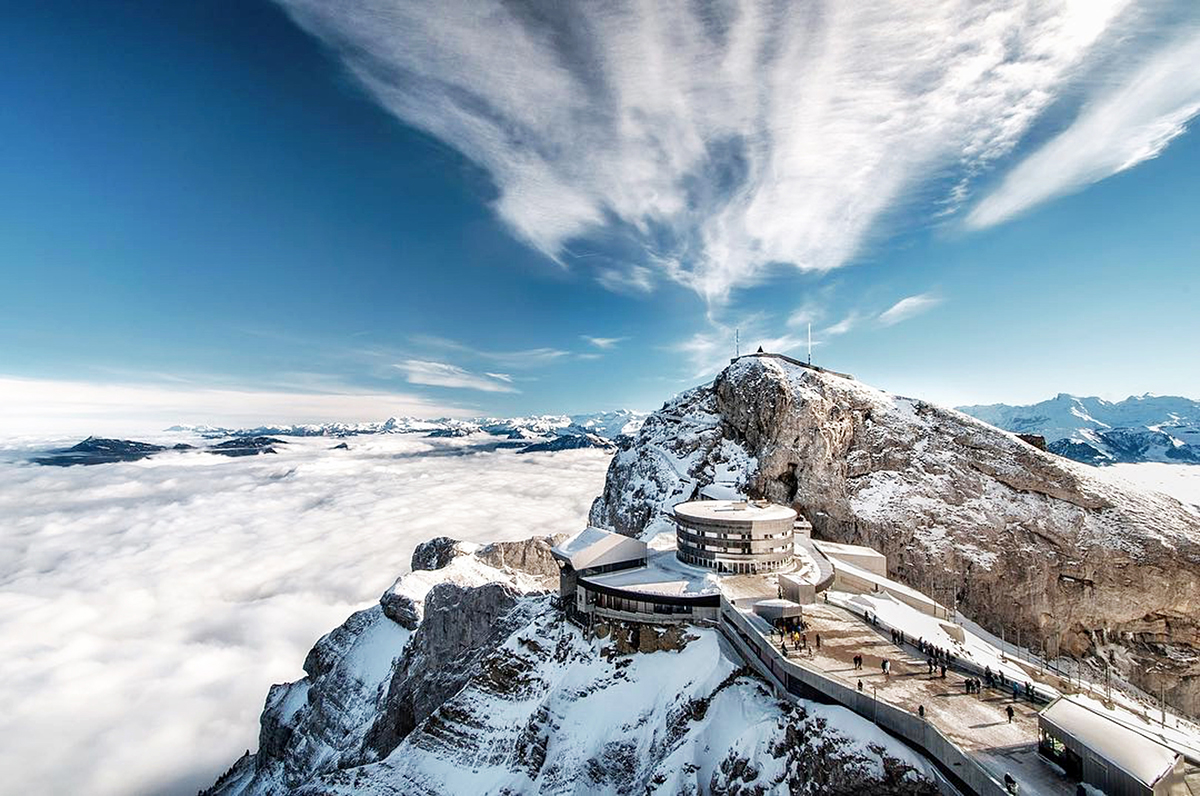
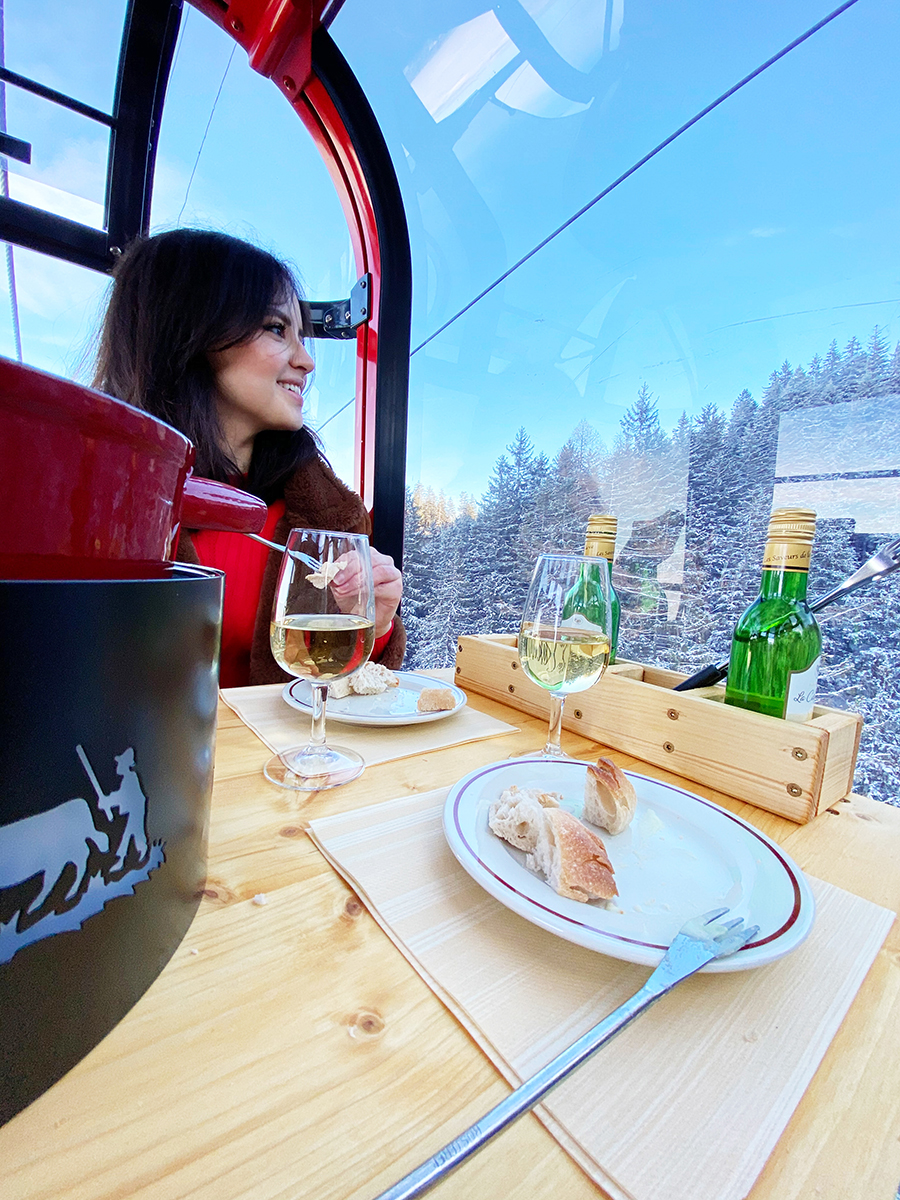
At Frakmuntegg, the snow began in earnest, not the softening crust of a warming spring, but the packed, consolidated winter snowpack of a mountain that has received fresh falls right through late March. The valley below remained brown in its lower reaches; the middle station was deep winter without apology. Then the Dragon Ride, the aerial cableway to Pilatus Kulm at 2,132 metres, 3.5 minutes of steep, panoramic, unapologetic ascent. The cabin swings clear of the ridgeline with the casual audacity of engineering that knows what it’s doing. When the summit station opens and the full panorama of Lake Lucerne materialises, the effect lands before the brain has finished processing it.
Lunch at the self-service restaurant Bellevue found the view contributing more to the meal than the menu. The afternoon held something unexpected “Breathe with Pilatus”, a multi-sensory installation by experience designer Annabelle Schneider, a walk-in breathing cloud of white fabric that slowed time with more efficiency than any spa treatment I’ve encountered. At 2,132 metres, inside a pulsing white room, the instruction to simply breathe felt like permission for something I’d forgotten was available.
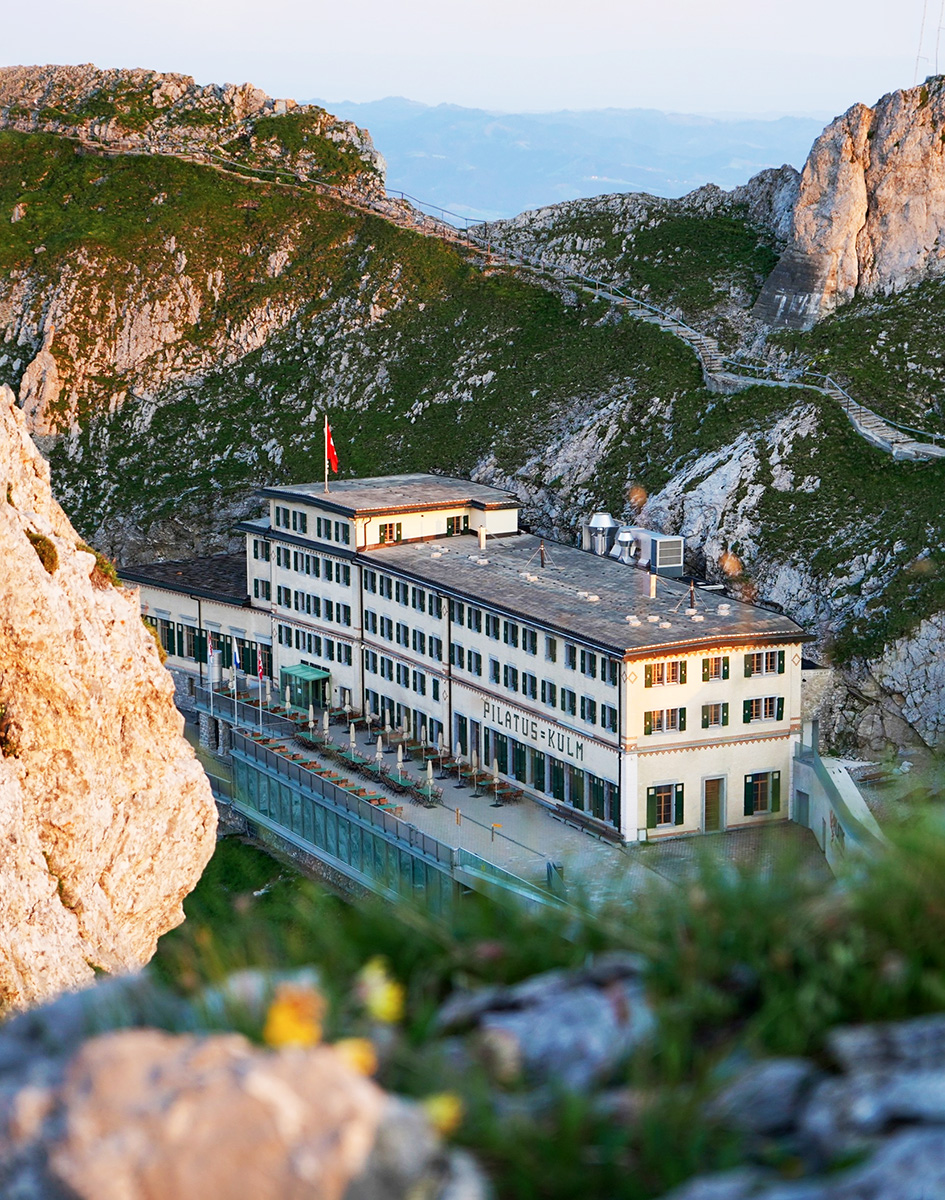
Hotel Pilatüs-Külm
THE SETTING
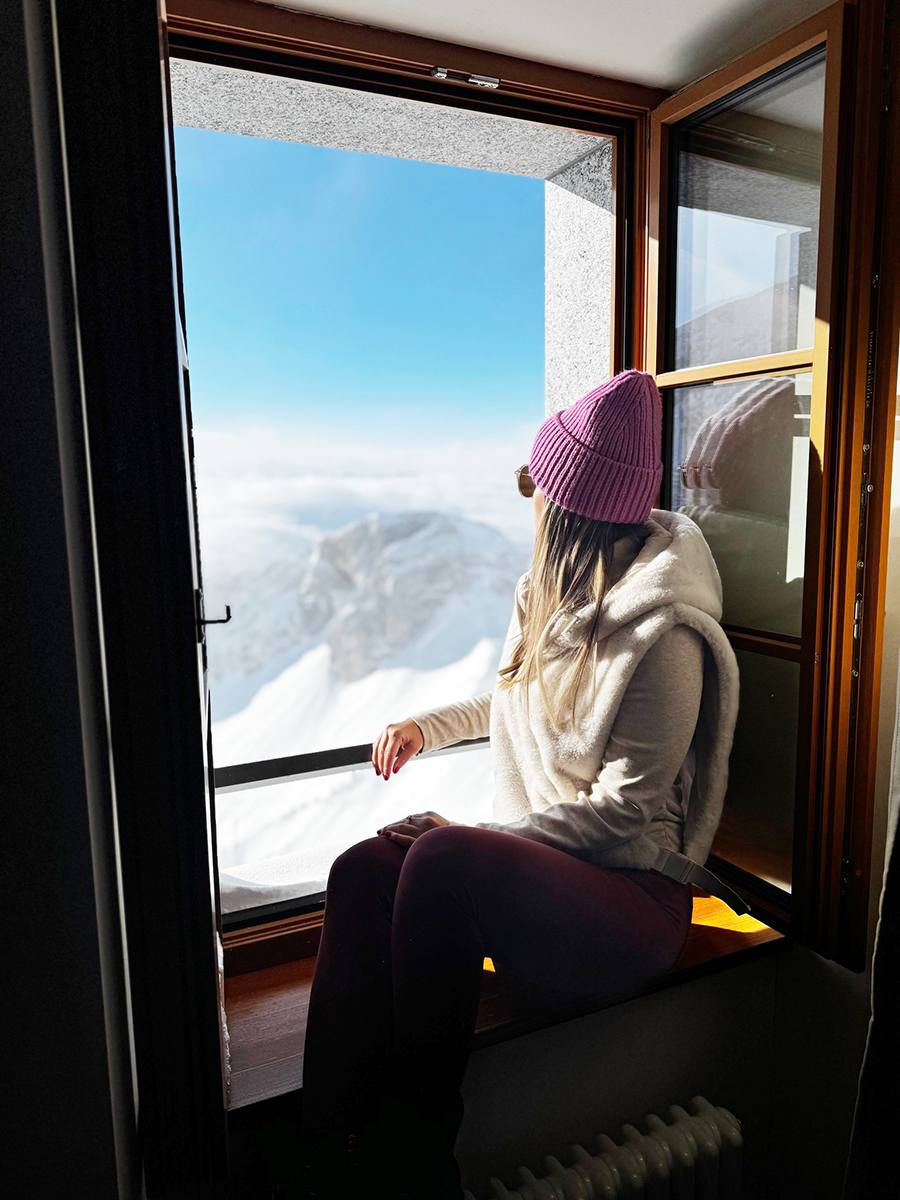
One of the highest hotels in Switzerland, its four-star rooms built directly into the mountain’s crown at 2,132 metres. The valley floor is 1,500 metres below the window at check-in. The sensation of suspended reality this produces is not manufactured; it is geological, and it is entirely specific to this address.
THE EXPERIENCE
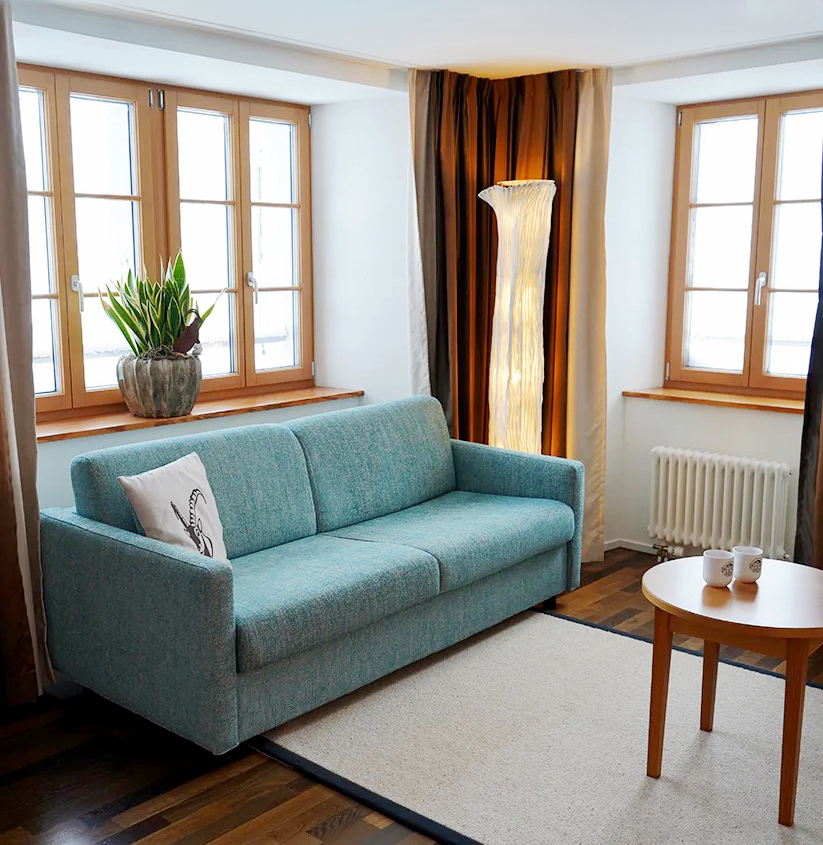
The rooms are warm, precisely furnished, and orientated toward the view with an intelligence that suggests the architects understood exactly what they were working with. The beds are the deep, firm Swiss standard that becomes a reference point for every bed that follows. Sunset at the Oberhaupt viewpoint at 6:15 produced the coppertoned light that only high-altitude spring evenings generate, the surrounding peaks igniting in sequence, the valley below already settling into blue shadow.
DINING
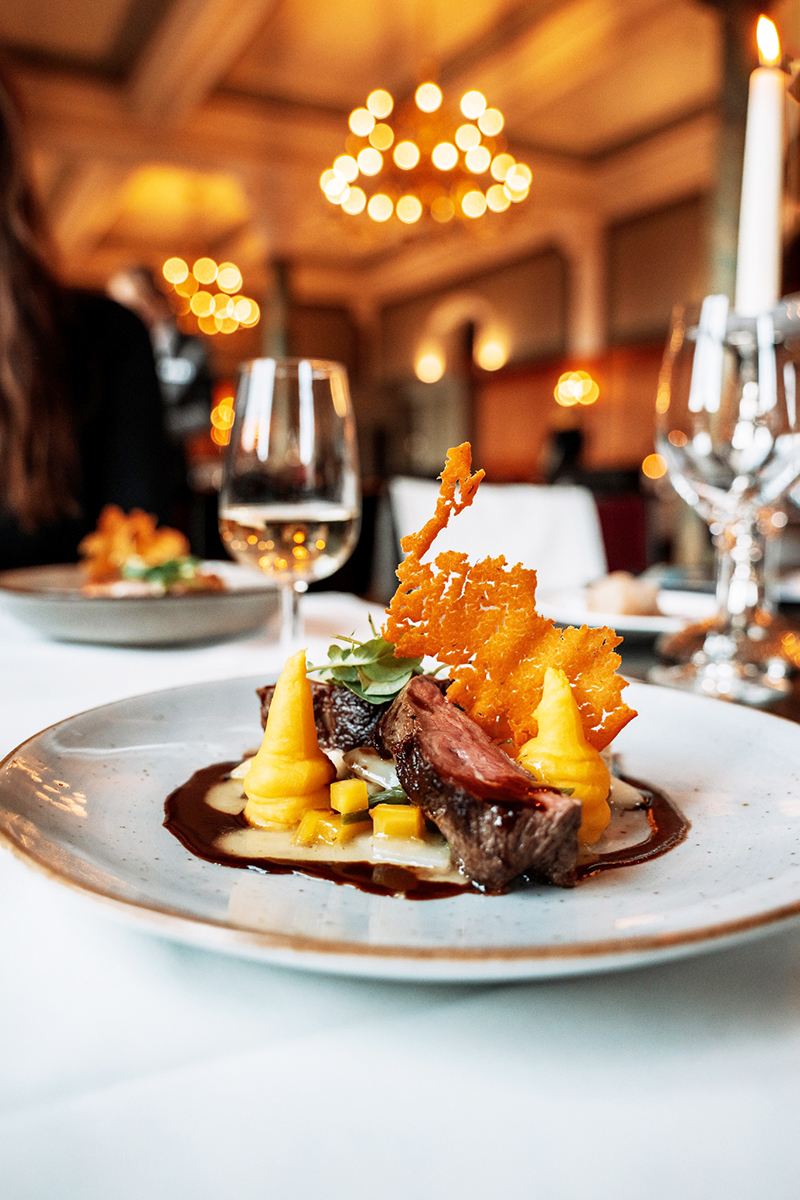
Dinner was a four-course menu in Restaurant Pilatus-Kulm, the service unhurried and precise, the wine list thoughtful. Afterwards, the Panorama Terrace offered Lucerne’s lights distributed across the valley darkness, the Alps reduced to black silhouettes against a sky of genuine stars, a rarity at altitude in early spring when weather can close in. It is one of those evenings that resolves the question of why one travels.
MORNING
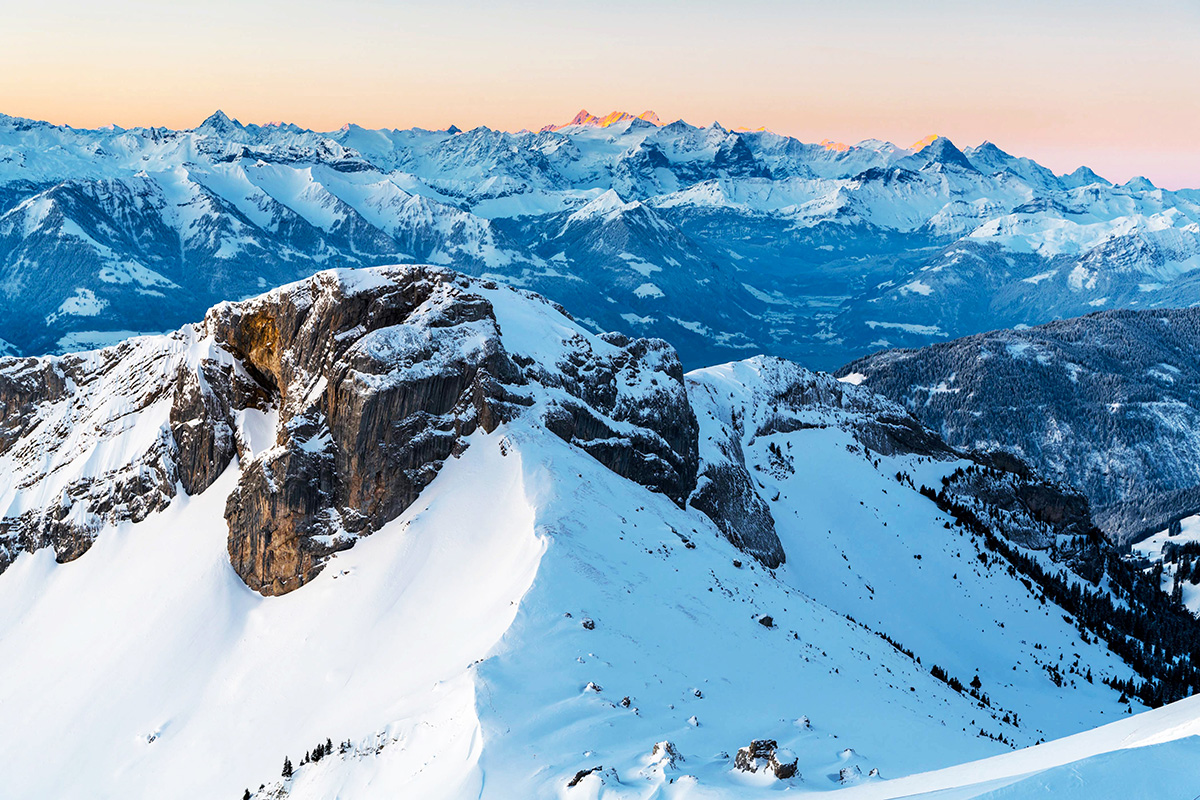
Sunrise from the Oberhaupt viewpoint at 6:45 the following morning: the valley still dark below, the summit the first surface in the world to receive the light, the Alps burning in sequence from east to west. Breakfast in the historical Queen Victoria Hall, Victorian in proportion and gravity, the buffet laid with the seriousness such a setting demands completed an overnight that is, in the most precise sense, without equivalent.
“The valley floor is 1,500 metres below the window. Pilatus-Kulm produces a suspended reality that is geological in origin, and entirely specific to this address.”
DAY THREE - LÜCERNE
Seven Centuries of Lucerne, Unlocked in an Afternoon
A Medieval City with a Complicated Interior Life, and the Best Riverside Dinner Table in Switzerland.
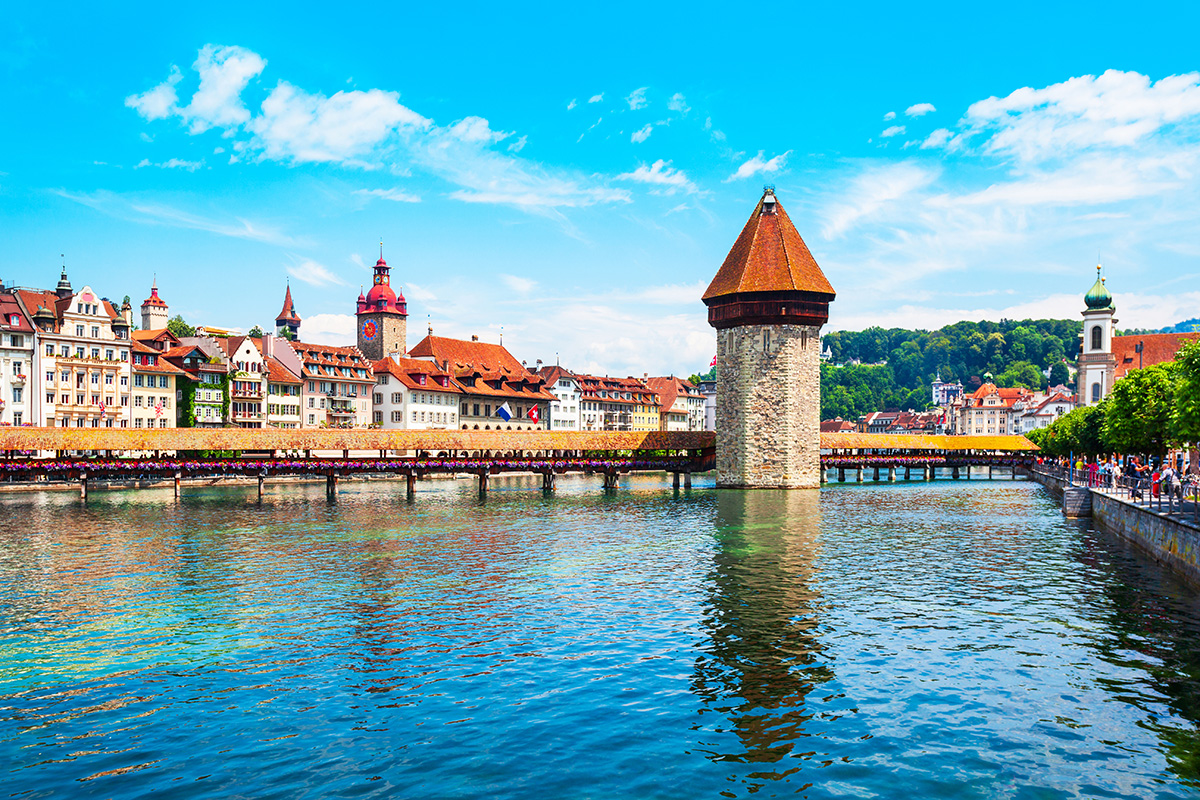
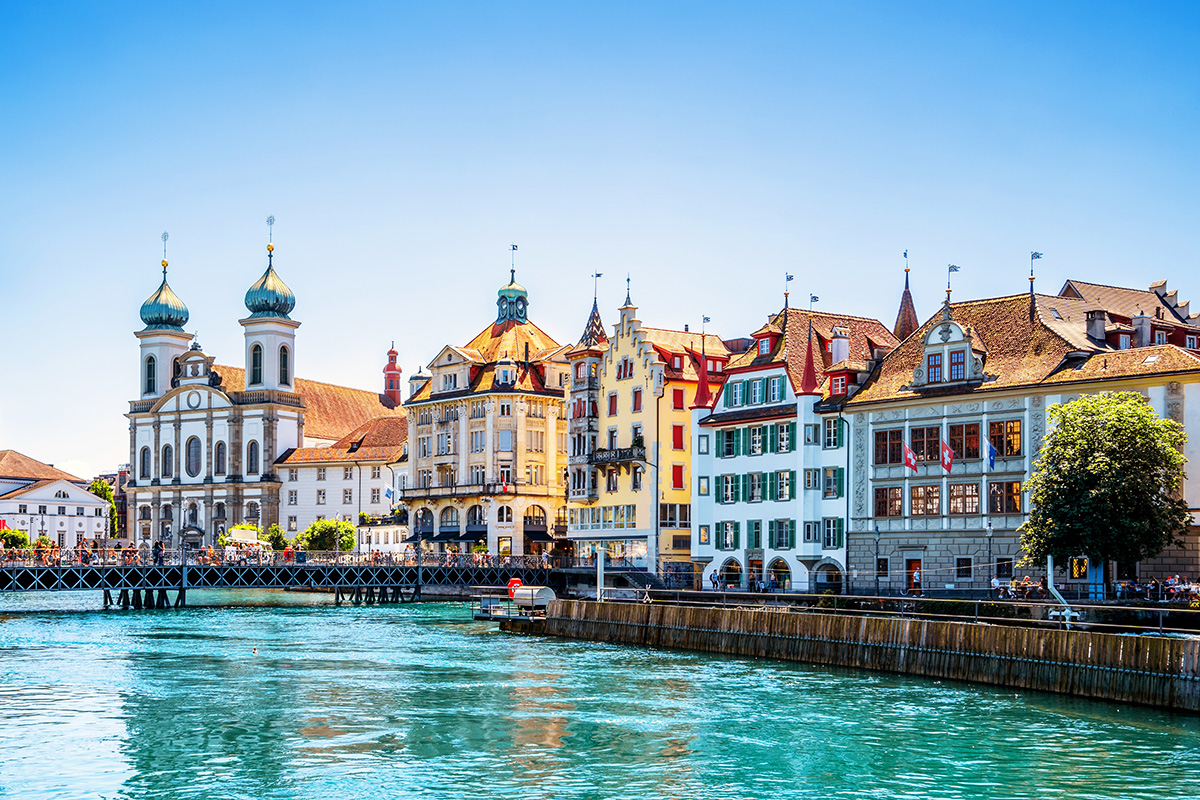
Lucerne is intimate in the way that larger Swiss cities are not. One arrives and is almost immediately confronted by the Kapellbrucke, the 14th-century covered wooden bridge arching diagonally across the Reuss with the Water Tower rising mid-span, an octagonal stone structure built in 1262 that predates the bridge by some years. The paintings beneath the bridge’s roof, triangular panels depicting Lucerne’s history, were illuminated in the cool spring ligh filtering through the latticed sides. Twenty-five of the original 110 survived the fire of 1993; the rest are faithful restorations. Standing among them, the distinction felt less important than the fact of their continued presence.
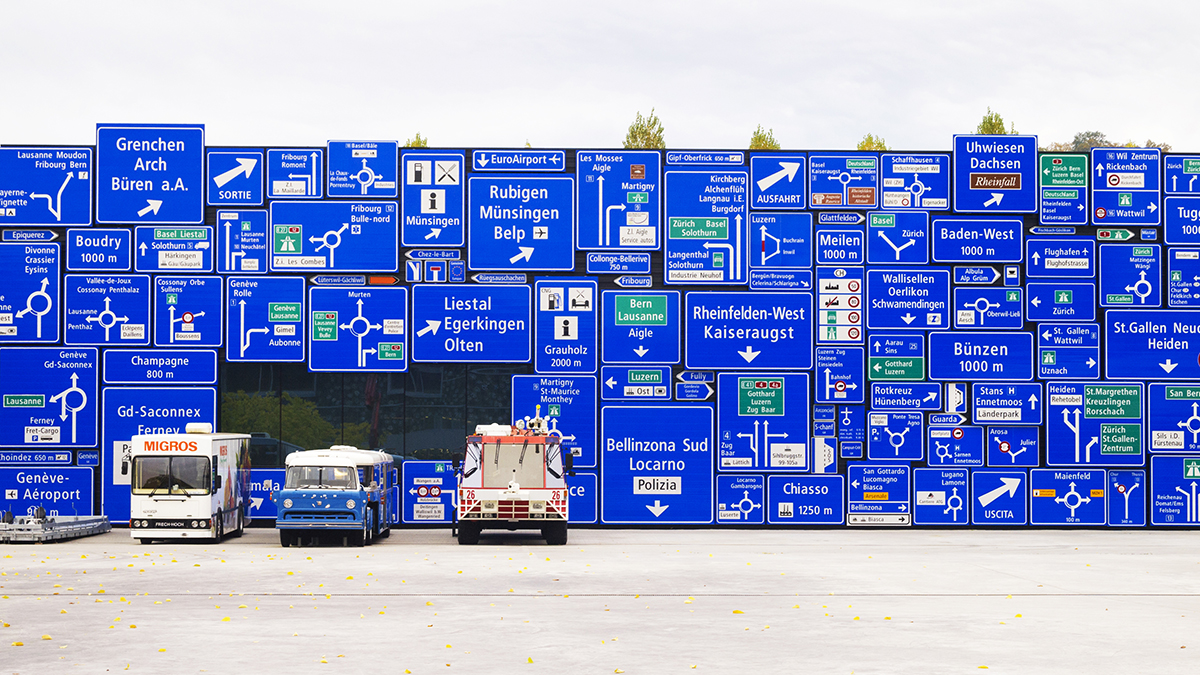
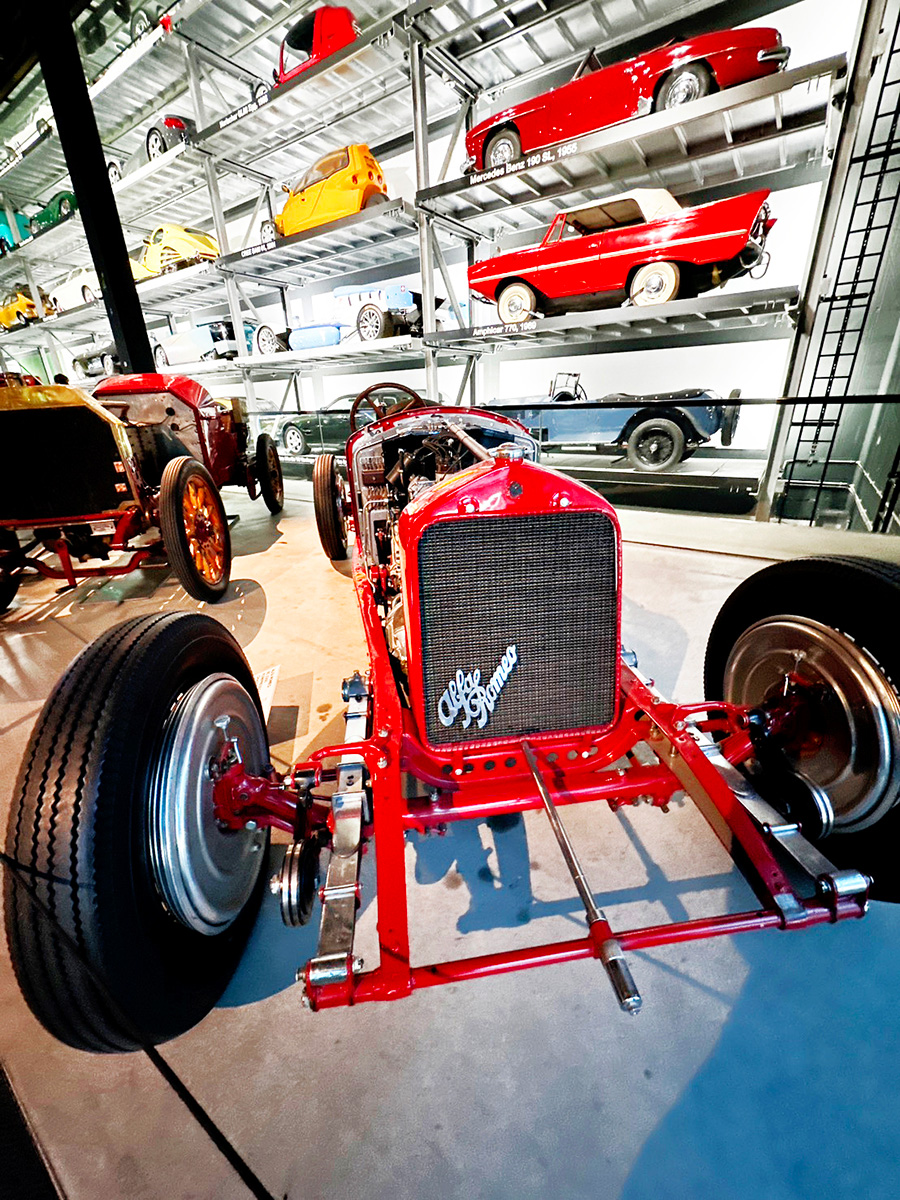
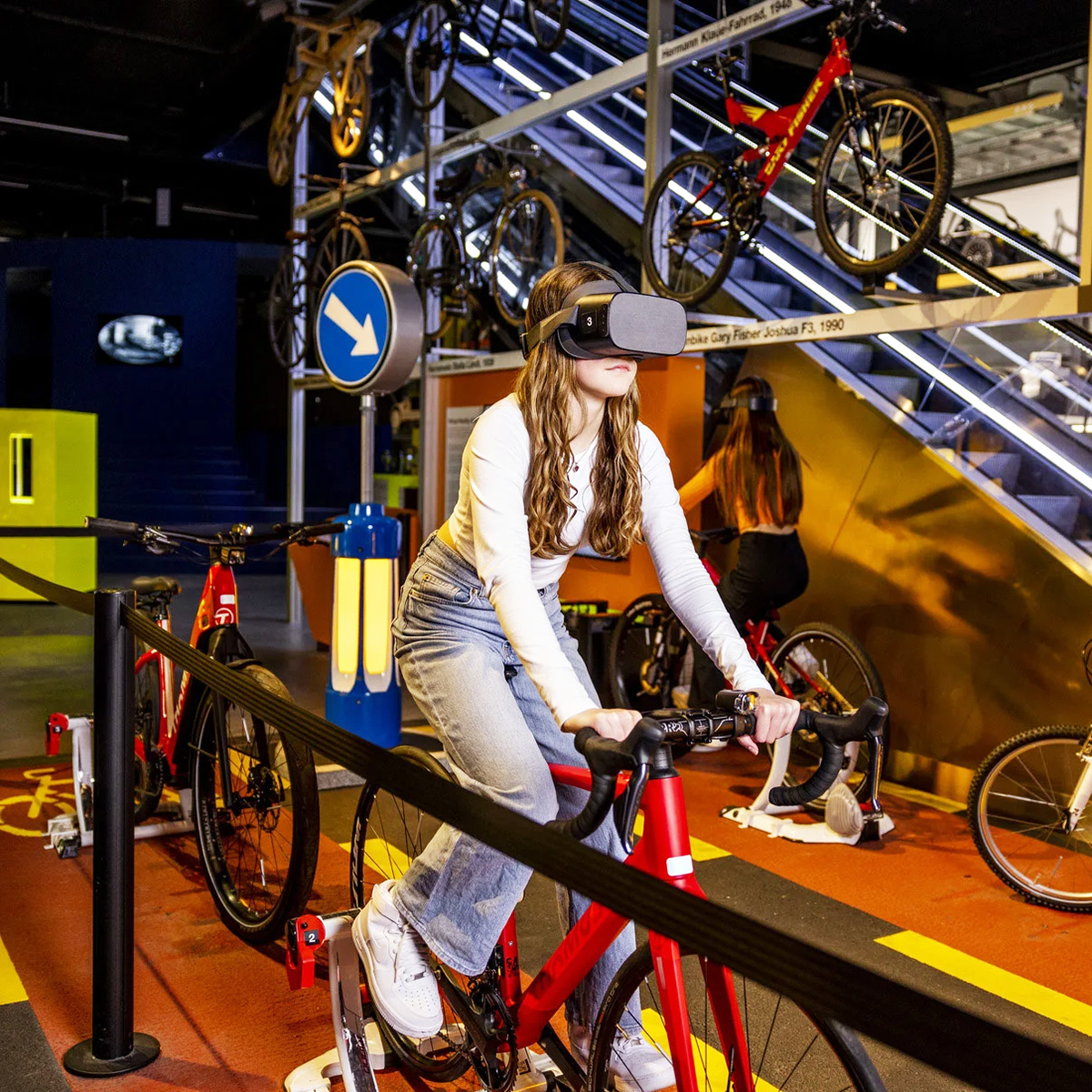
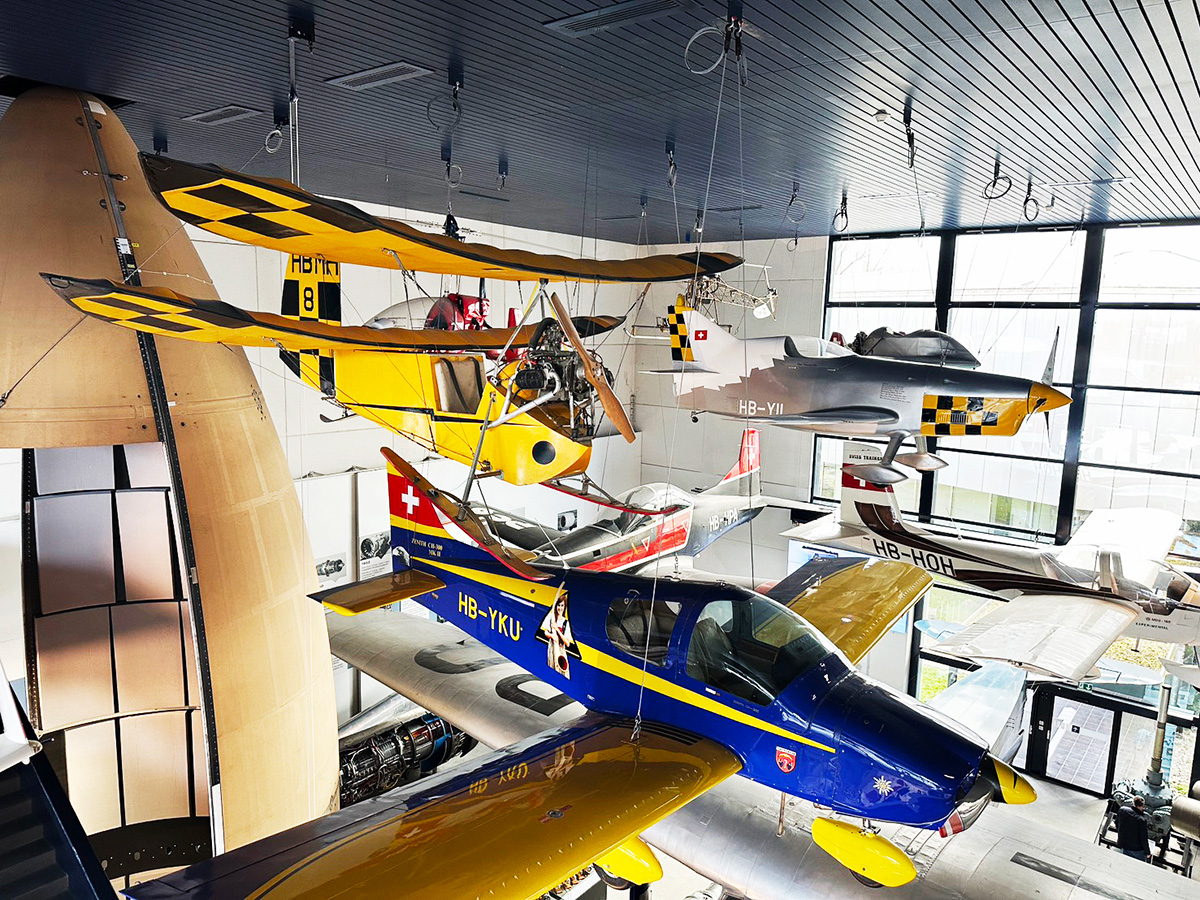
The Swiss Museum of Transport, Switzerland’s most visited museum, which sounds like faint praise until you’re standing next to a full-scale steam locomotive in a room that also contains a space capsule and a working flight simulator, absorbed two hours without effort. The original vehicles alone justify the visit; the interactive exhibits ensure it doesn’t feel archival.
Lunch at BACiO della MAMMA on Pilatusstrasse was the afternoon’s reset: a warm, unhurried Mediterranean room in the middle of Lucerne, the kind of table where the conversation extends past the coffee. The afternoon walk through the old town covered the Jesuit Church on the south bank, its twin onion domes reflected in the Reuss when the water cooperated and the KKL Luzern, Jean Nouvel’s concert hall, one of those buildings that makes the lake it sits beside appear to have arranged itself in deference.
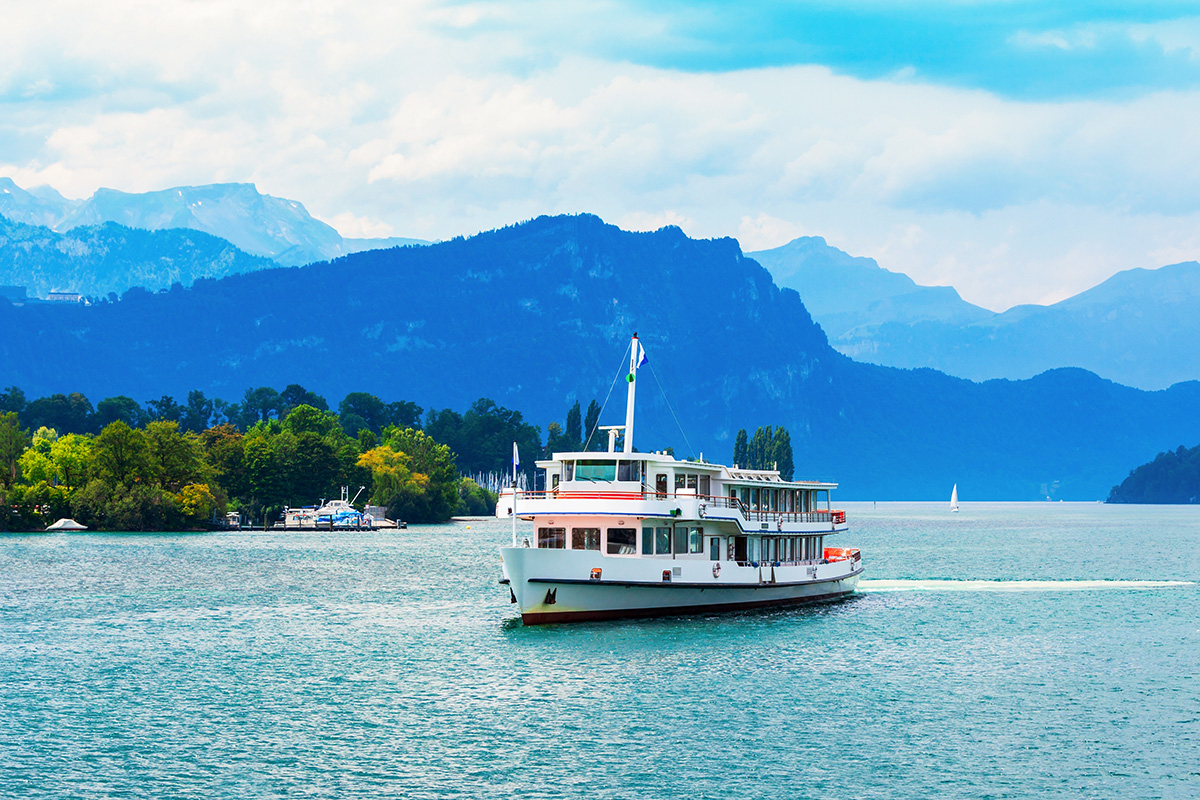
The guided visit to the Water Tower revealed eight centuries of use in sequence: treasury, archive, prison, torture chamber. Lucerne, the charming medieval city, turns out to have a complicated interior life. The leisure hours were given to the Burgenstock Katamaran on Lake Lucerne, a round trip departing hourly, the mountains rearranging themselves at each turn of the bow before dinner at Restaurant Mill’Feuille on the Muhlenplatz, positioned directly on the Reuss where the river accepts the last of the day’s sun.
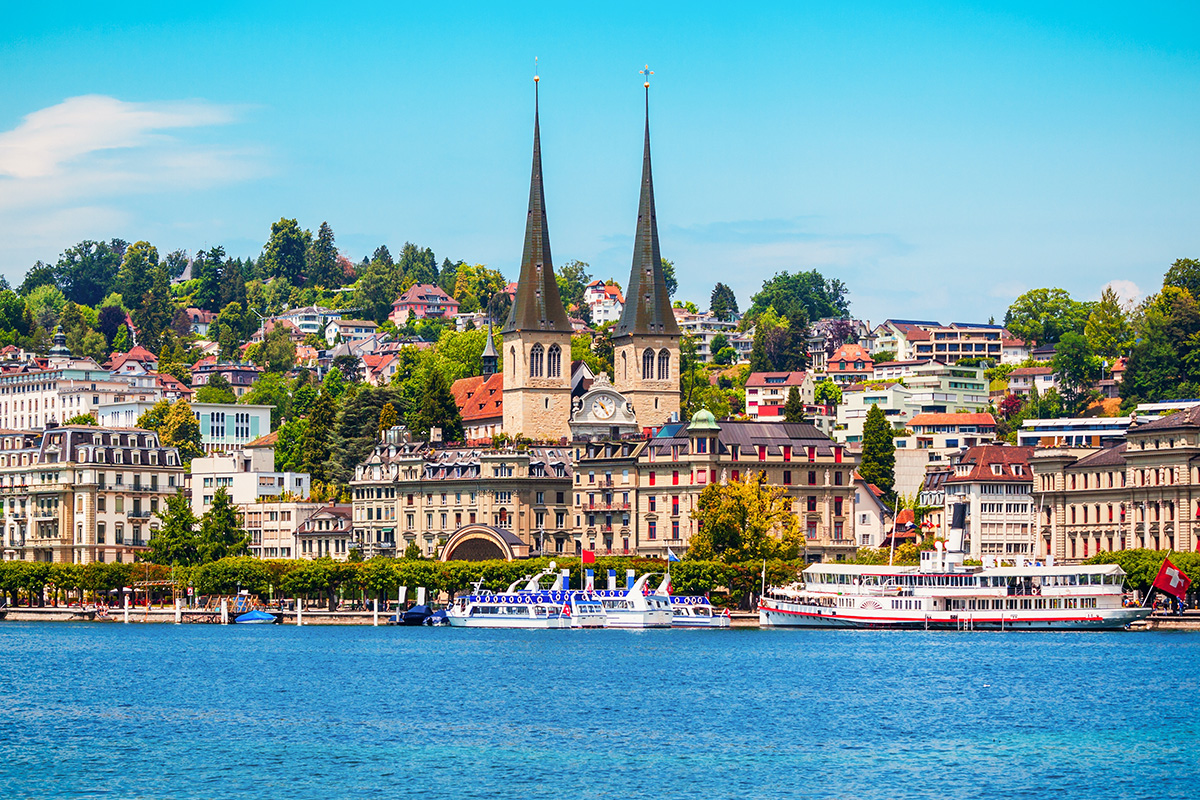
Lucerne Reveals a Subtle Balance of Past and Present, Unfolding Through Scenes That Feel Both Composed and Completely Natural.
Radisson Blü Hotel Lücerne
THE POSITION
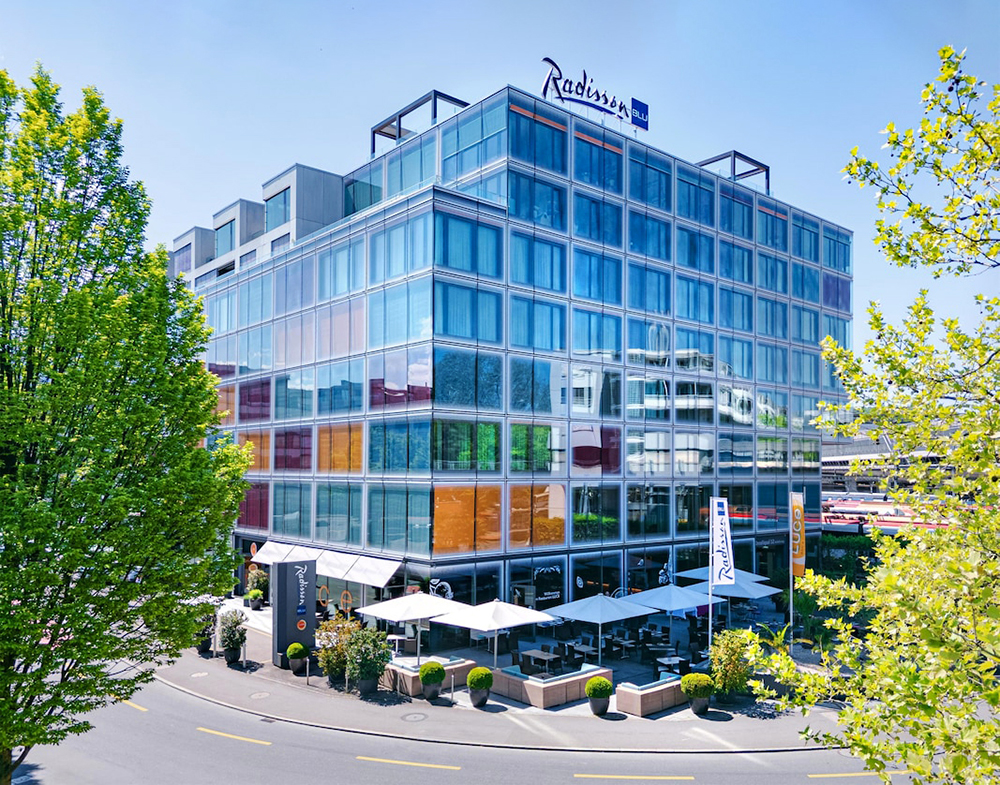
The Radisson Blu Lucerne’s multi-coloured glass façade is visible from the lake promenade, a deliberate statement in a city that tends toward historical sobriety. The hotel occupies the Lakefront Centre, placing it at the precise intersection of lake access, old town walking distance, and rail connectivity that a Lucerne base demands.
ROOMS & ATMOSPHERE
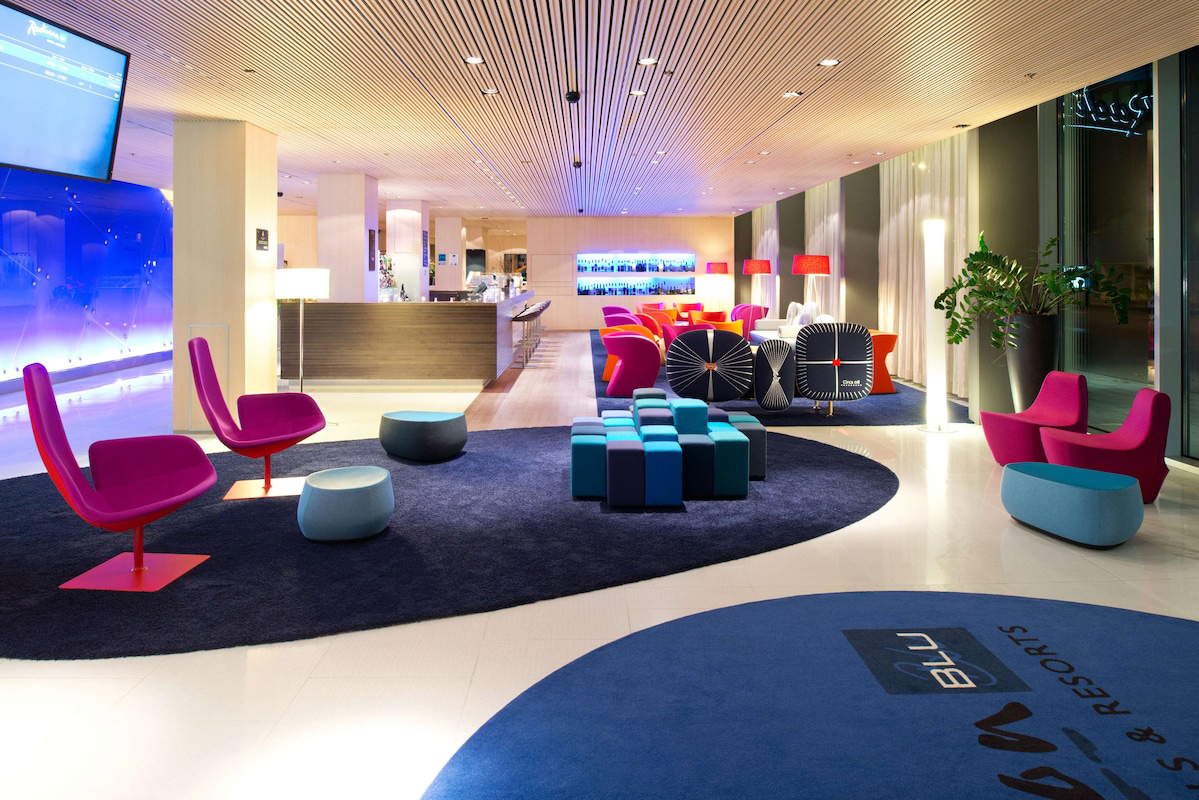
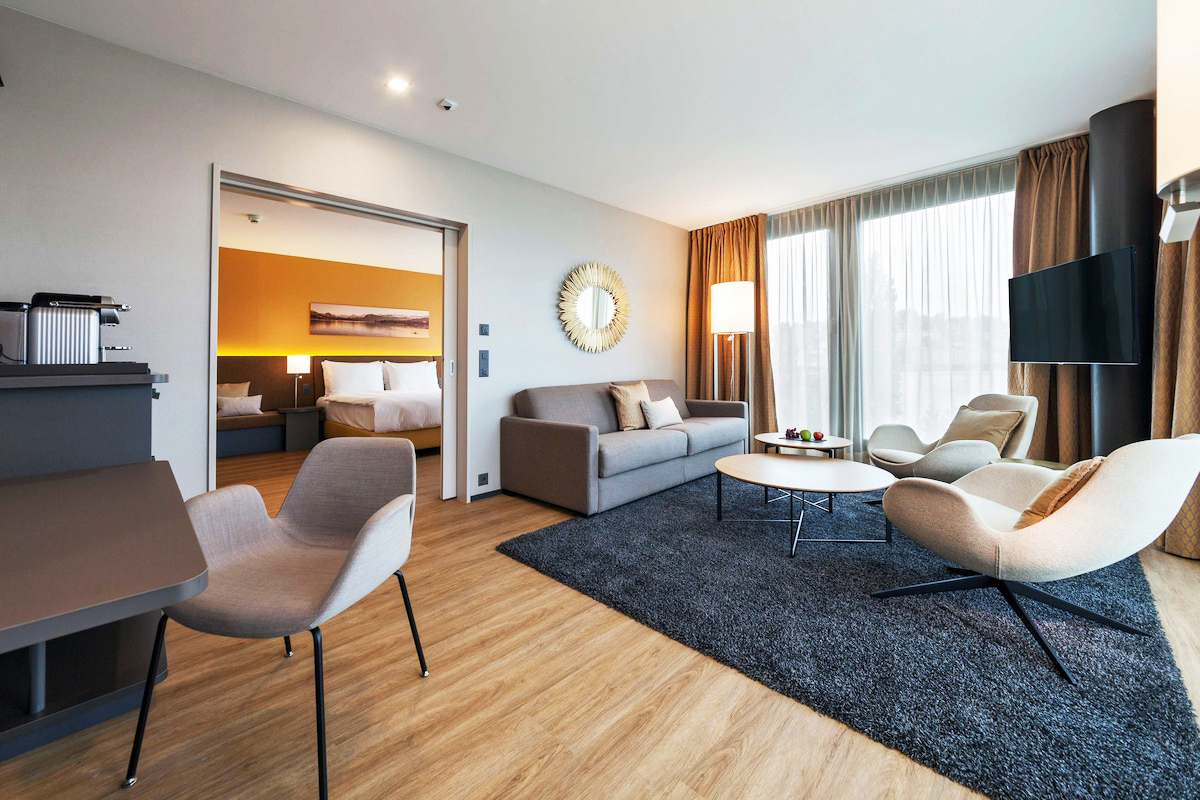
Rooms are generous in proportion, the lake-facing ones offering the Rigi and Pilatus across the water in the morning light. The colour palette is warmer than Radisson Blu properties typically suggest; someone has understood that Lucerne in spring requires an interior warmth that the grey lake light will not always supply. The beds are excellent. The bathrooms are properly sized.
THE PRACTICAL CASE
For a multi-day Lucerne base, the location is close to unbeatable: the Hauptbahnhof is eight minutes on foot, the Kapellbrücke twelve. The concierge team is fluent in the SBB luggage transfer system and handles it without the need for instruction. Breakfast is taken with a lake view if you secure the right table, worth specifying at booking.
Electric Tuk-Tuks, a Castle on a Lake, And Dinner Above the Clouds, Zürich Reconsidered
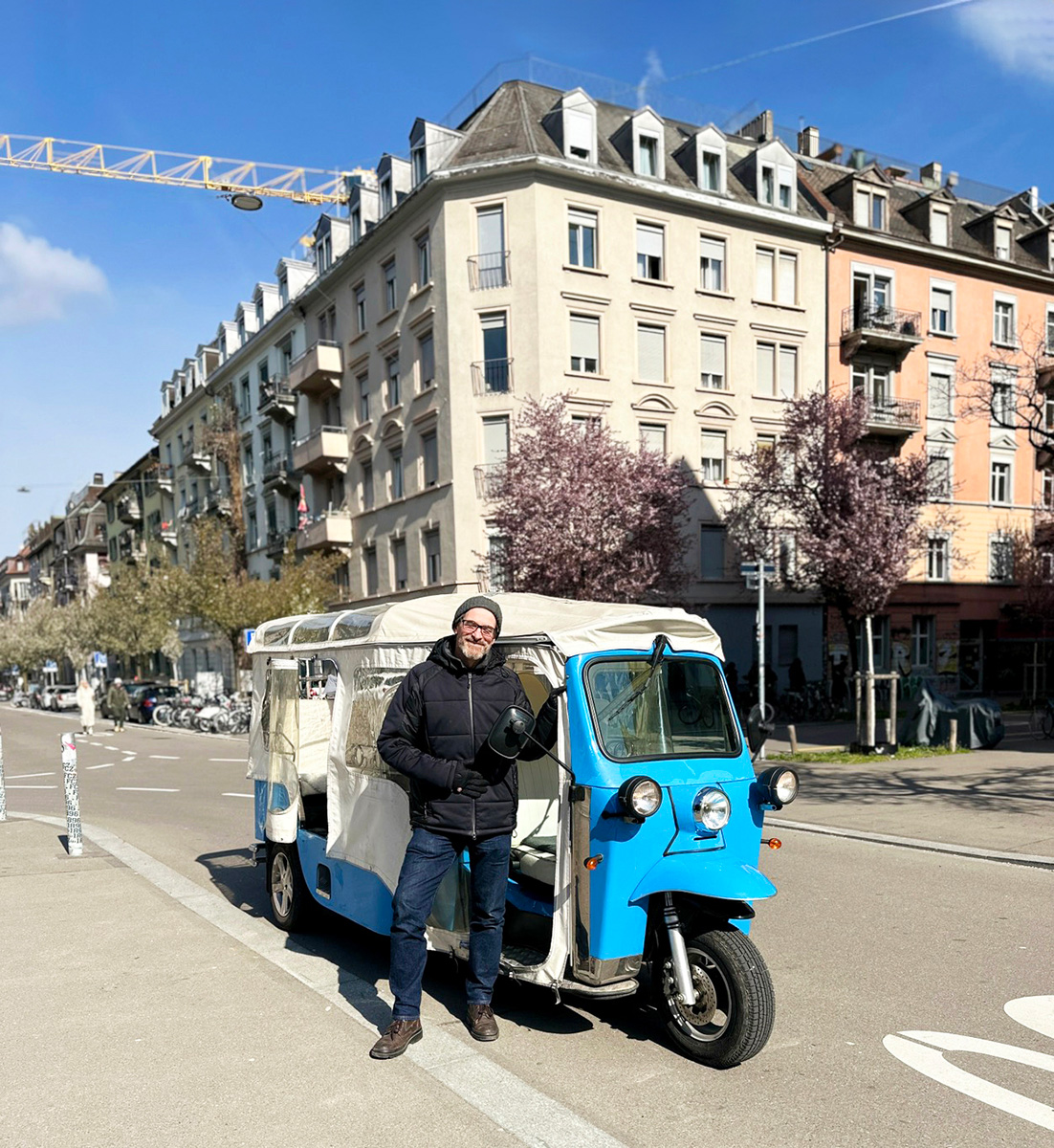
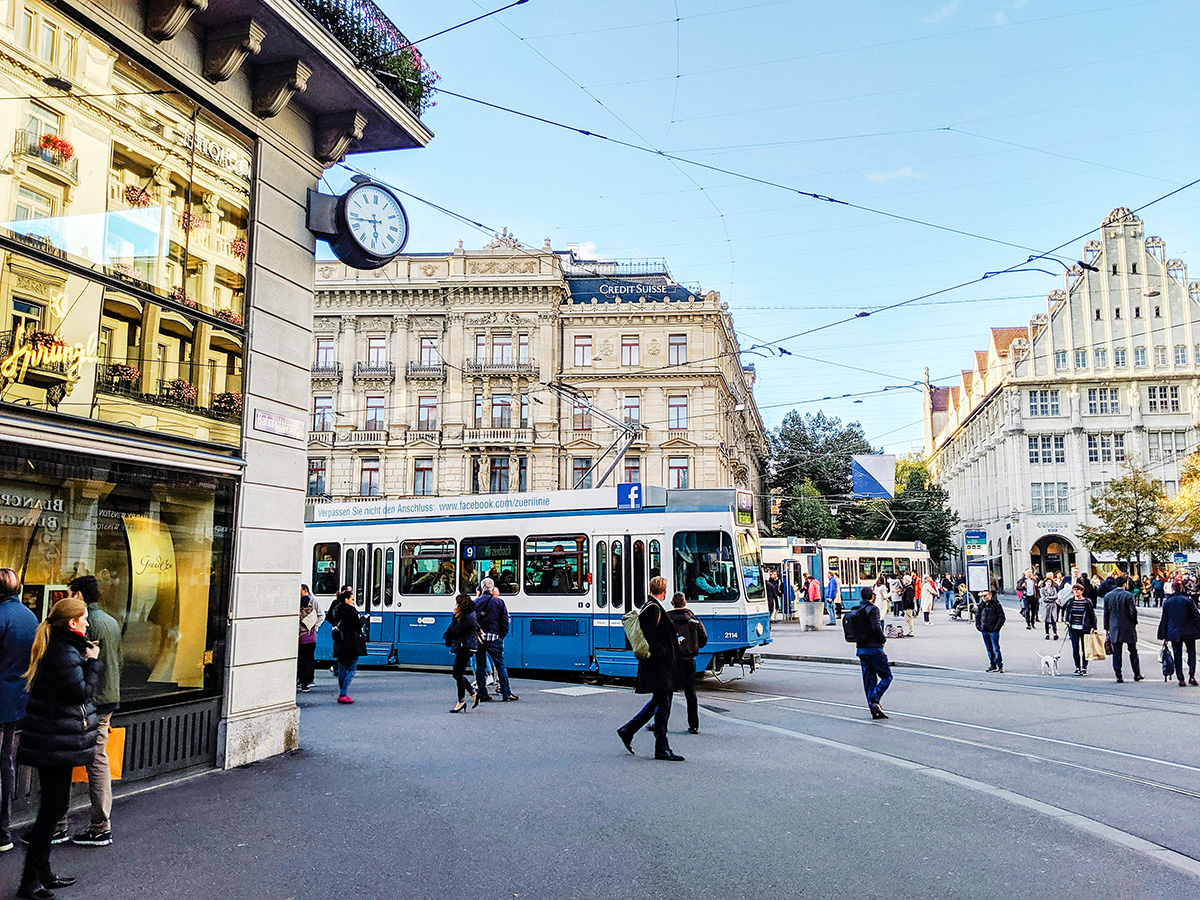
Zurich presented itself differently on the second encounter, more neighbourhood, less institution. The morning’s Surprising Zurich Tour by eTukTuk, departing from Europaallee, circumvented the Bahnhofstrasse entirely in favour of the city’s more interesting kilometres. Langstrasse, Kreis 4, the gallery district, the streets behind the opera house where Zurich’s working life happens without the participation of tourists, the electric three-wheelers navigated all of it with a manoeuvrability that foot travel couldn’t match. This is Zurich off the standard itinerary, and it is considerably more interesting.
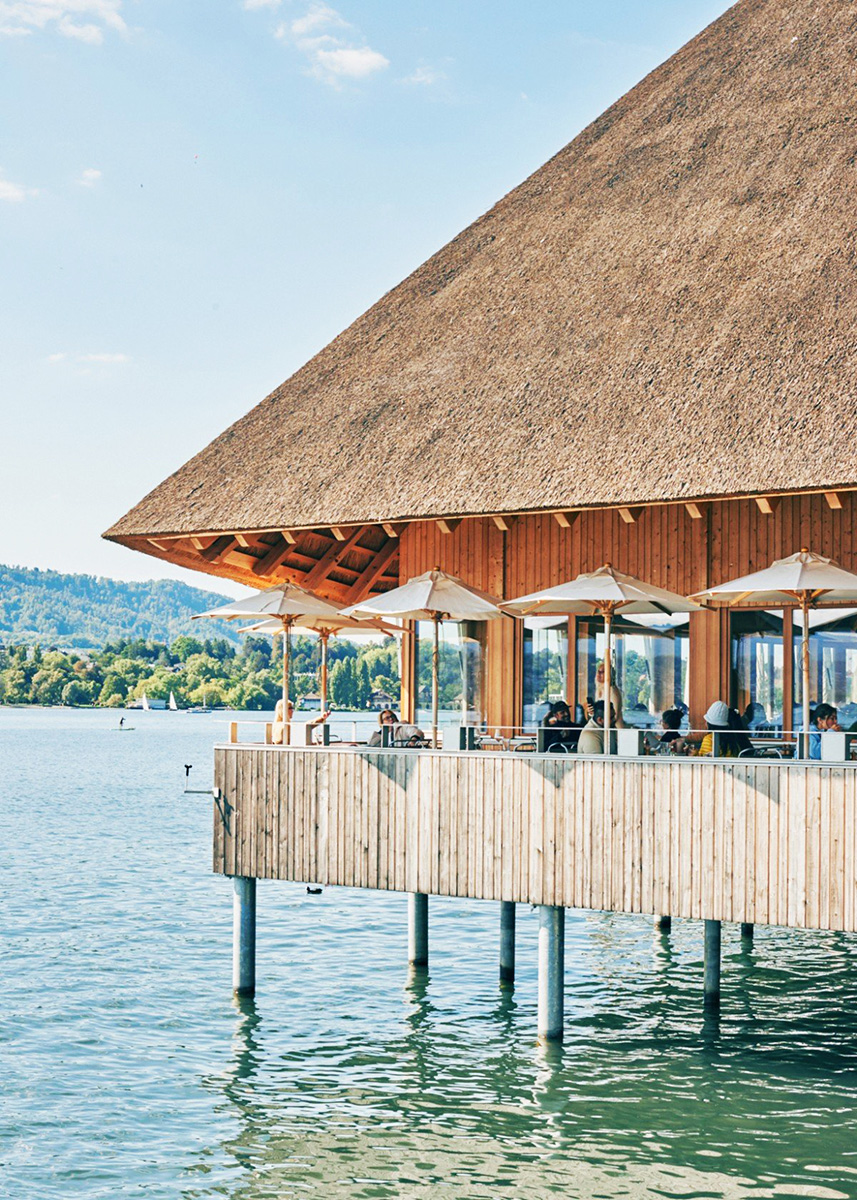
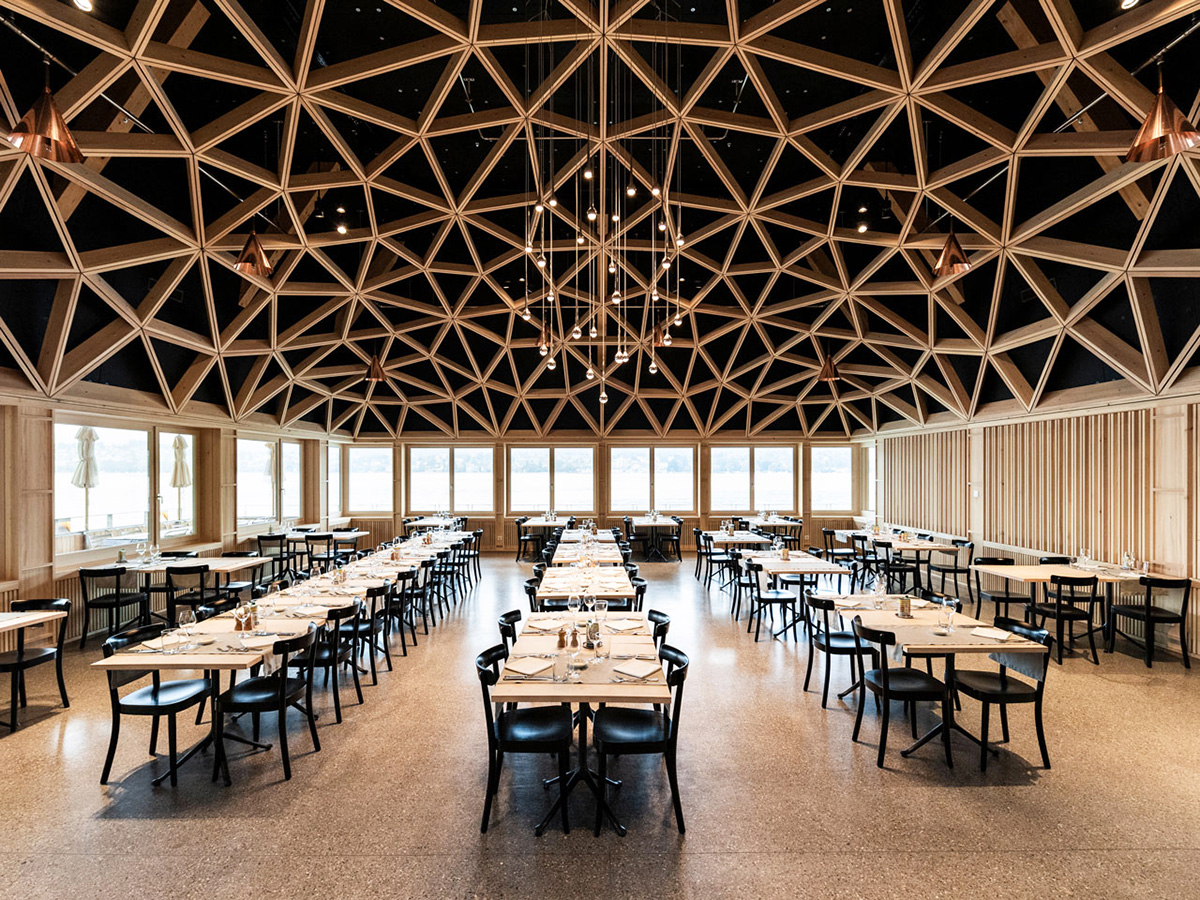
Lunch was at Fischerstube Zurihorn on Bellerivestrasse, a terrace extending directly over Lake Zurich, the water at eye level, the far shore in the clear March haze.
The afternoon transferred to Rapperswil, forty minutes along the eastern shore of the lake, for the classic city tour: the medieval old town, the castle courtyard, and the tower from which the lake spreads in both directions and the pre-Alps define the southern horizon.
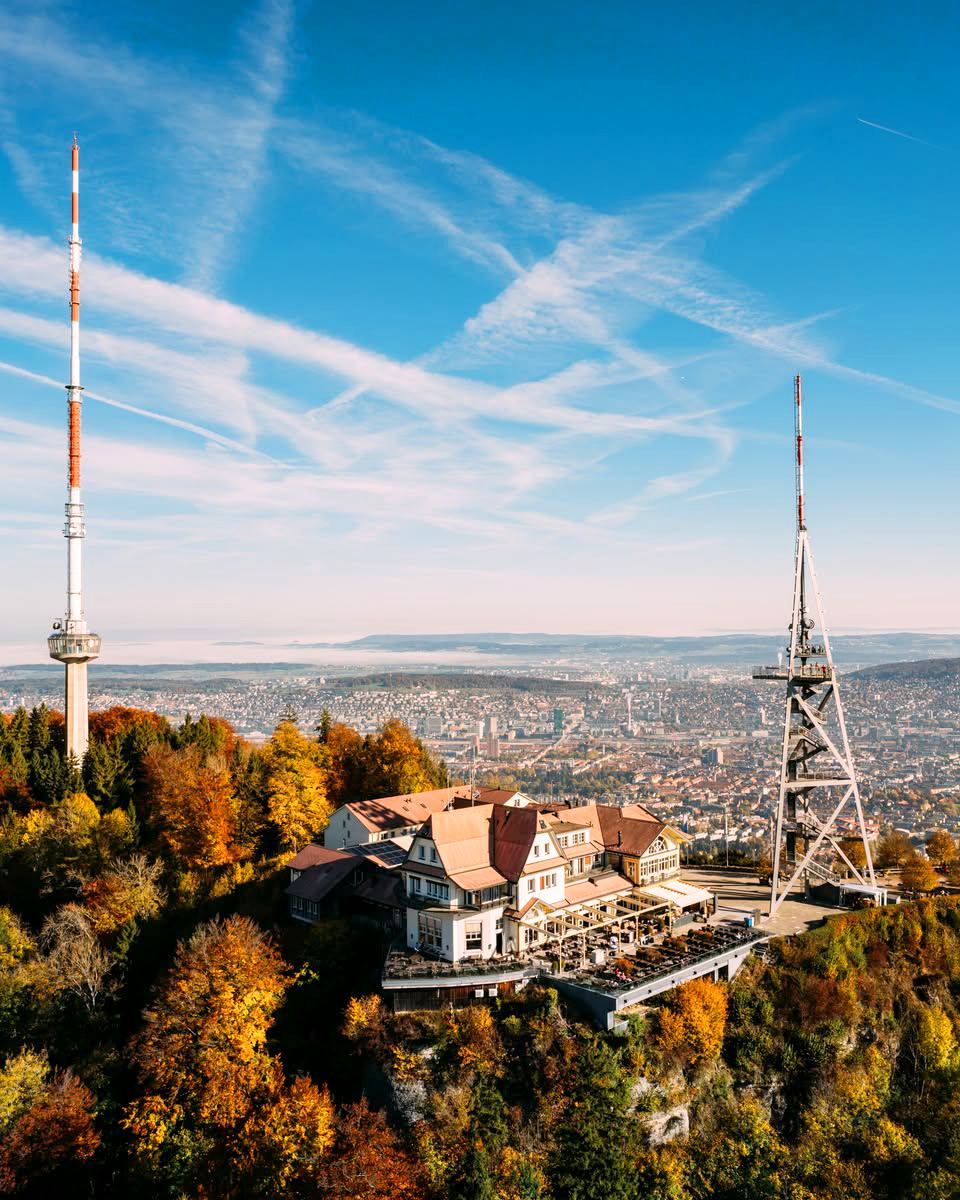
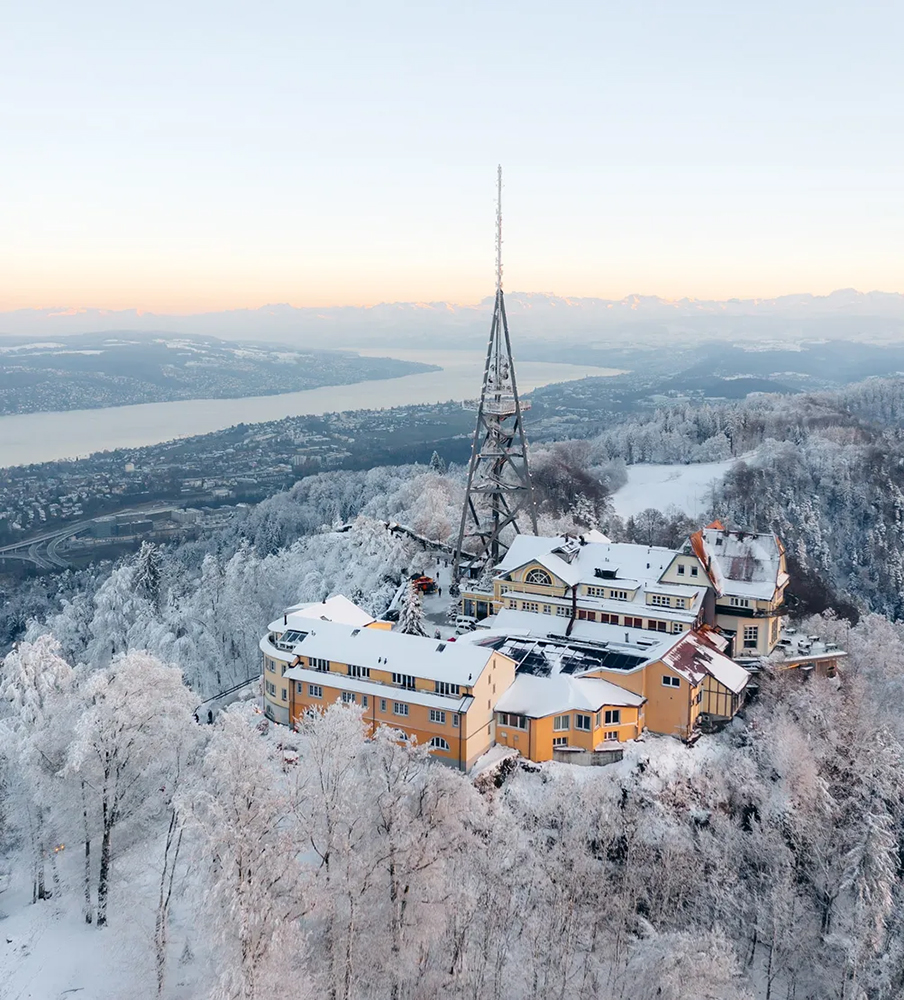
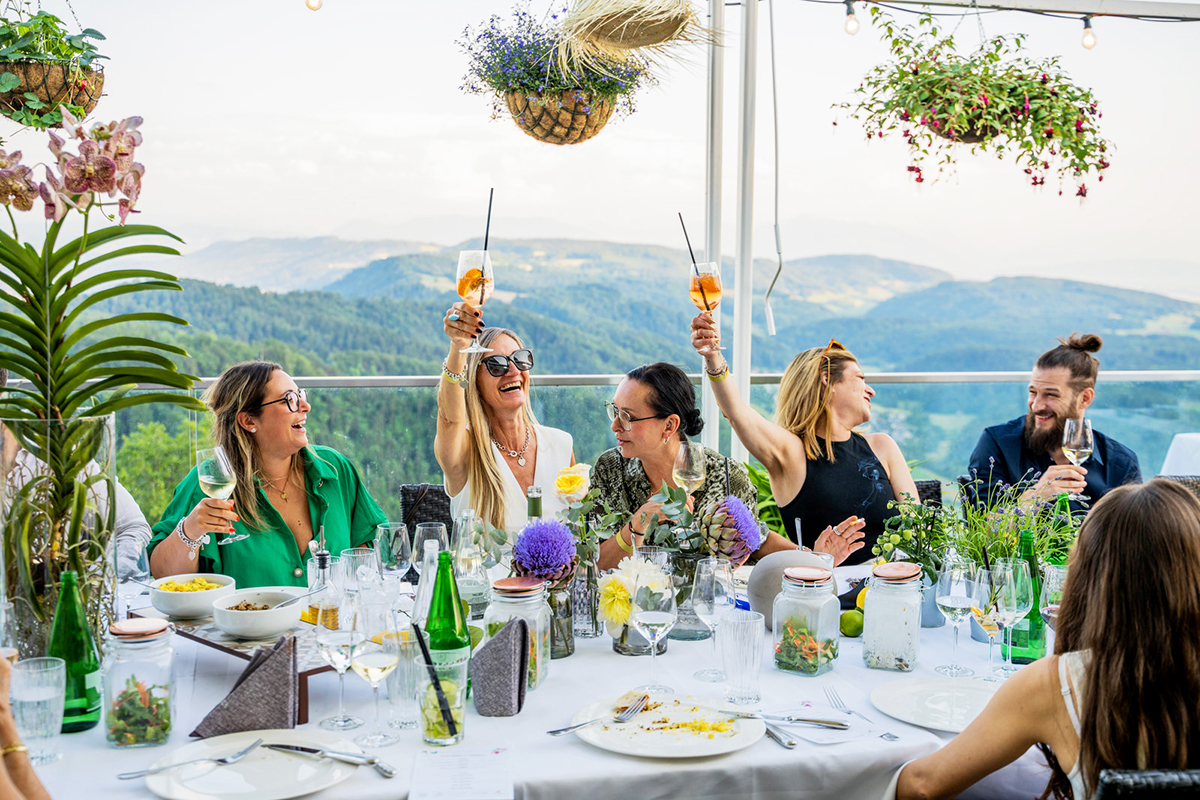
Dinner ascended to Uetliberg, Zurich’s own mountain at 870 metres, where Uto Kulm restaurant positioned the evening above the cloud inversion that had settled over the city. Zurich’s lights visible through breaks in the grey below; the Alps extending the southern horizon at eye level. It is one of those dining situations where the architecture of the setting does most of the work.
DAY FIVE - ZÜRICH
Tempered by Chocolate: A Sunday in the City of Lakes
FROM THE WORLD'S TALLEST CHOCOLATE FOUNTAIN TO A GOLDEN-HOUR LAKE CROSSING, ZÜRICH AT ITS MOST GENEROUS.
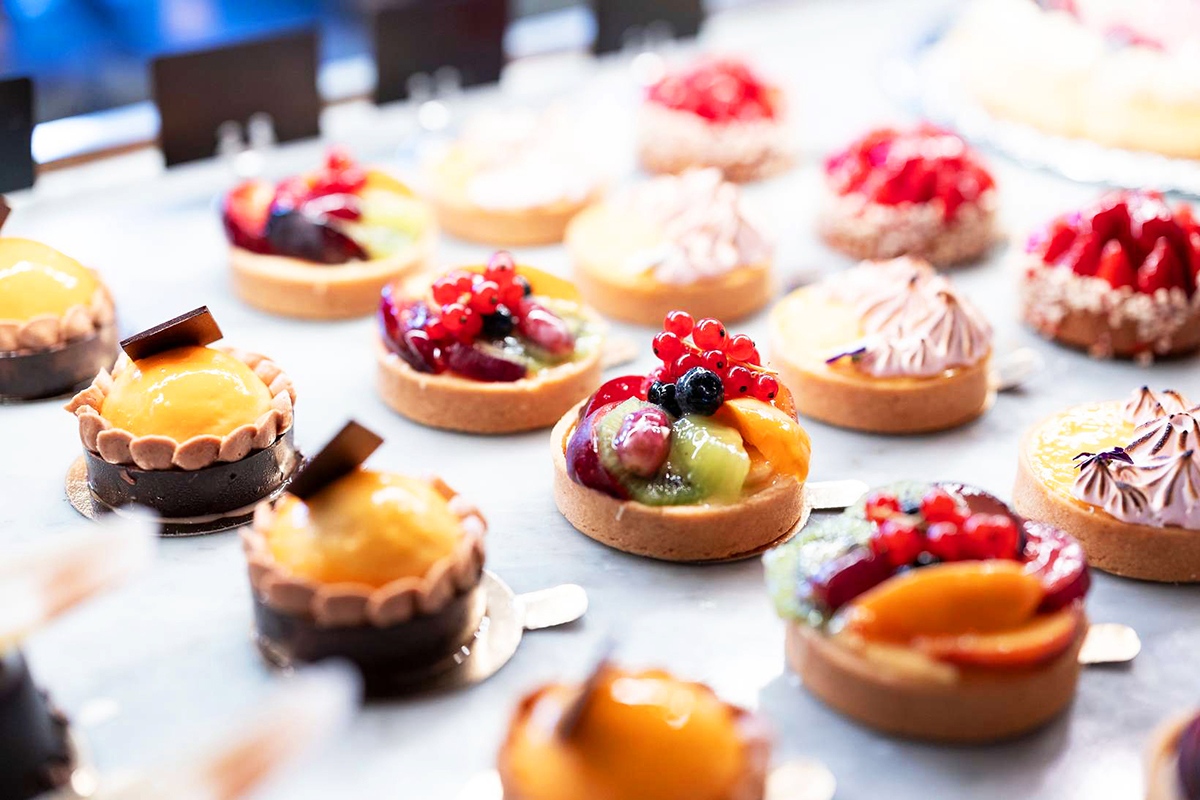
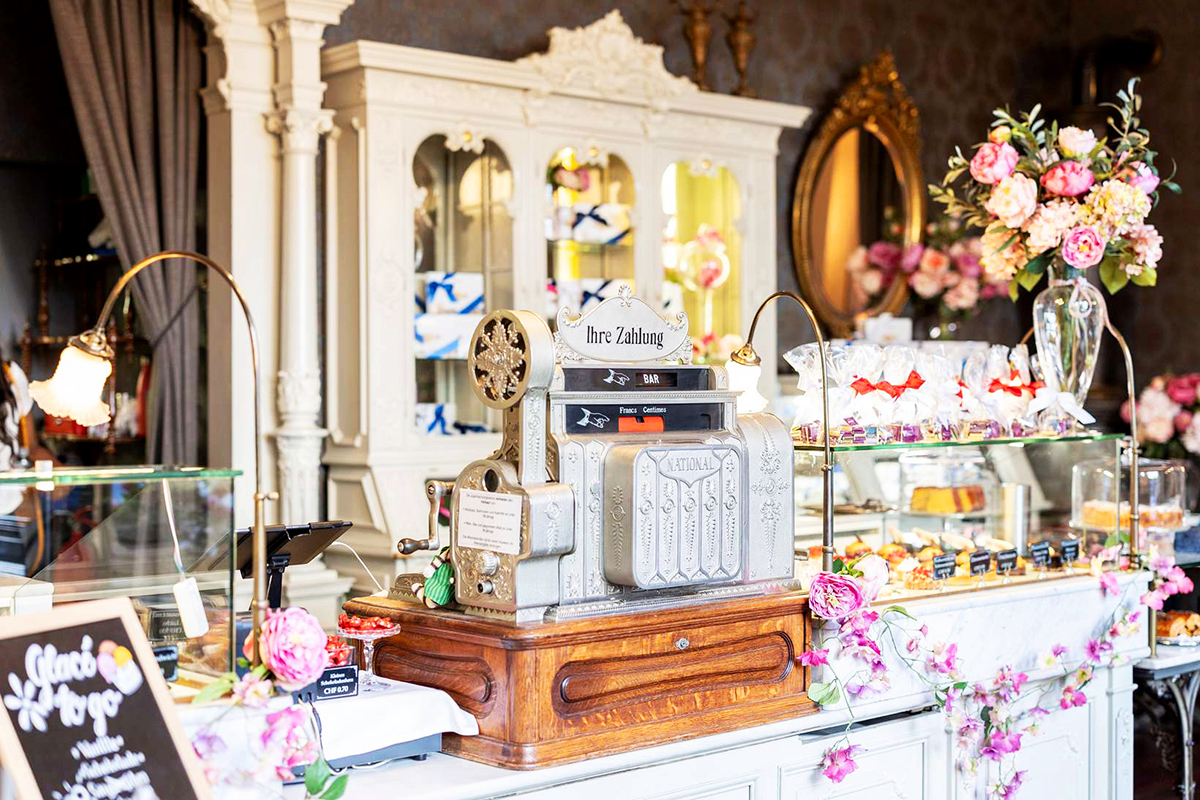
Sunday in Zurich has a specific quality of quiet, the Bahnhofstrasse subdued, the lake wide and uncrowded, the old town releasing its architecture to the morning light without competition. Lunch at Cafe & Conditorei 1842 in the Rathaus quarter confirmed that Switzerland’ relationship with pastry is not casual. It is an institution with centuries of accumulated authority, and the Sunday menu arrives with the conviction of a place that has been doing this since before refrigeration.
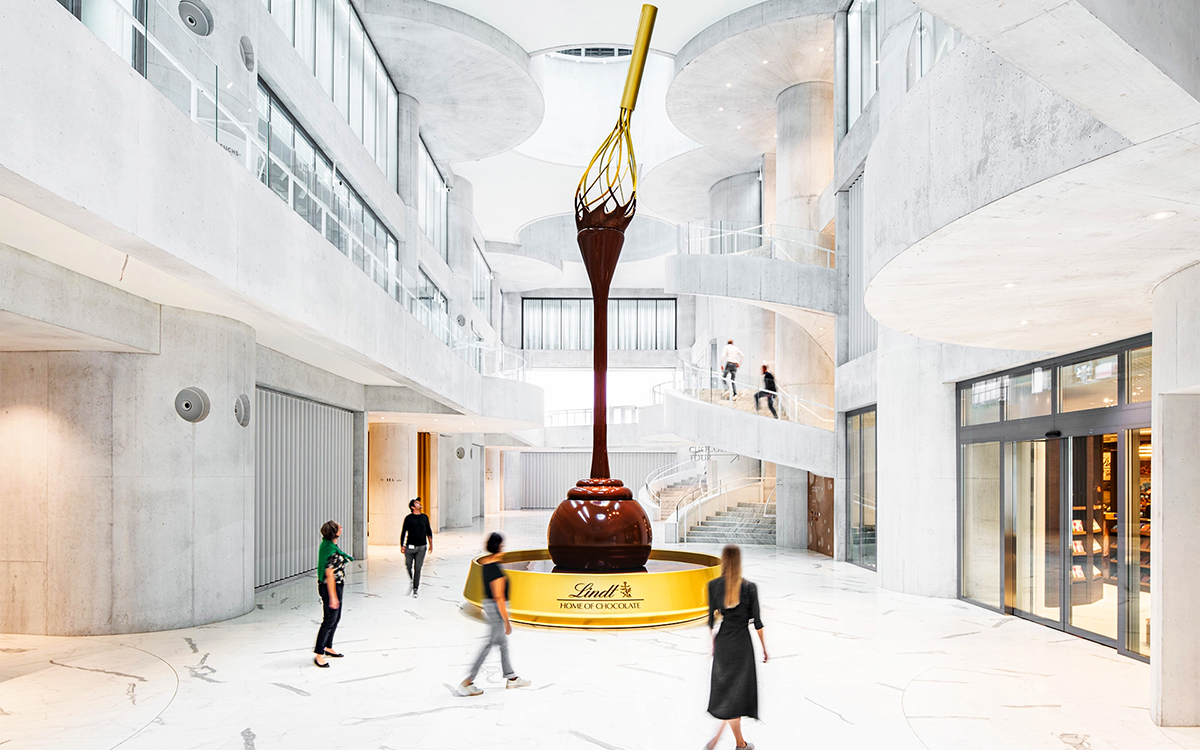
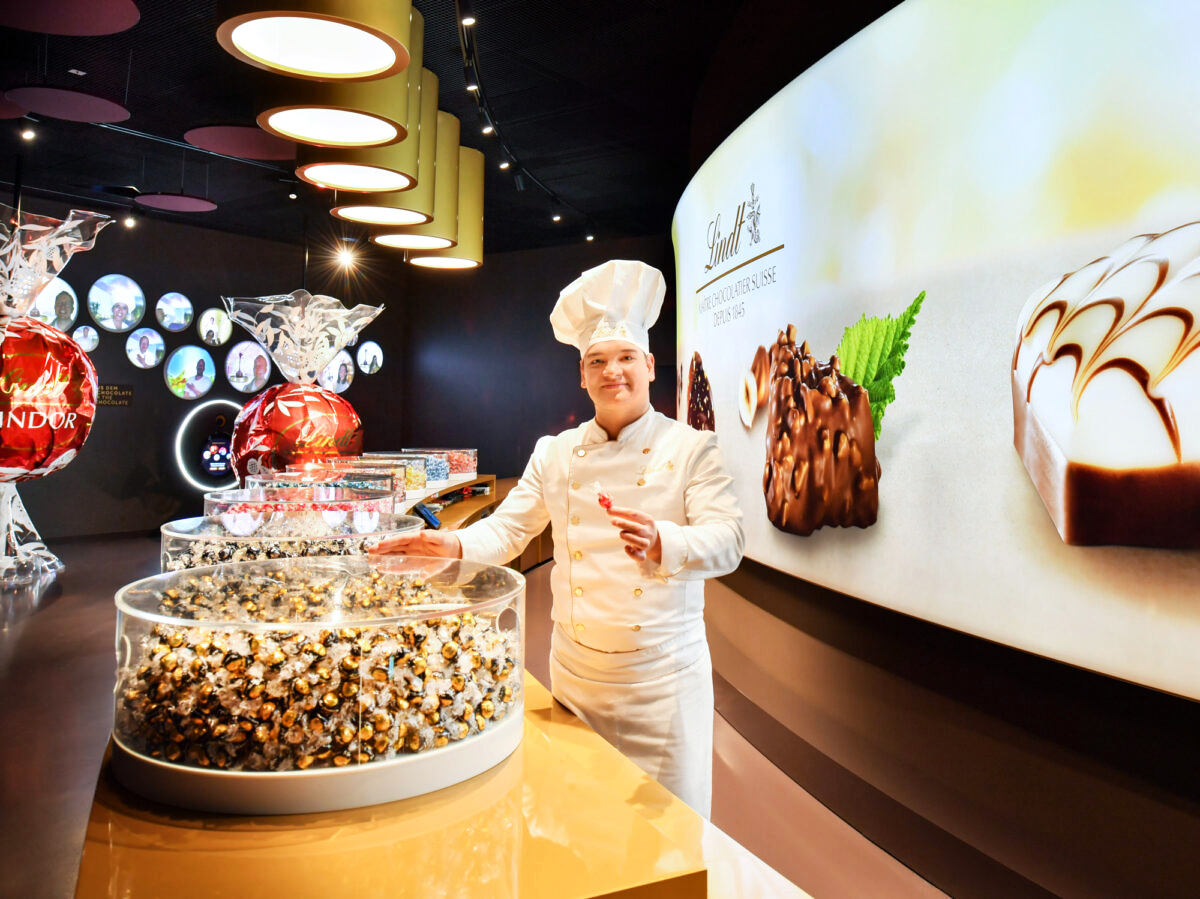
The afternoon took an unexpected direction: the Lindt Home of Chocolate at Kilchberg on the lake’s southern shore, a monument to single-minded ambition. The Easter chocolate workshop is not, it turns out, a tourist exercise. The maitres chocolatiers treat the session with the seriousness of a craft master class, and the resulting Easter creations are the work of hands that have just been taught something. The world’s tallest chocolate fountain, nine metres of continuously flowing dark chocolate in the museum’s central hall presents itself with the selfassurance of an object that settled its own significance long ago.
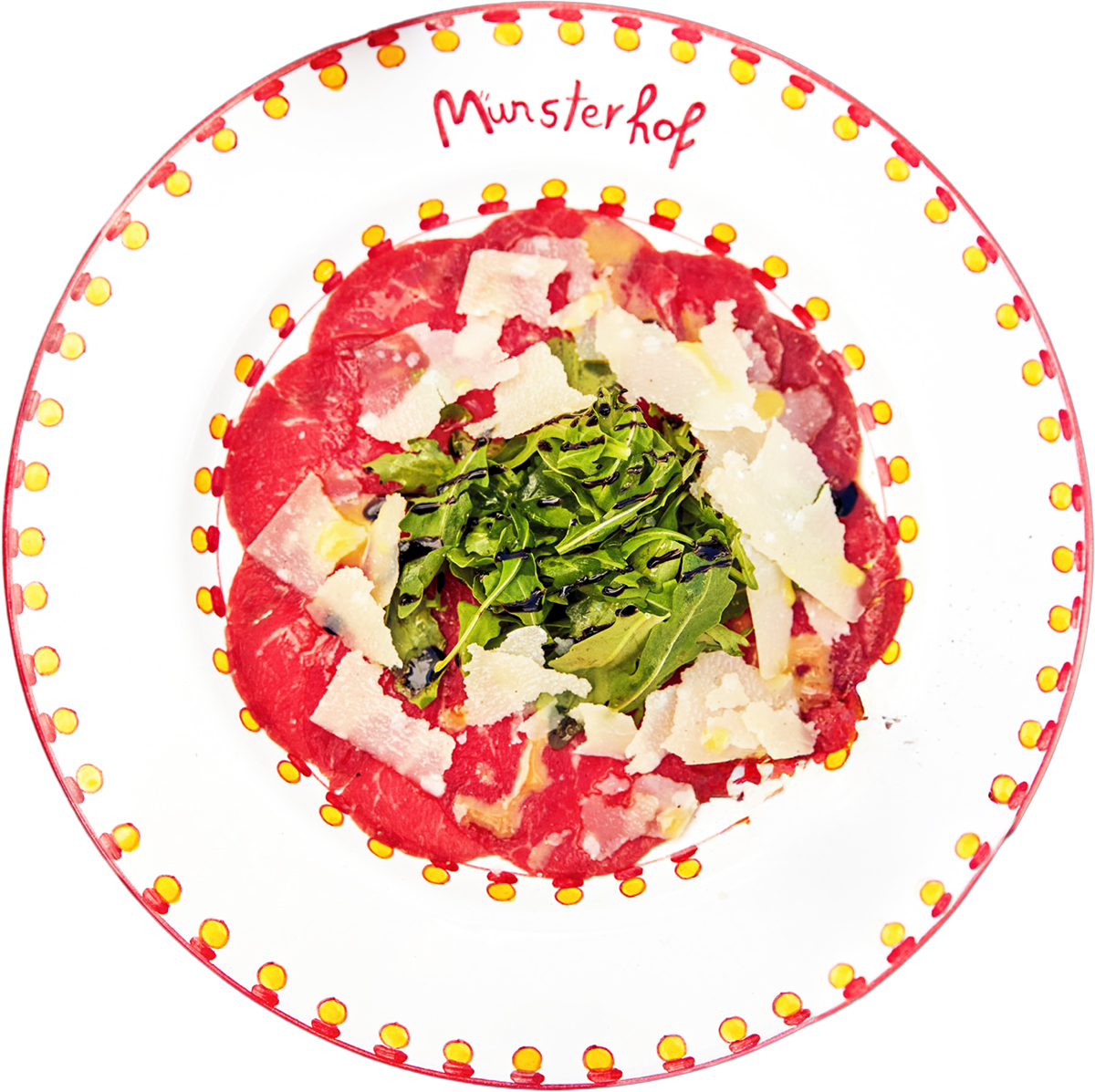
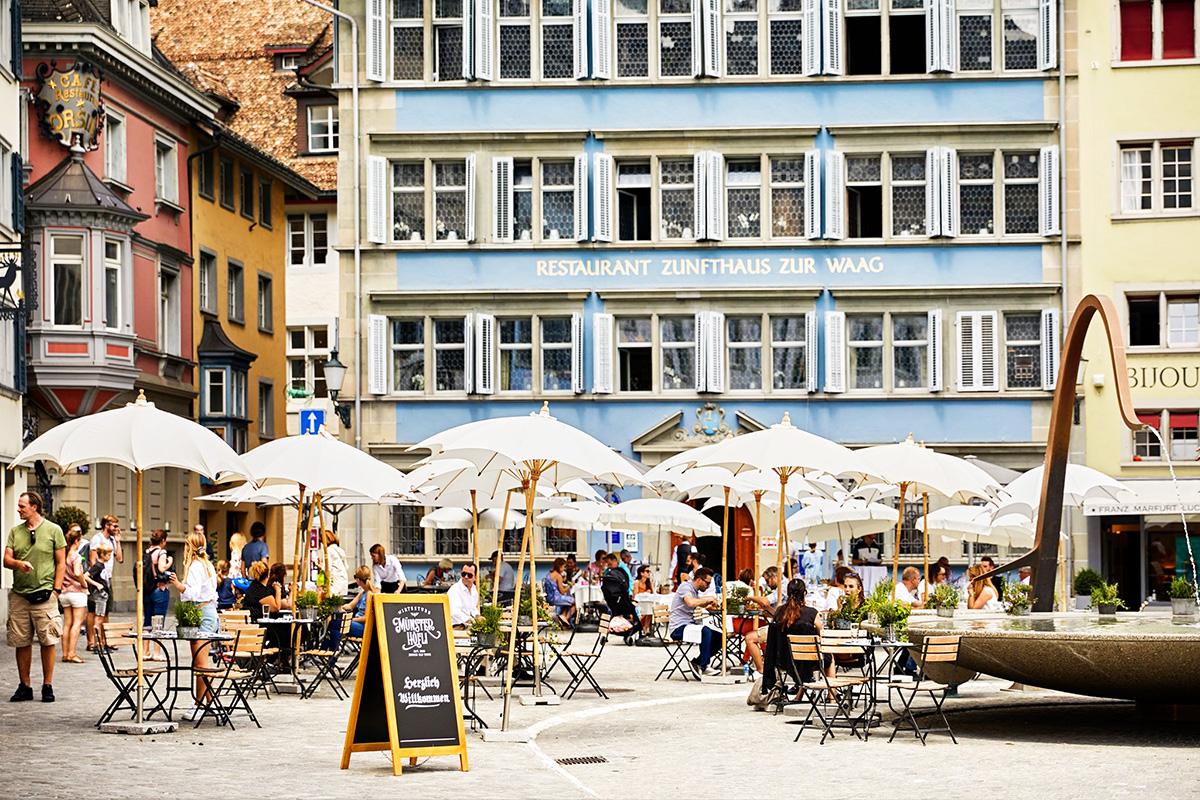
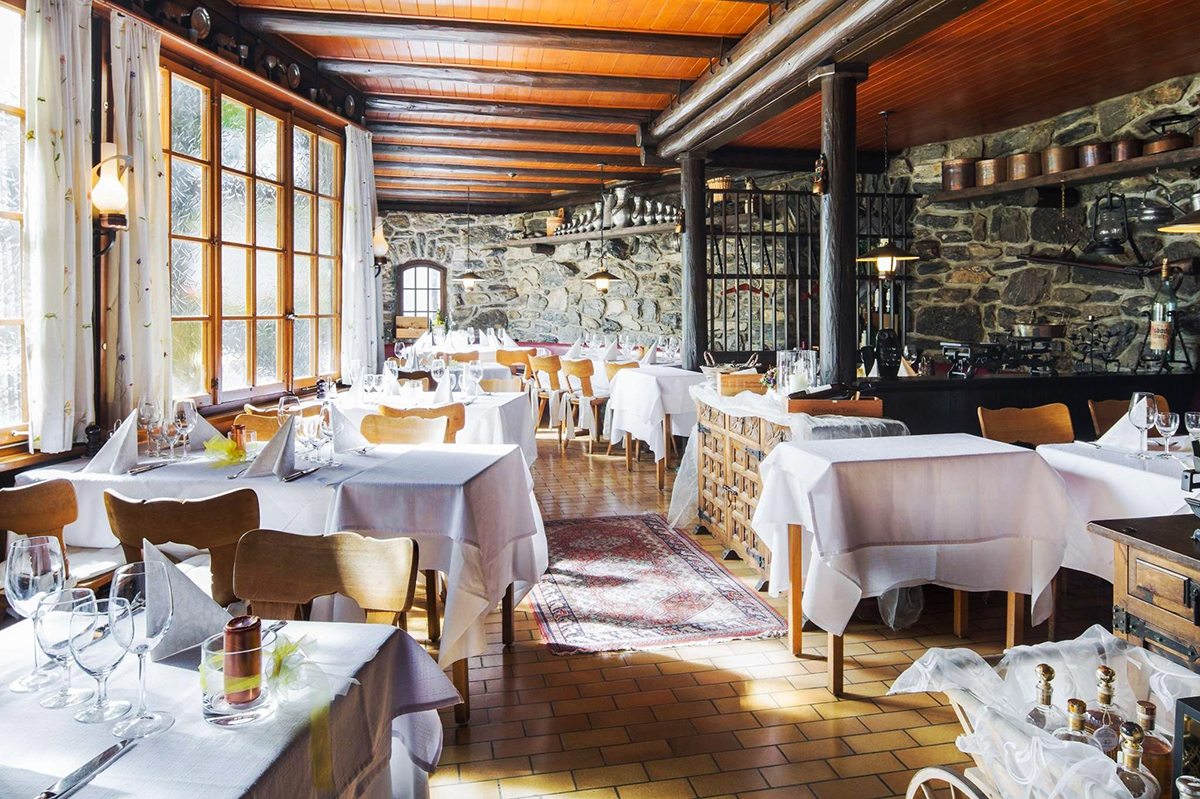
The return to Zurich by lake boat was an unexpected grace note: the city reassembling on the north shore across twenty-three minutes of golden-hour water, the Grossmunster towers picking up the light first, the old town following in sequence. The evening was spent at Restaurant Munsterhofli in the old town, a wine list of unusual depth, a room with the acoustics of centuries of use, the Munsterplatz visible through the windows in the early April dark.
“The city reassembled on the north shore across twenty-three minutes of golden-hour water, the Grossmunster towers picking up the light first.”
DAY SIX - GRINDELWALD & WENGEN
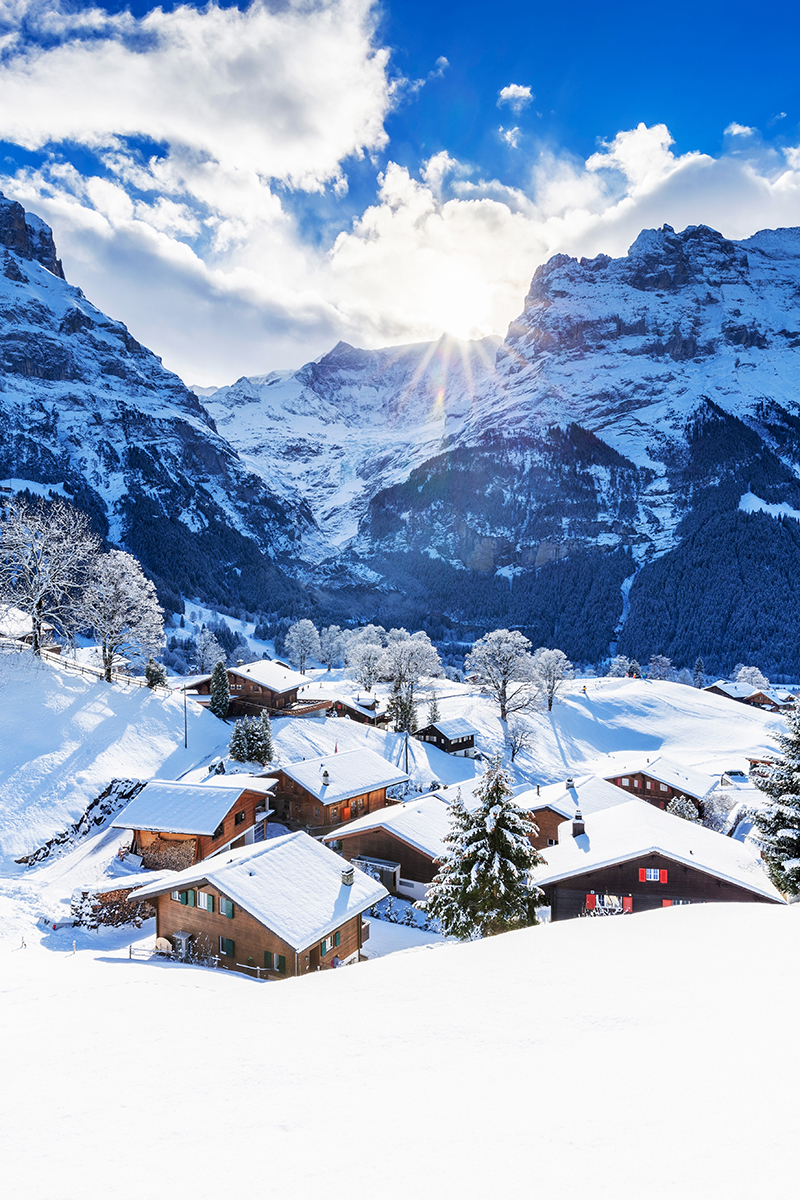
Under the Eiger's Shadow: Arrival in the Bernese Oberland
A Train Journey That Becomes an Argument. A Village At 1,274 Metres That Has Been Watching the Jungfrau for 130 Years.
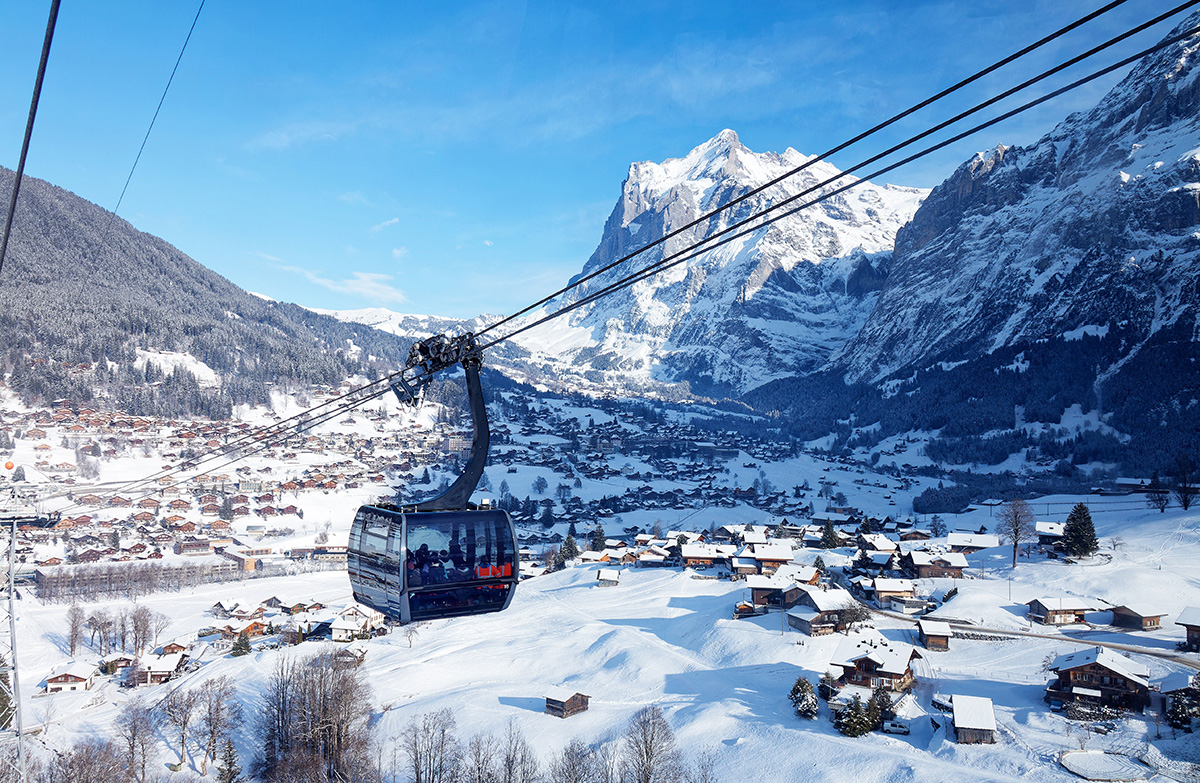
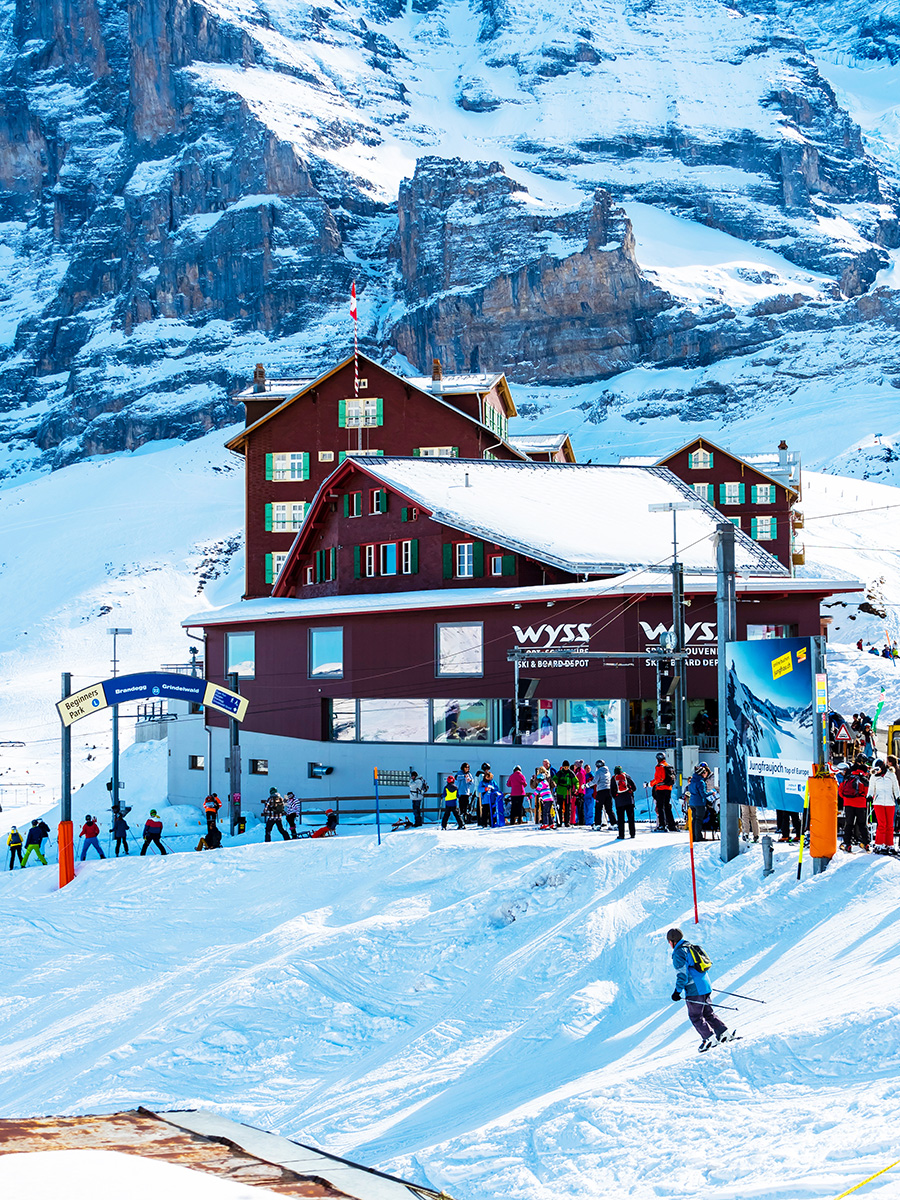
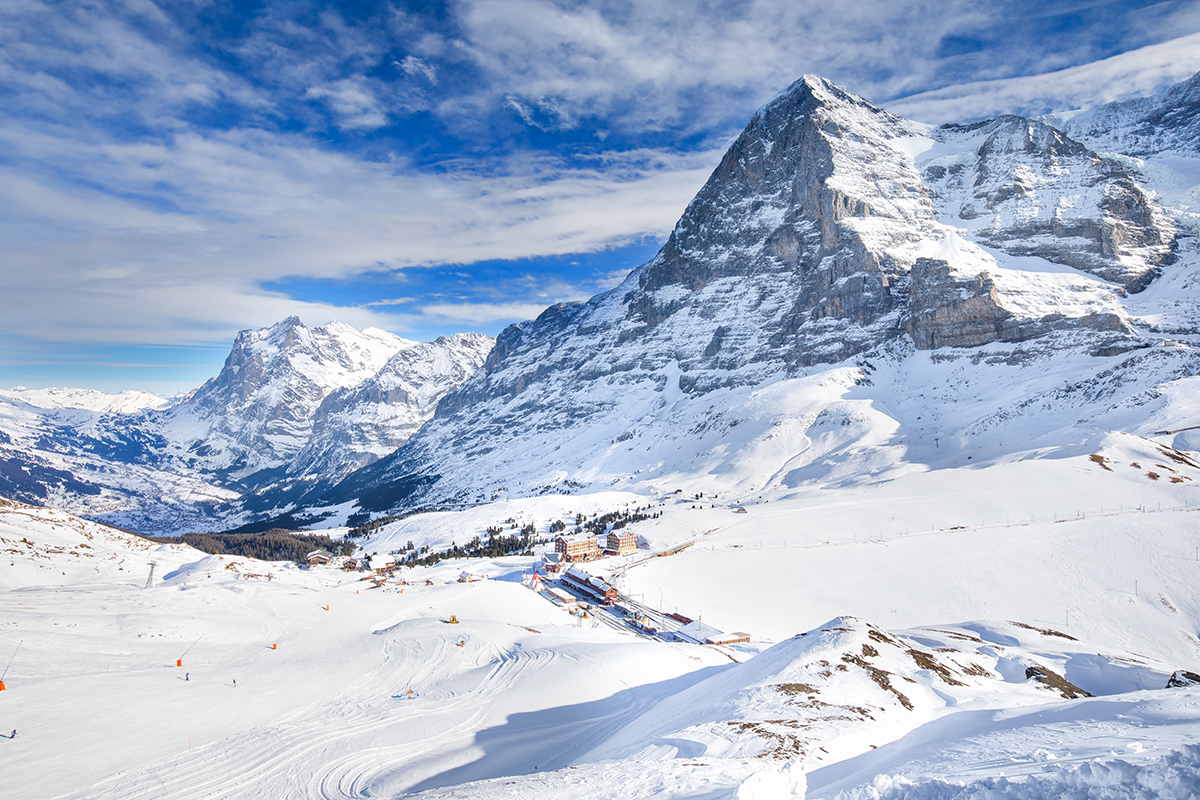
The train from Zurich to Grindelwald, via Bern and Interlaken Ost, is not transport; it is argument. The Alps assert themselves progressively from the south as the train clears the Swiss Plateau and enters the Bernese Oberland, the peaks accumulating until the valley narrows to a corridor and Grindelwald appears at the end of it with the north face of the Eiger as the terminal wall.
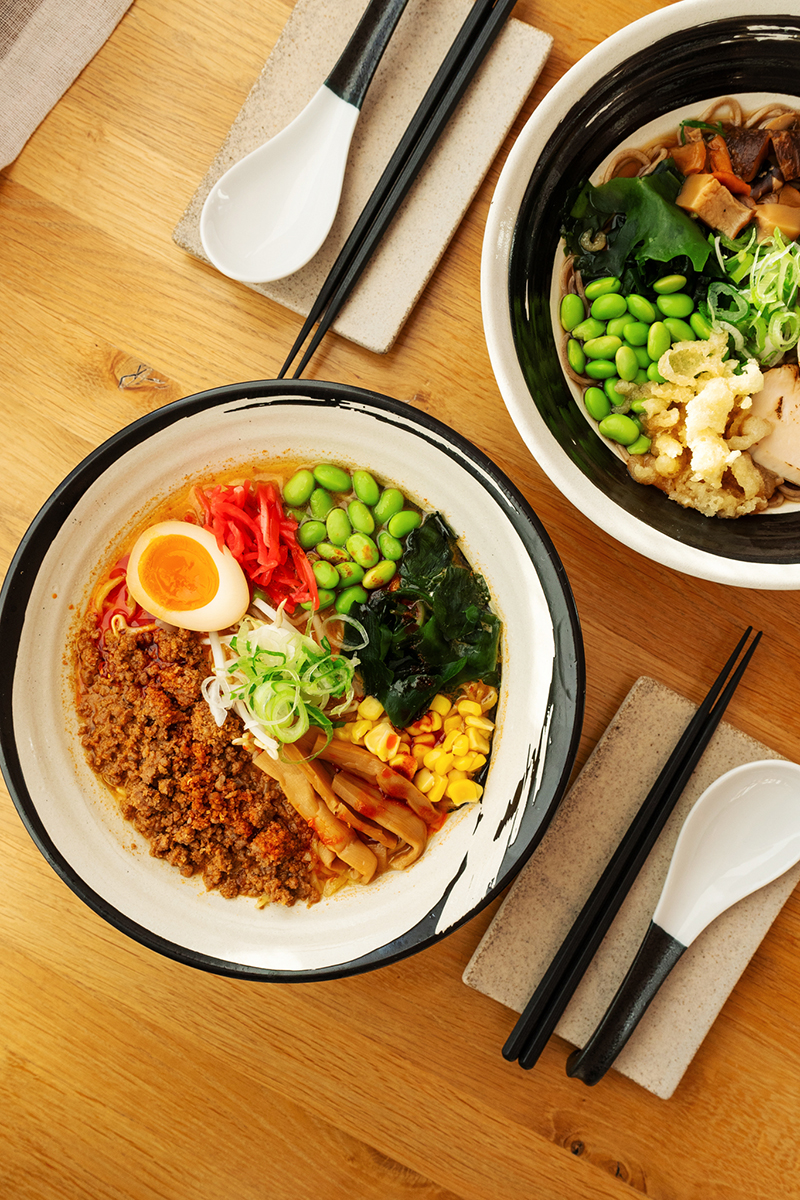
Lunch was at the newly opened Umami Works on the ground floor of Grindellodge, Obere Gletscherstrasse 41, Japanese flavours, regionally sourced ingredients, a mountain-view terrace delivering the Eiger North Face as the backdrop to every course. There is something specifically surreal about eating Japanese-influenced food at 1,034 metres with 1,800 metres of vertical limestone and ice framing the view.
The afternoon traced Grindelwald’s main street before the cable car from Grindelwald Terminal to Mannlichen. The terminal itself, ultra-modern, its wooden architecture referencing the alpine vernacular without pastiche is worth the stop. From Mannlichen at 2,343 metres, the Royal Walk, a 25-minute ridge hike to the summit, delivered the full Bernese Oberland spread: Eiger, Monch, Jungfrau, Breithorn, Wetterhorn, and beyond them Lake Thun in the blue distance. The snow on the ridge was not the soft, yielding crust of a warming spring — it was deep, consolidated winter snowpack, the kind that arrives with overnight storms and shows no interest in leaving. The silence was total.
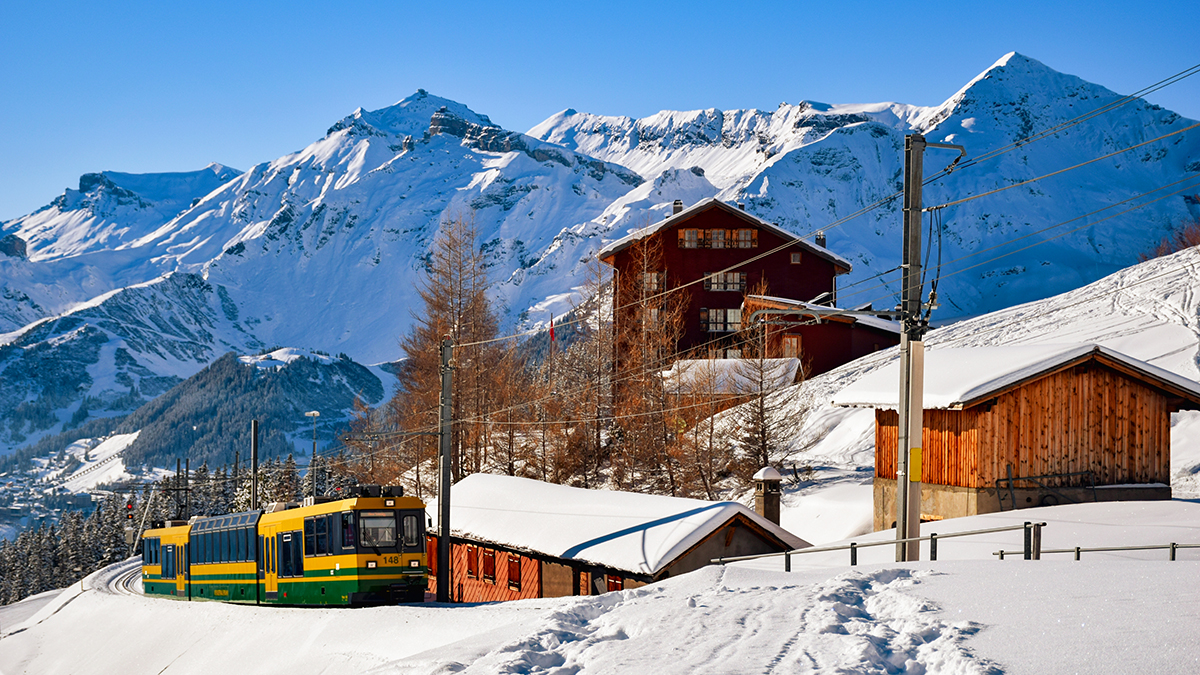
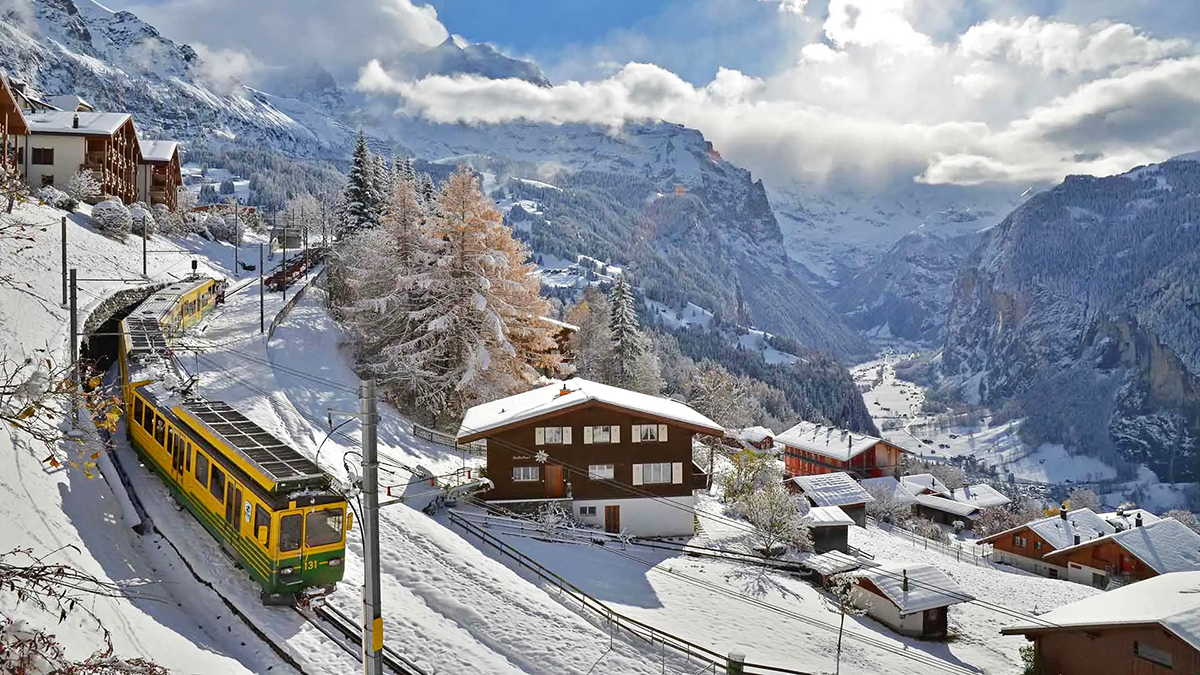
The cable car descent to Wengen, the car-free village at 1,274 metres, reachable only by train or on foot arrived in the last light. The village settling into its particular silence: no engines, no road noise, only the sound of the cogwheel train departing and the mountains doing what mountains do after dark.
Hotel Regina Wengen
THE BUILDING
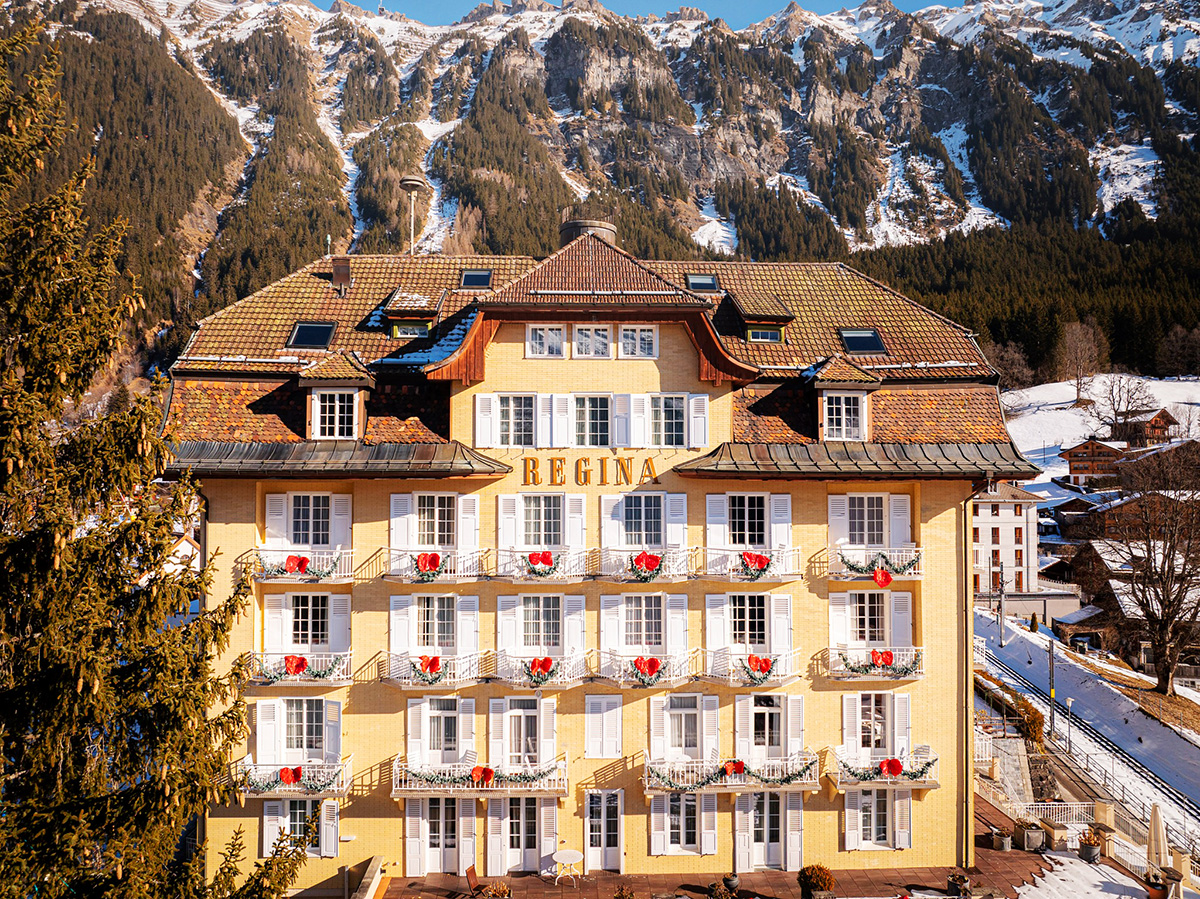
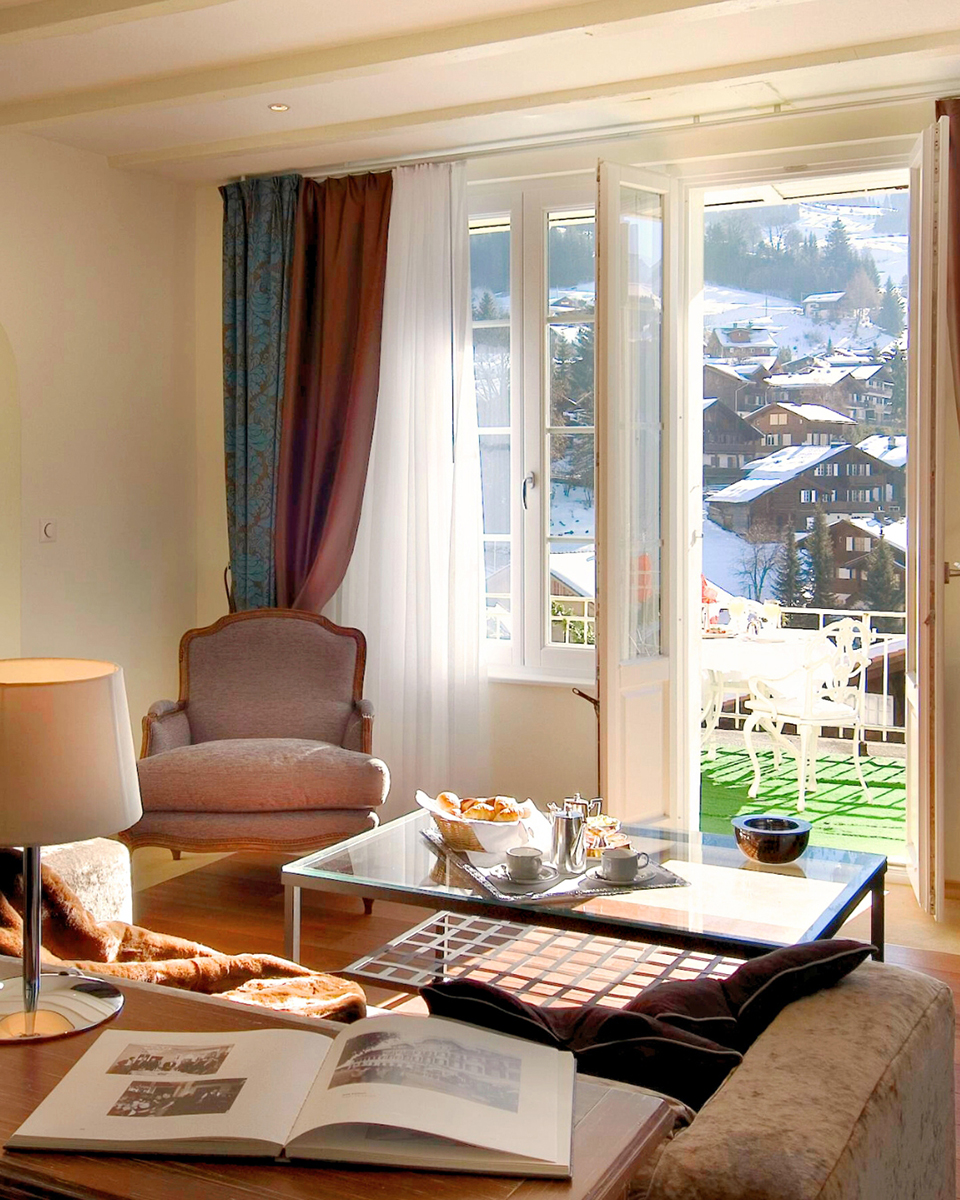
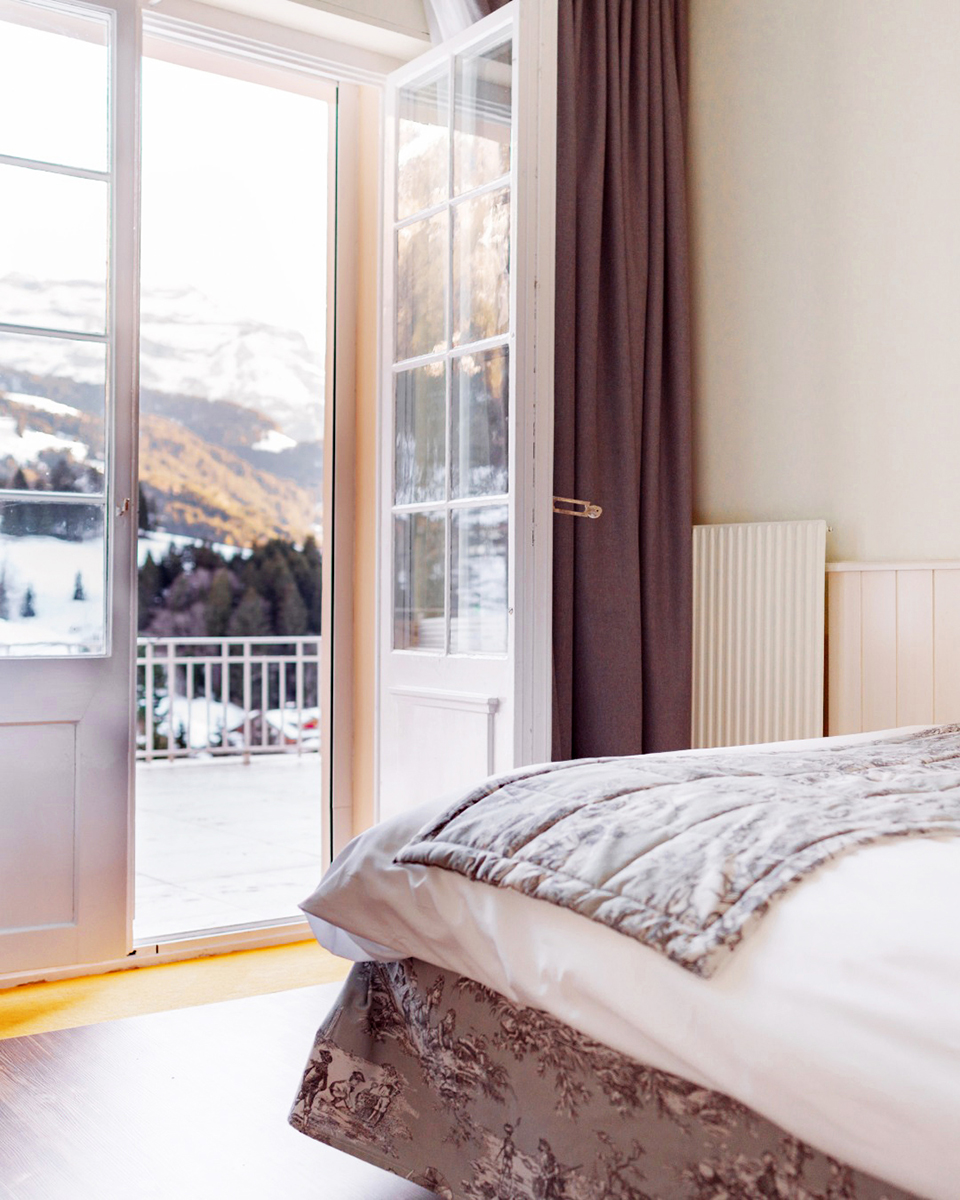
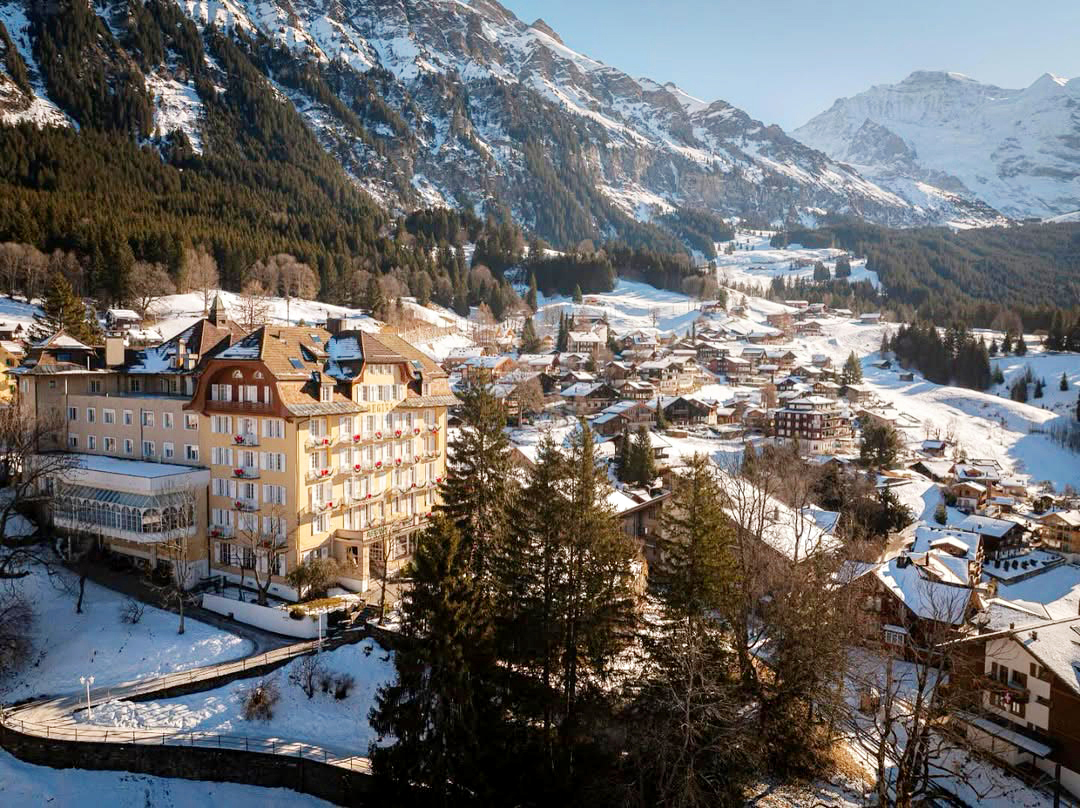
Hotel Regina dates from 1894, when Wengen was first discovering its identity as a mountain resort for a certain kind of European traveller. The Victorian architecture has been maintained with fidelity, high ceilings, wide corridors, the sense of a building that understood from the beginning that it was here for the long term. The rooms have been renovated with restraint: modern plumbing and linens, but the proportions and the balconies preserved intact. Every room faces the mountains. This is not incidental.
THE VIEW
The Jungfrau from a Hotel Regina balcony in the early morning, the summit catching the first light while the valley is still in shadow, the snowfields on the upper face burning pink then white is one of those images that makes the journey feel not merely worthwhile but necessary. The hotel has been watching this particular view from this particular angle for 130 years. It has had time to find the best positions.
DINING
The hotel offers two restaurants: ‘Chez Meyer’s’, rated 15 Gault & Millau points, which brings the ambition of serious Alpine cuisine to a village dining room with impressive results; and Jack’s Brasserie, the half-board restaurant, which serves an honest, generous menu of Swiss and European standards with the Jungfrau visible from the terrace. The wine list across both restaurants is a considerable achievement for a mountain village.
THE SILENCE
Wengen is car-free. The absence of engine noise at 1,274 metres, particularly after 10pm when the last train has gone and the village closes over itself, produces a quality of quiet that most travellers have not encountered since childhood, if then. In late March 2026, with fresh snow falling on the rooftops and the Jungfrau’s upper flanks disappearing into a white sky, that stillness acquires an additional dimension — less the hush of a season waking up, more the held breath of one that hasn’t finished its business yet. Hotel Regina sits at the centre of it. The stillness is the amenity.
ESSENTIAL INFORMATION
Hotel Regina Wengen Address: Zentrum, CH-3823 Wengen Website:hotelregina.ch
DAY SEVEN - JÜNGFRAÜJOCH & LAÜTERBRÜNNEN
Inside the Mountain, Above the World: The Top of Europe
The Jungfrau Railway Bores Through the Eiger and the Mönch. This Fact Never Loses Its Strangeness.
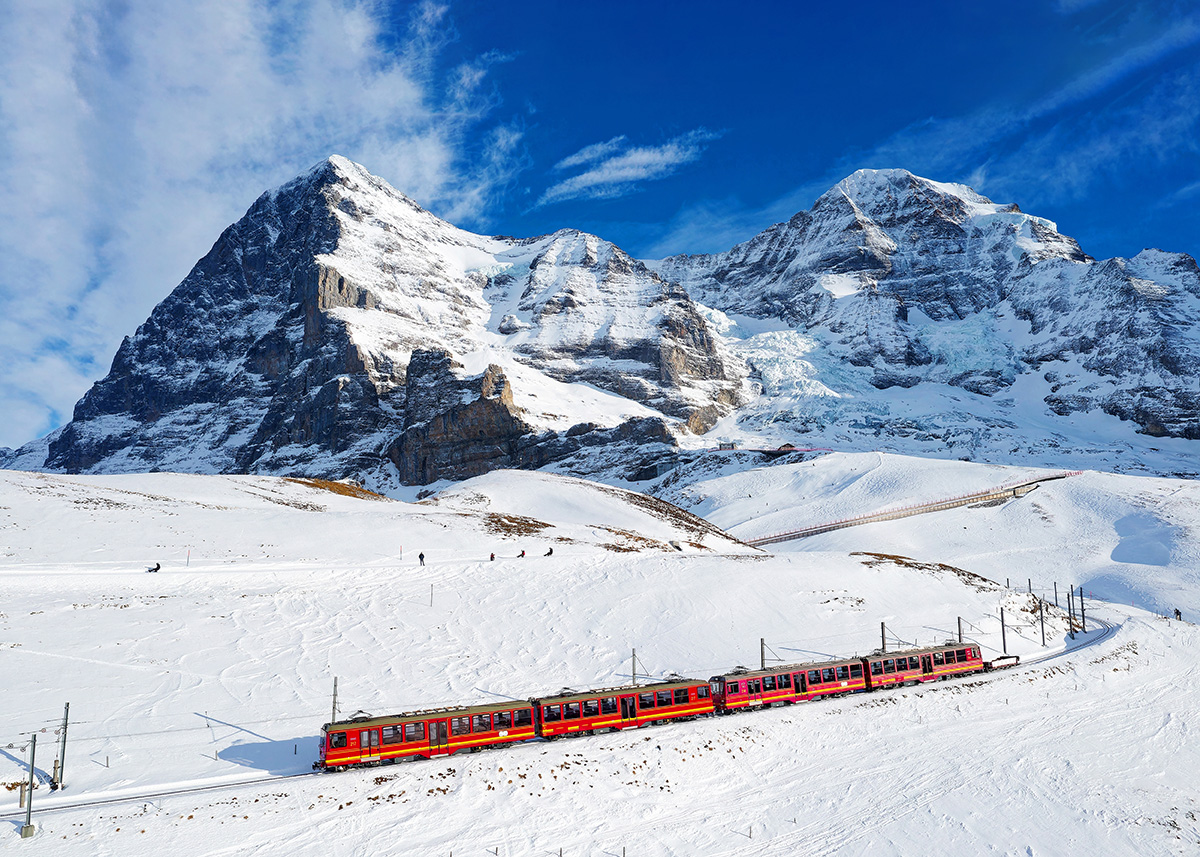
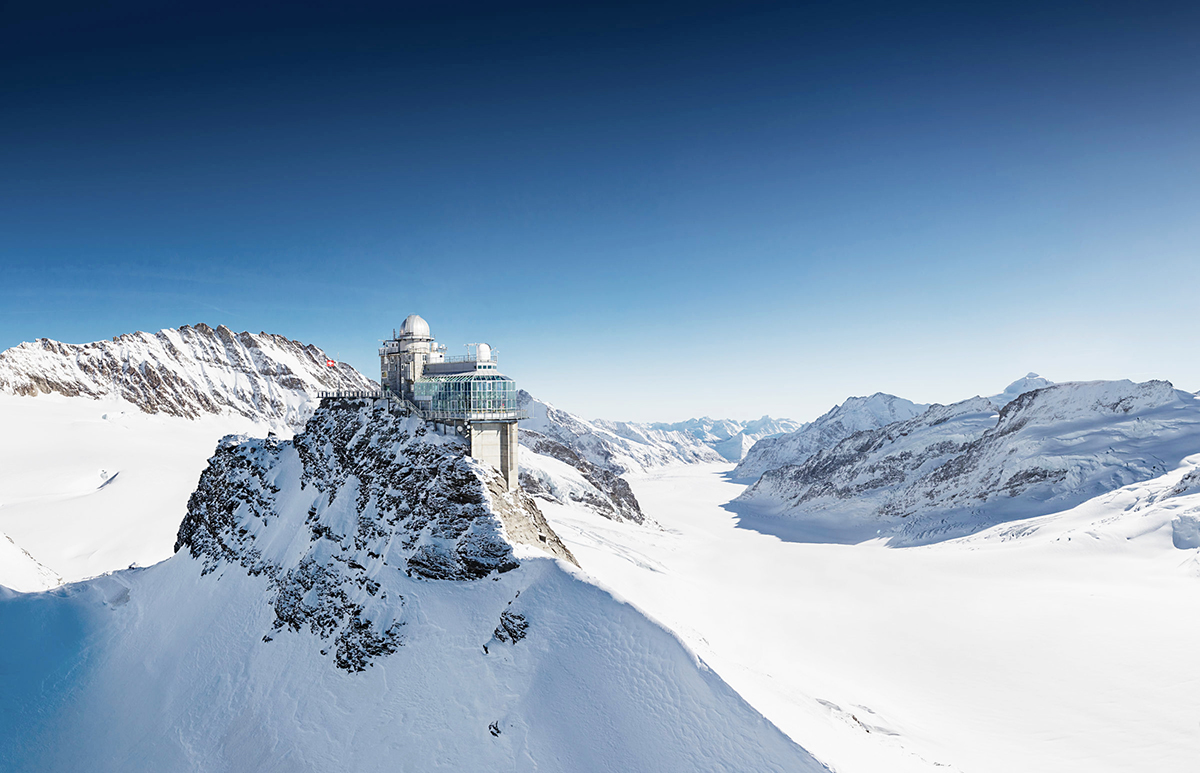
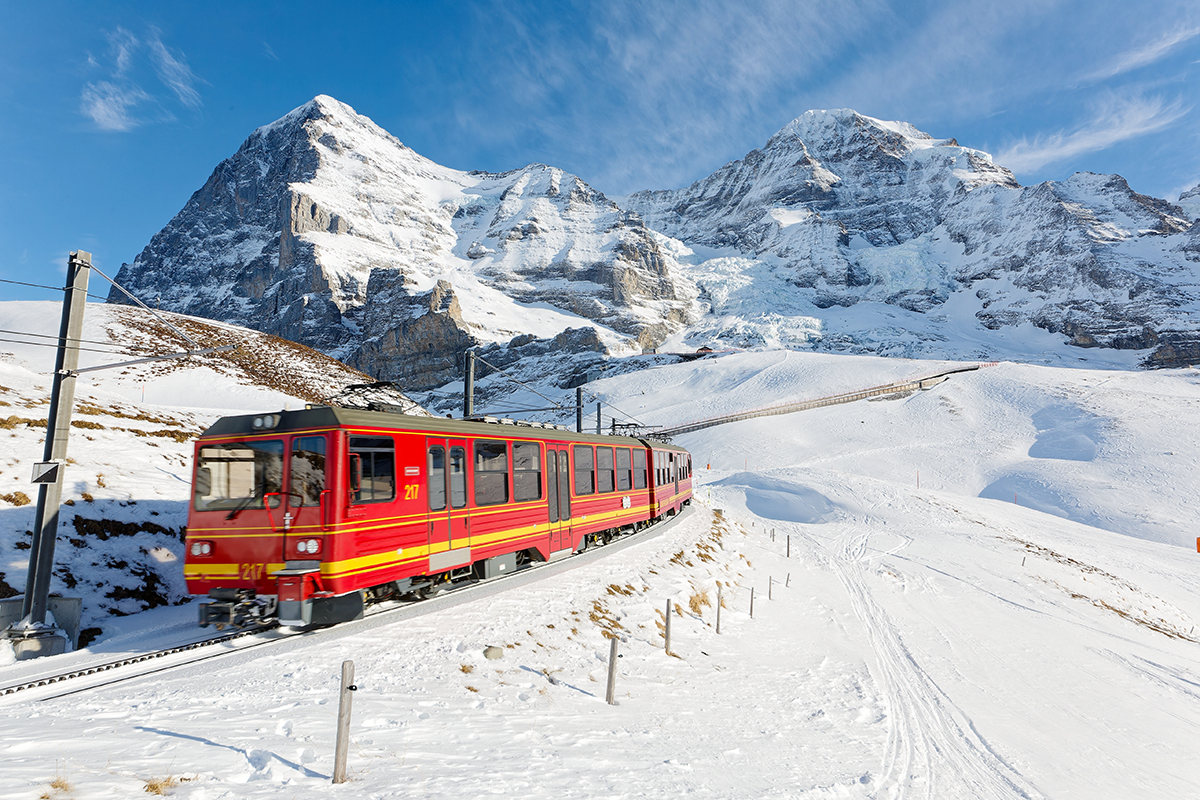
The Jungfrau Railway bores directly through the body of the Eiger and then the Monch. This fact never loses its strangeness: the carriage moves through the interior of a mountain, the tunnel walls sliding past for the better part of an hour, two intermediate stations carved into the rock face offering brief, vertiginous windows onto the north face and the Eismeer glacier below. Then the summit station at 3,454 metres, and the icy air arriving before the mind has finished processing the altitude.
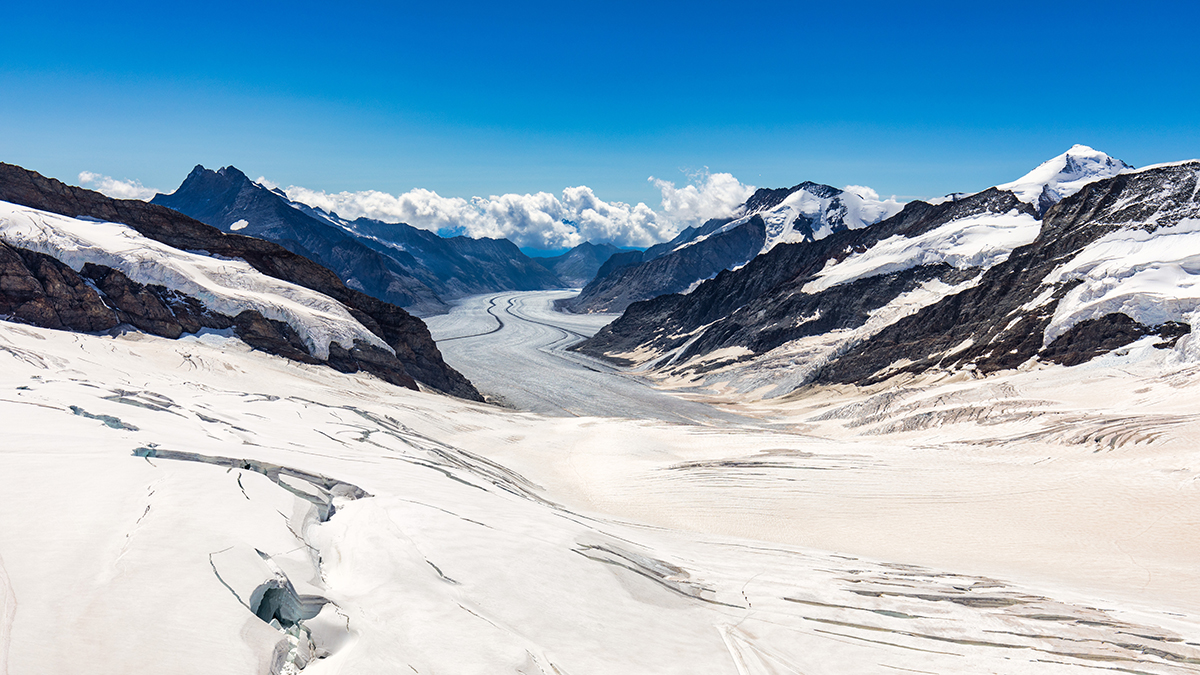
The cold at Jungfraujoch in late March this year is not the hesitant chill of a season in transition. It is absolute, purposeful, and deeply uninterested in the fact that the calendar says spring. Temperatures at the summit were running close to minus fourteen degrees — the kind of cold that registers in the lungs before the intellect has formed an opinion about it, and that turns every exhaled breath into a small visible statement. The Sphinx Observation Terrace, reached by a lift ascending a further 117 metres through the mountain, presented a panorama that the eyes require time to properly calibrate. To the south, the Aletsch Glacier, 23 kilometres of ice, the longest in the Alps, a UNESCO World Heritage Site unfolds toward Italy in a slow blue-white arc, its margins defined by fourthousand-metre peaks on either side. To the north, the view extended to the Black Forest and the Vosges on the French-German border. It is the largest uninterrupted view I have ever stood within.
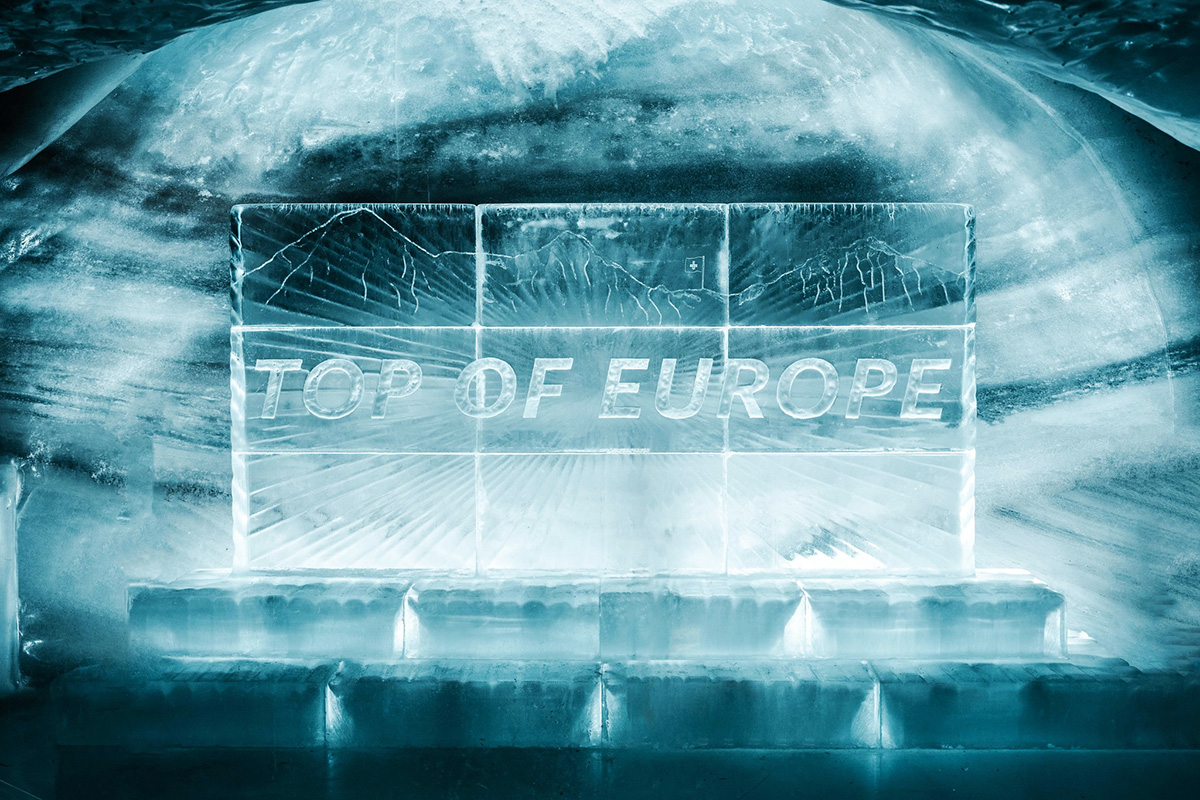
The Ice Palace, carved within the glacier at the end of a descending tunnel, occupies a register entirely its own: luminous blue chambers and archways of ancient ice, their surfaces catching the artificial light and returning it transformed. The cold inside is primordial. Walking through 10,000 years of compressed snowfall, the mountains above become geological rather than scenic, a distinction that recalibrates everything.
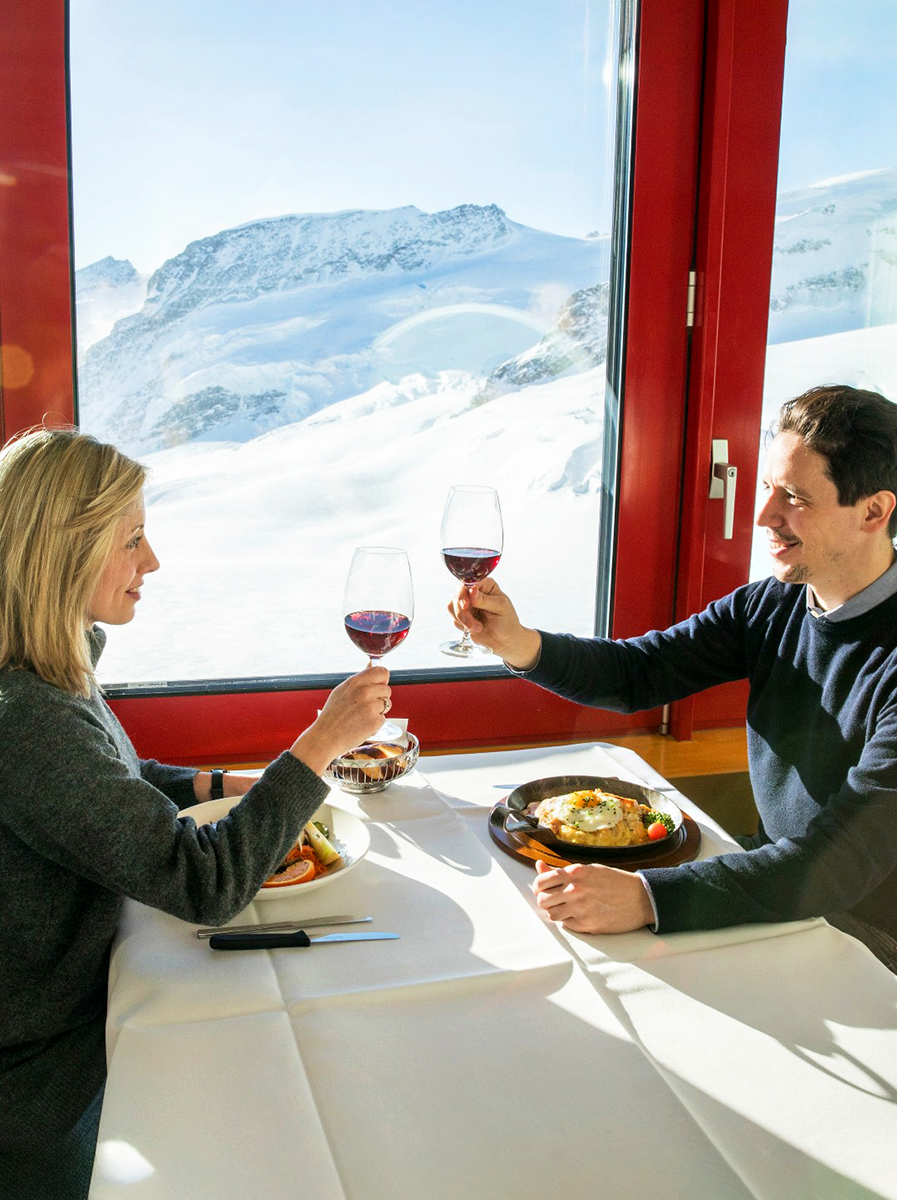
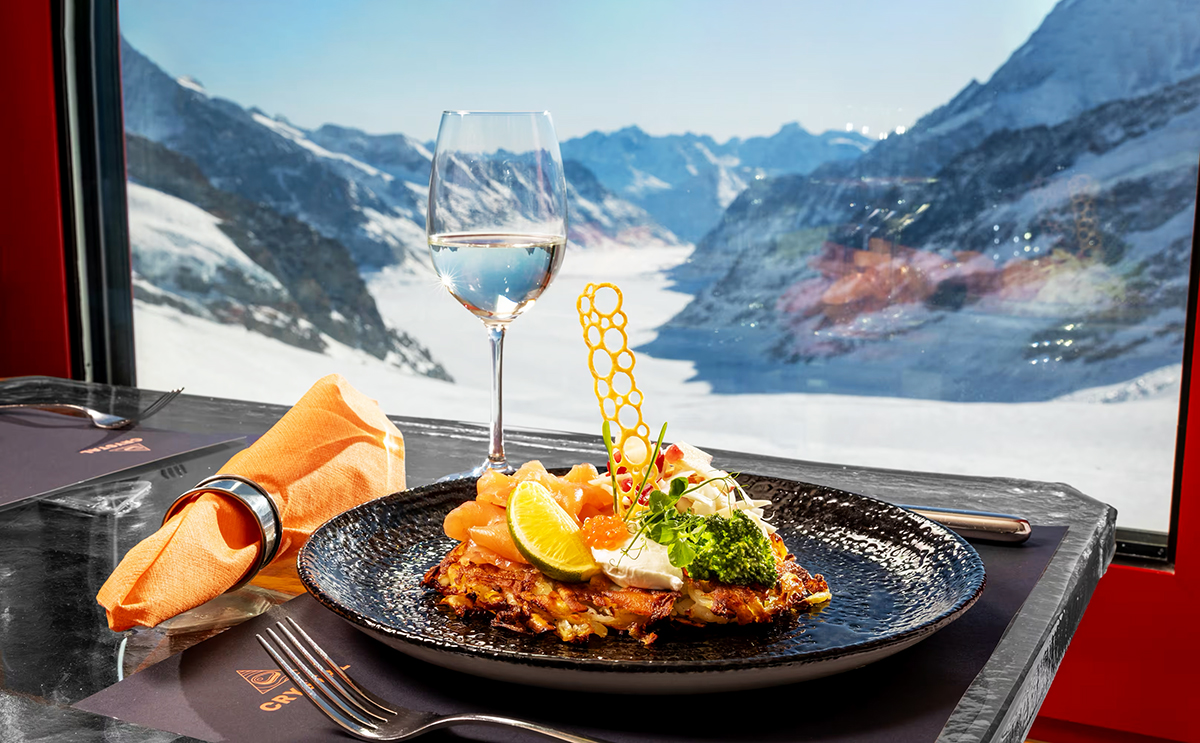
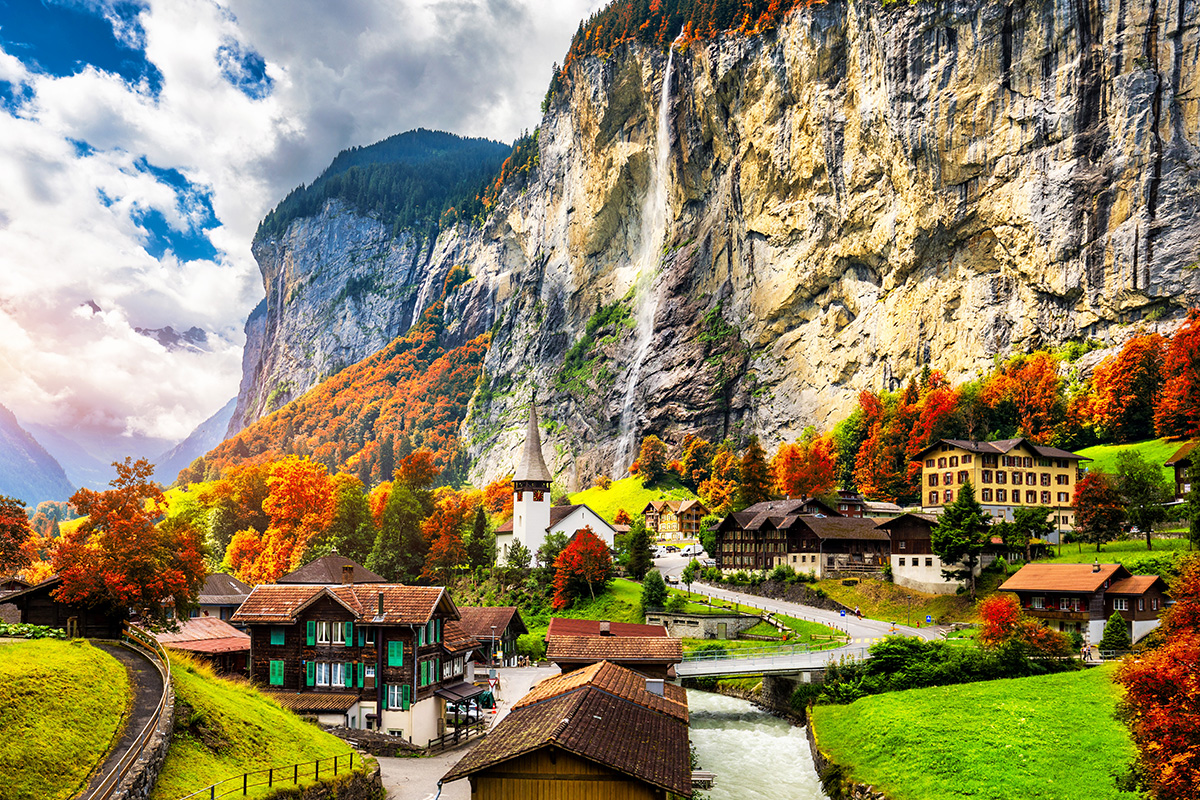
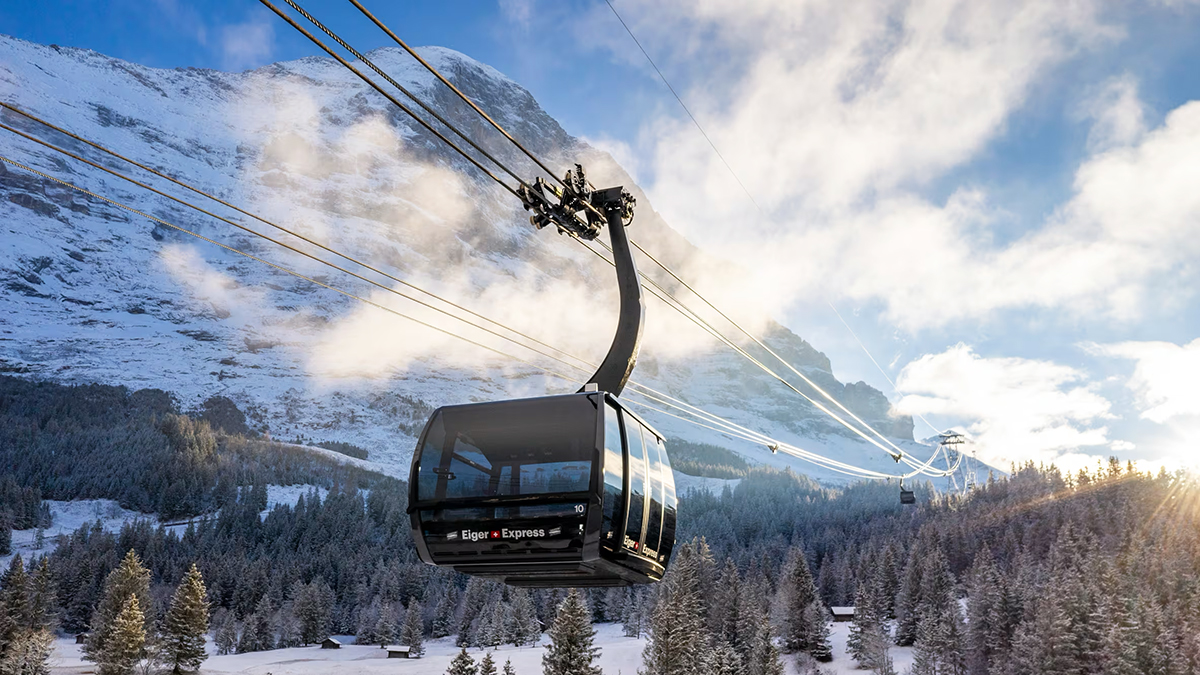
Lunch was at Restaurant Crystal at the summit, the Aletsch Glacier as the dining room view, 3,454 metres as the ambient fact. The descent by the Eiger Express tricable gondola from Eigergletscher to Grindelwald Terminal in fifteen minutes, sixty passengers per cabin in near-silence, delivered a final, lateral perspective on the north face before the valley reclaimed us. The afternoon transferred to Lauterbrunnen, the valley of 72 waterfalls, its cliff walls rising 300 metres on either side, the Staubbachfall visible from the village square, one more register of Alpine scale, measured in water rather than ice.
“The Aletsch Glacier, 23 kilometres of ice, unfolds toward Italy in a slow blue-white arc. It is the largest uninterrupted view I have ever stood within.”
DAY EIGHT - MÜRREN, SCHILTHORN & GIMMELWALD
The Edge of Everything: Mürren, the Thrill Walk, and the Farm at the End of the Road
The World's Steepest Cable Car. A Revolving Restaurant Above 200 Peaks. A Farmer Who Opens His Barn Doors to the World.
The journey to Murren navigates two valleys: train to Lauterbrunnen, post-bus to Stechelberg, and then the world’s steepest cable car, 689 metres of vertical ascent in four minutes. Murren arrives at 1,638 metres as a cliff-edge village suspended above the Lauterbrunnen Valley, car-free, its chalets and church steeple arranged along a terrace from which the Eiger, Monch, and Jungfrau are deployed across the valley with an amplitude that suggests deliberate installation.
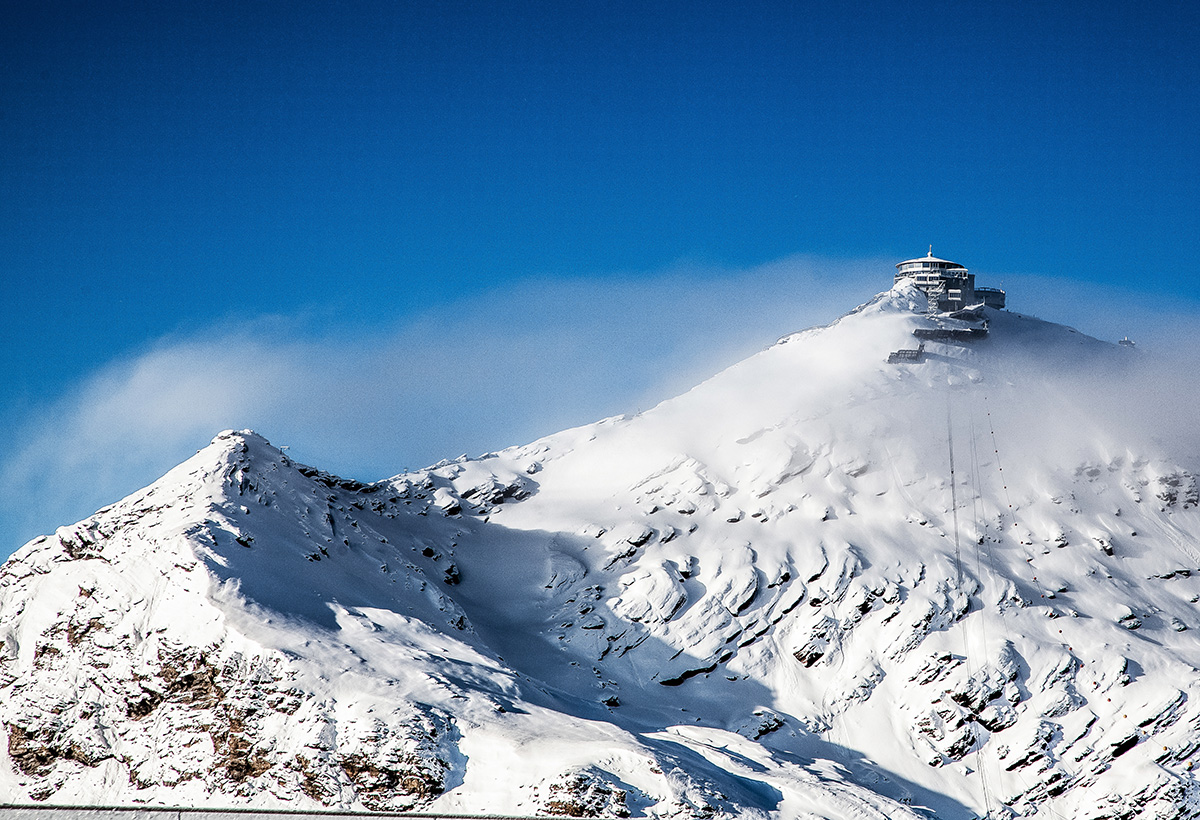
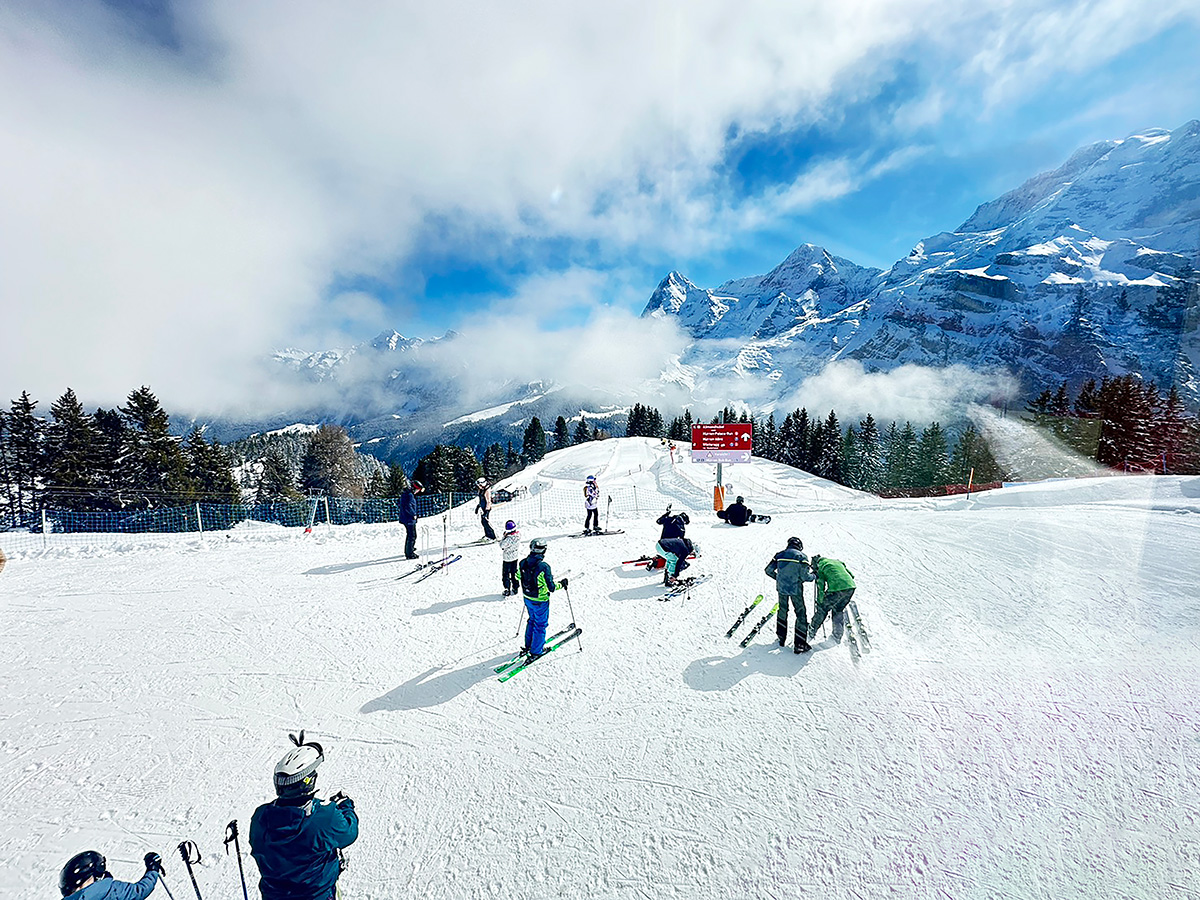
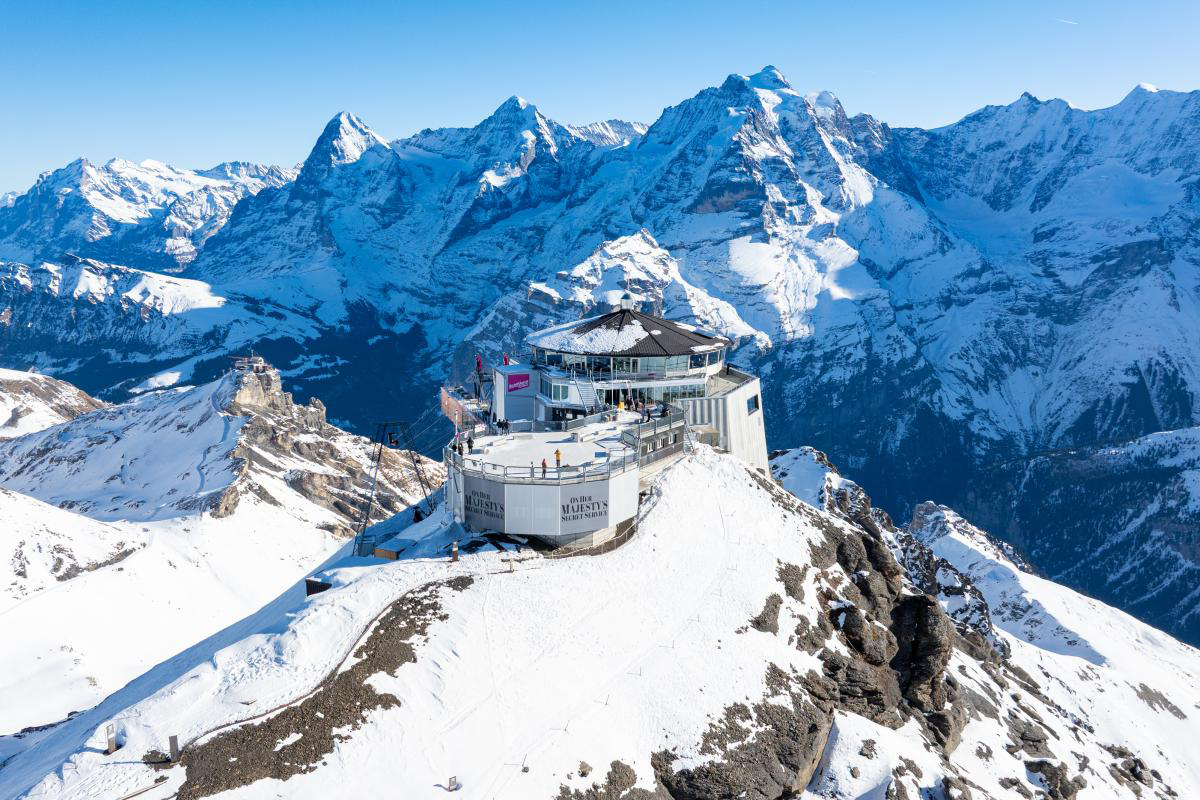
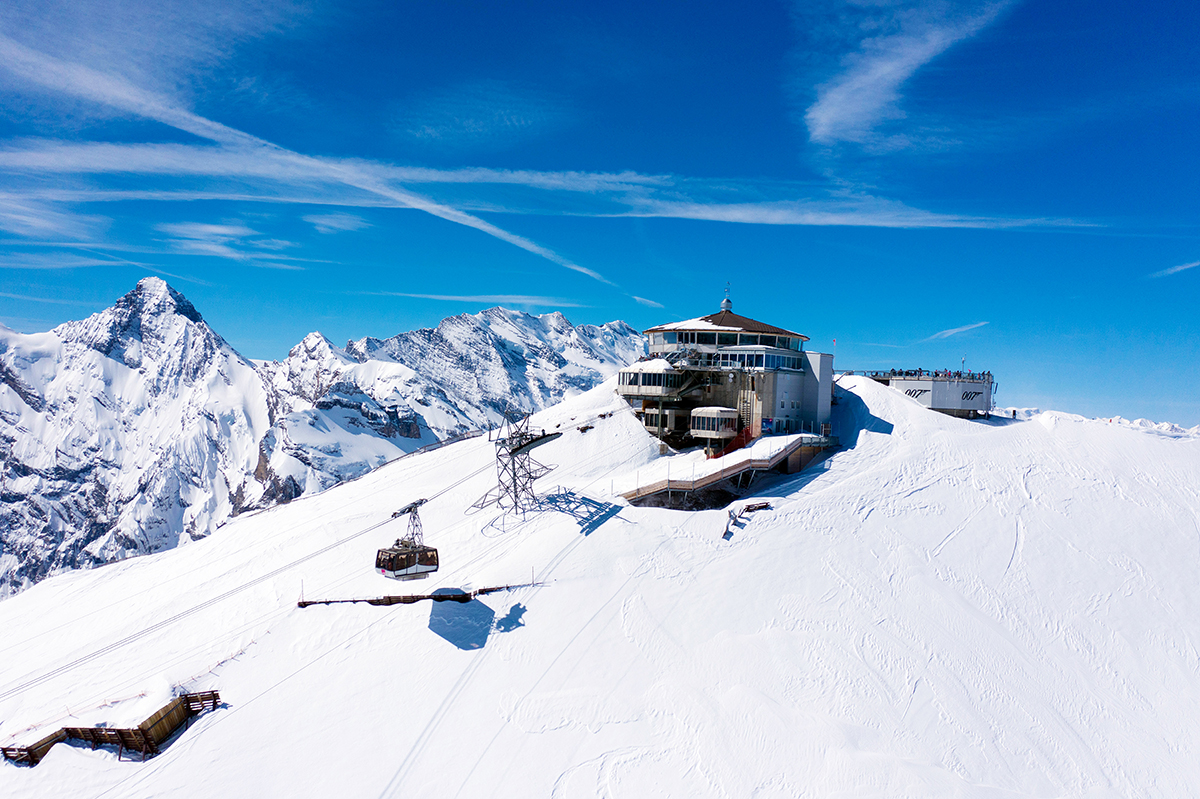
The Schilthorn, reached by the new Funifor cable car system, Switzerland’s first, inaugurated in December 2025, rises to 2,970 metres and delivers the country’s most complete panorama: over 200 named peaks, from the Bernese Oberland to Mont Blanc.
The Funifor system is an engineering achievement with two independent cable loops, each with its own drive station, offering a resilience and nearsilence that makes the ascent itself a considerable experience.
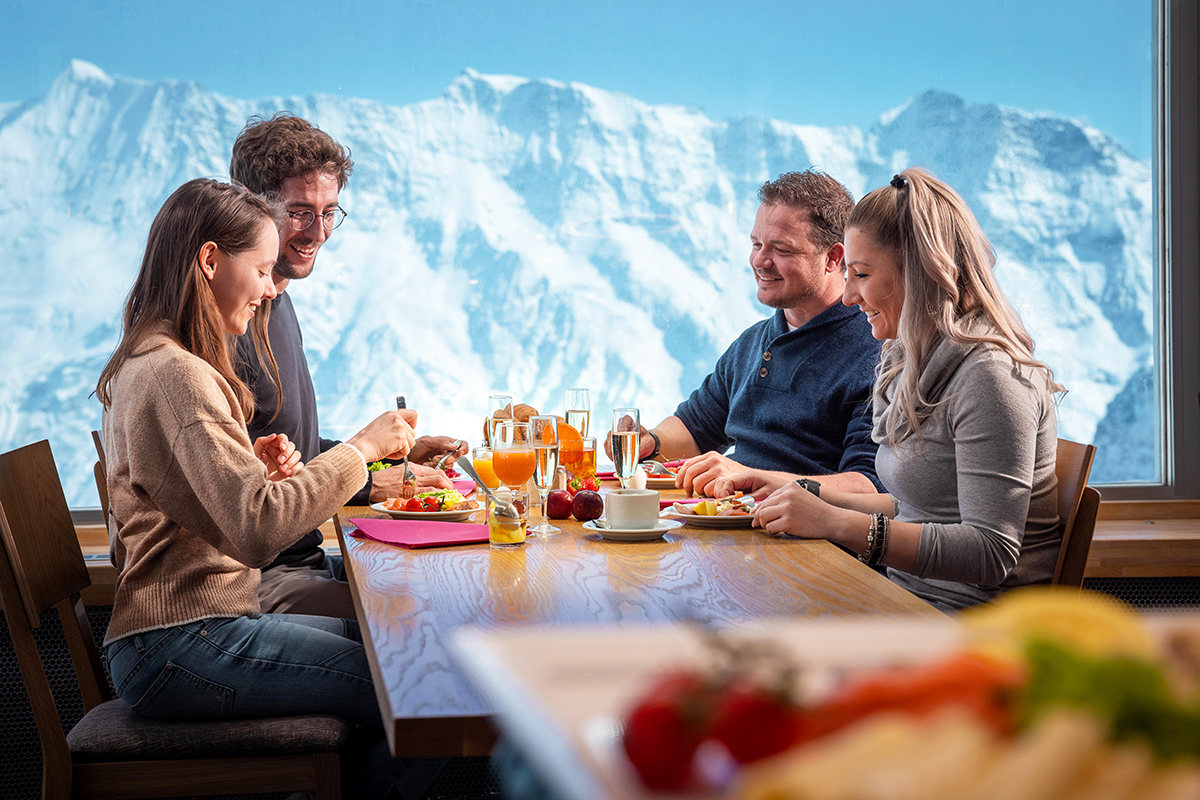
The Schilthorn-Brunch at Restaurant Piz Gloria, the 360-degree revolving restaurant, operational since 1967 served the meal as the panorama completed one slow revolution. The Piz Gloria View pathway, 80 metres along the northwest summit ridge to the observation deck, placed the mountains at a proximity that made the ascent feel understated. The descent to Birg at 2,677 metres introduced the Thrill Walk: a steel pathway bolted into the perpendicular rock face, including a crawl-through tunnel, a glass-bottomed floor, and rope walkways with the valley a thousand metres below. It is, by any honest assessment, alarming, and one of the more honest encounters with Alpine scale available to the nonclimber.
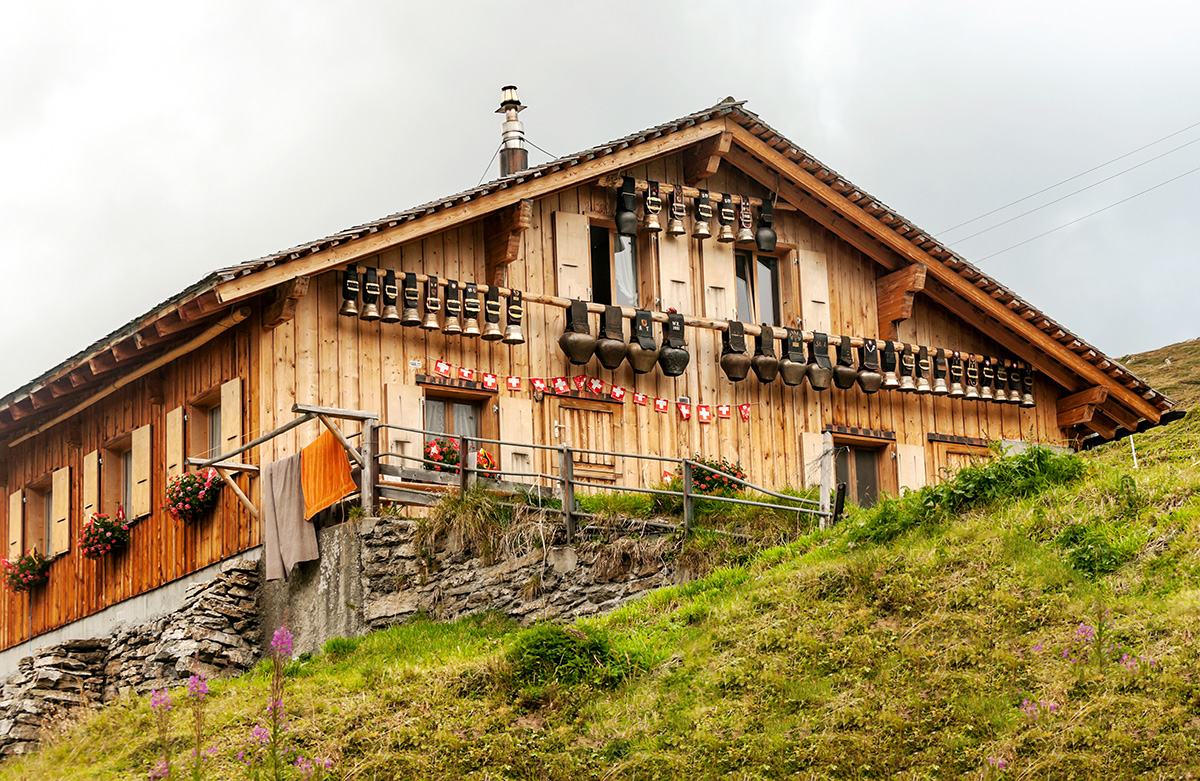
The final morning was Gimmelwald, a village of perhaps 130 permanent residents at 1,367 metres, car-free, its flower-adorned chalets and cheese storehouses the embodiment of a Switzerland that predates the tourism industry entirely. Farmer Thomas Rubin opened his barn doors: the cows in their winter stalls, the hay stored in architectural order, the cheese wheels in the dim storehouse radiating their amber certainty. It was one of those encounters that recalibrated the preceding week, all the infrastructure and precision and panoramic restaurants rest, ultimately, on this.
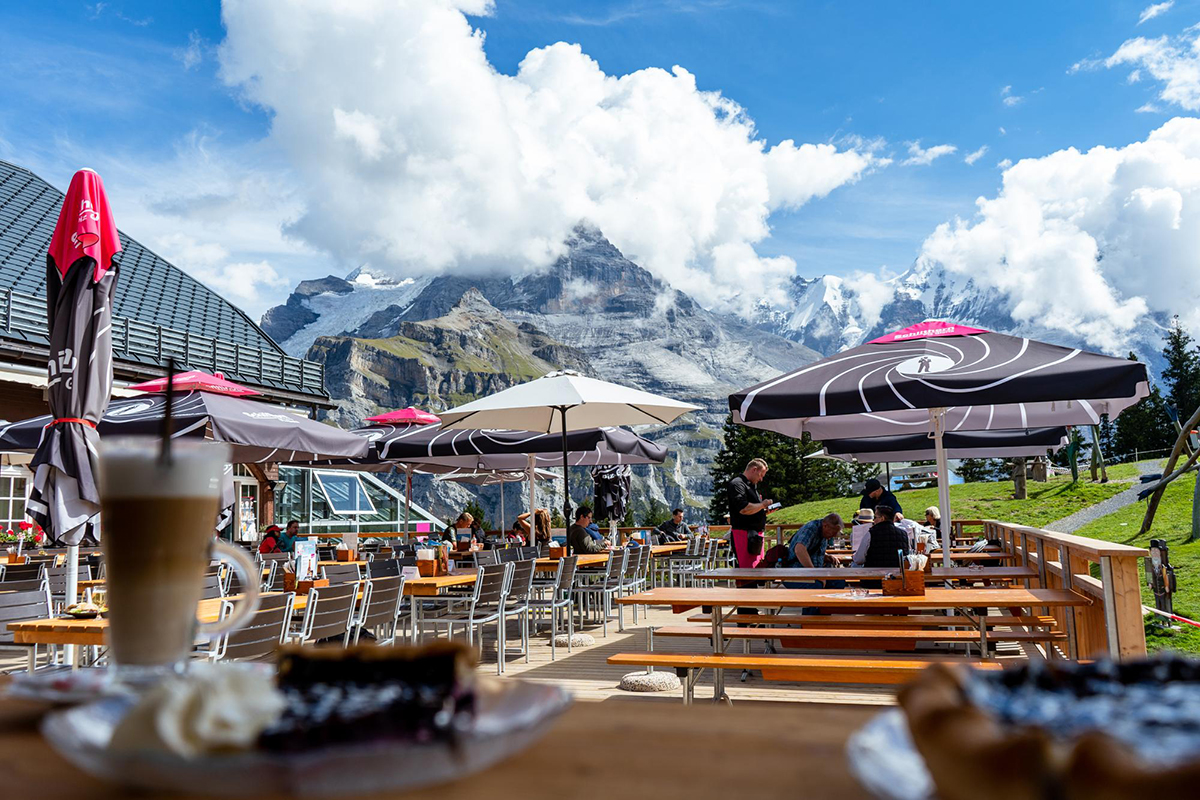
Lunch at the Allmendhubel Panorama Restaurant at 1,907 metres, a two-course menu with the Eiger, Monch, and Jungfrau one final time across the table concluded the mountain chapter. The descent through Stechelberg and Lauterbrunnen and then north through the Swiss Plateau toward Zurich carried the week’s accumulated altitude back to sea level, and left the question that every worthwhile journey eventually asks: when do I return?
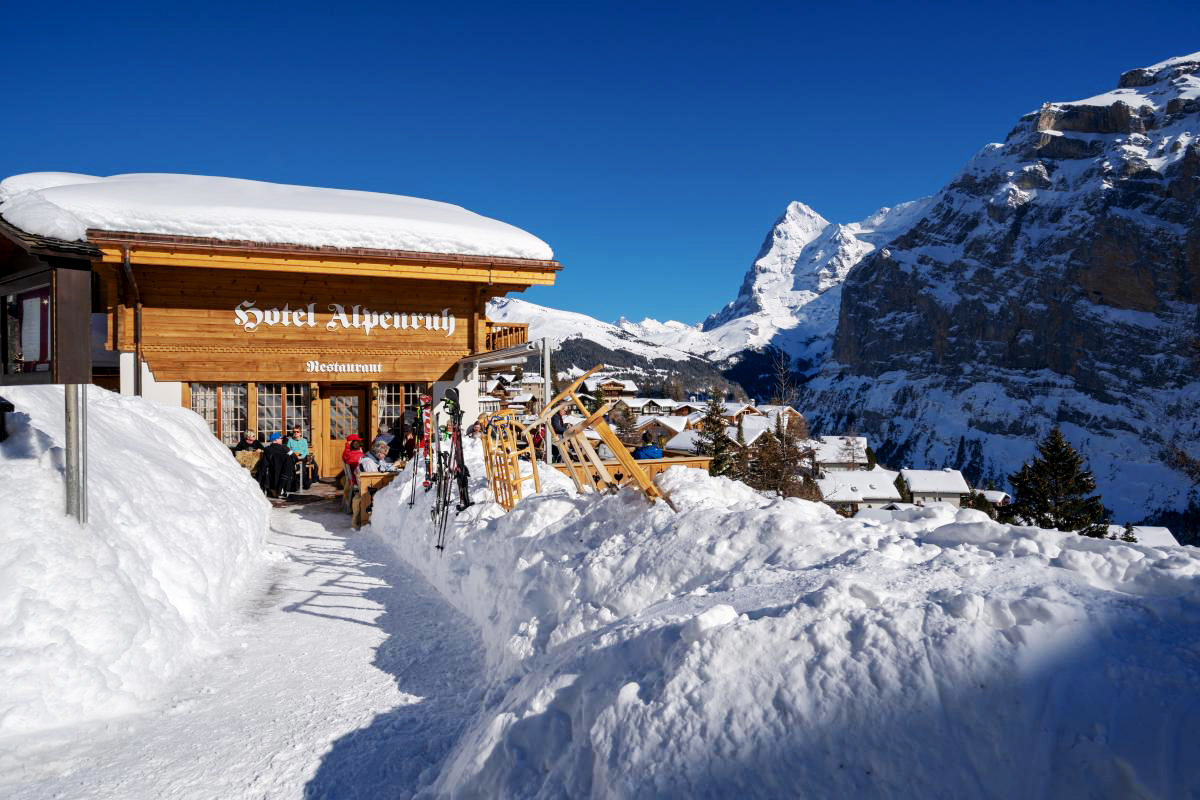
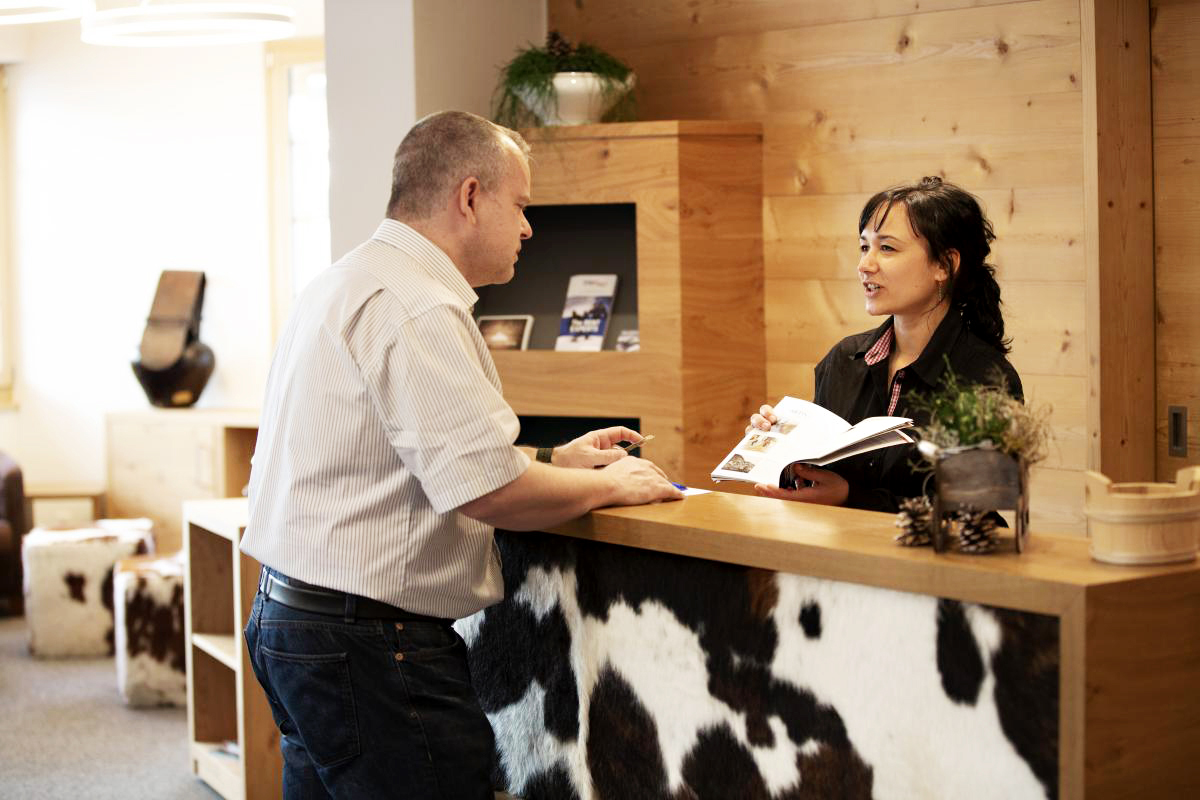
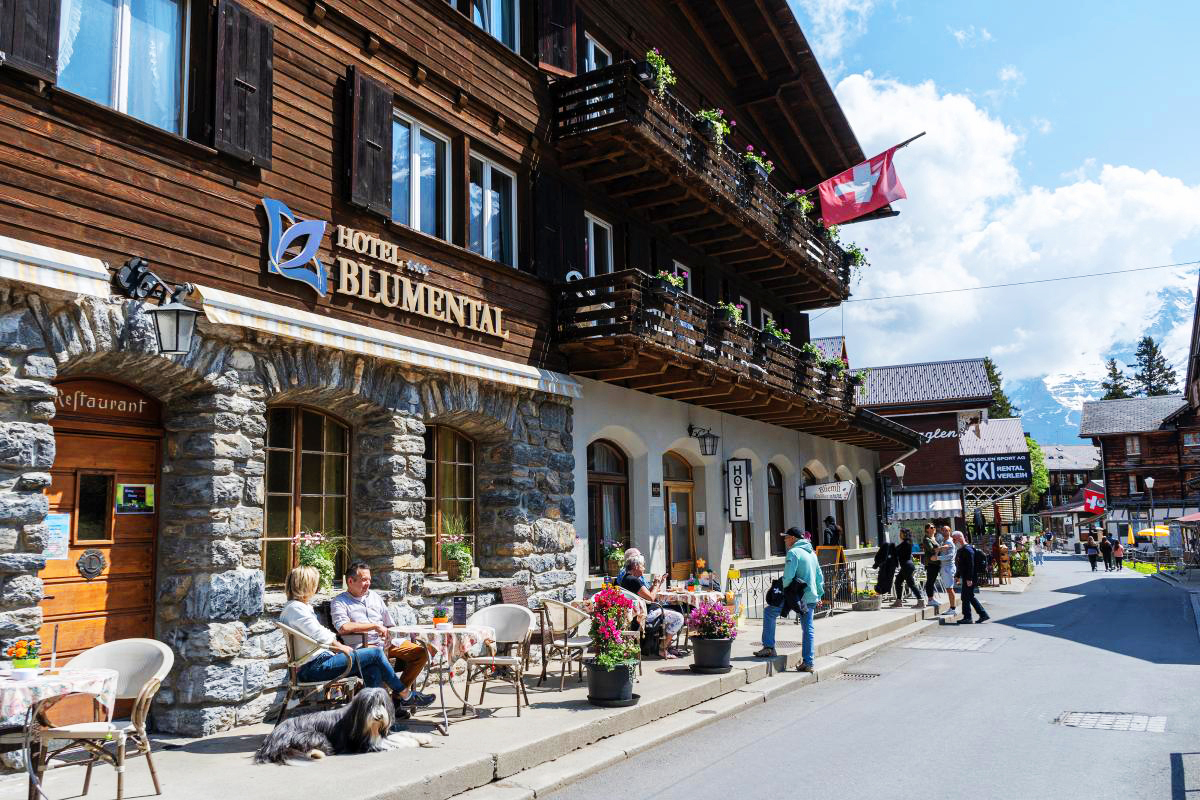
Hotel Alpenrüh & Hotel Blümental, Mürren
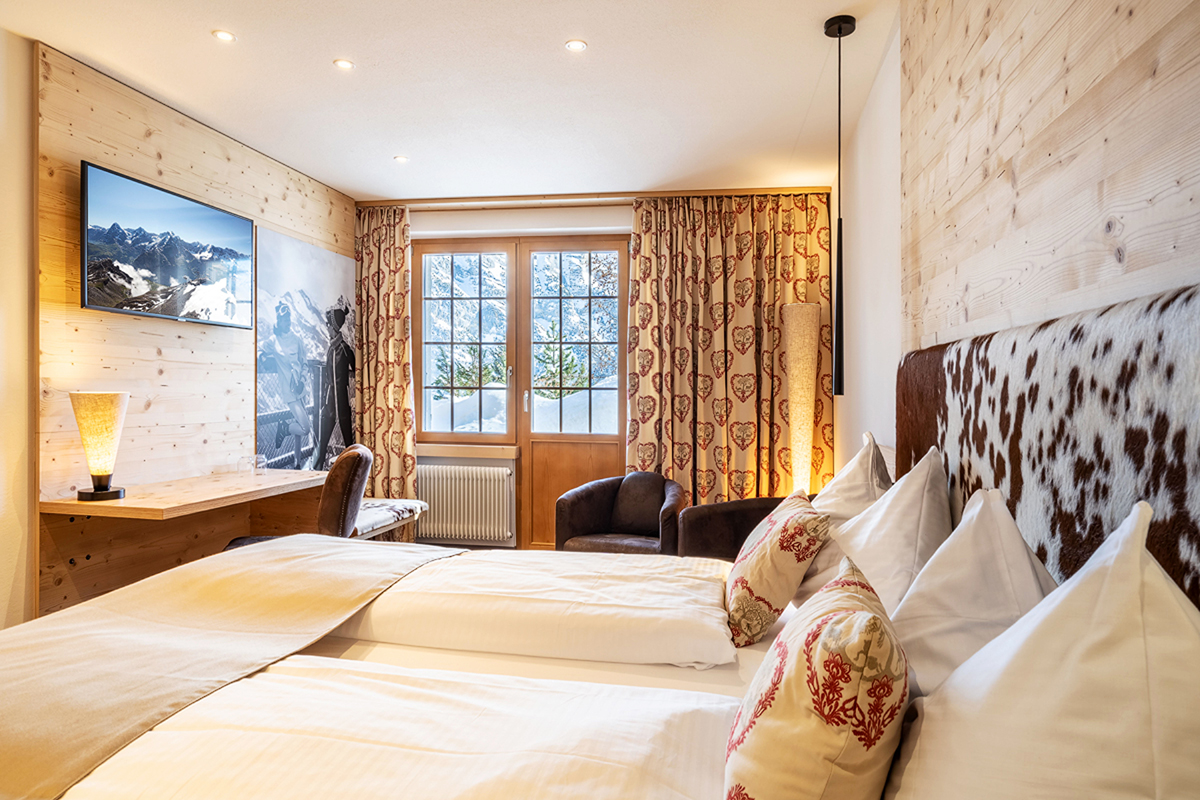
Hotel Alpenruh sits on the edge of Mürren with those three peaks – Eiger, Mönch, Jungfrau, filling the windows at every angle. The rooms are clean, warm, and correctly sized for what they are: mountain lodgings in one of the most spectacularly positioned villages in Europe.
WHAT MATTERS HERE
The balconies. Every room has one, and every balcony faces the same view, the Lauterbrunnen Valley dropping 800 metres below, the Jungfrau standing at the far end of the visual field in permanent attendance. In the early morning, with coffee and the mountains catching the first light, Hotel Alpenruh provides one of the finest balcony experiences in Switzerland at a price point that would not buy you a roomservice breakfast in some of its competitors.
ESSENTIAL INFORMATION
Hotel Alpenruh Address: Eggli 954B, CH-3825 Mürren Website:alpenruh-muerren.ch
HOTEL BLUMENTAL — DINNER
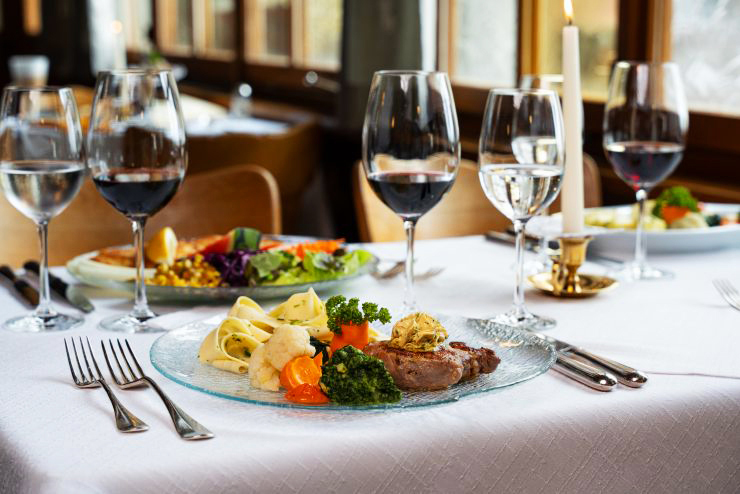
Dinner at Hotel Blumental, a two-course menu in a dining room that has the character of a mountain inn that hasn’t been persuaded to become something else: timber walls, candlelight, a menu of seasonal Swiss cooking that benefits from the altitude and the season in equal measure. Outside, Mürren was doing what it does in the depths of a proper alpine winter — the snow falling steadily, the village tucked beneath it, the Jungfrau invisible in the dark. Inside, the Rösti arrived correctly, crisp exterior, yielding within, and the wine arrived at the right temperature, which in a Mürren that has not yet released its grip on winter is a harder achievement than it sounds.
WHEN TO GO Late March to mid-April is the optimal window but travellers should arrive with clear expectations in 2026. This year, winter has held the summits with unusual persistence, delivering heavy fresh snowfall across the Jungfrau region right through late March. Mountain summits are in full winter condition, which is excellent news for those who came for snow, drama, and uncrowded pistes. Valley temperatures in Zürich and Lucerne are mild at 10–12°C, but anything above 1,400 metres is operating firmly in winter mode. Summer crowds have not arrived, Jungfraujoch bookings are available without the usual pressure, summit terraces are spacious, and restaurants are unhurried. Pack accordingly and expect to be rewarded.
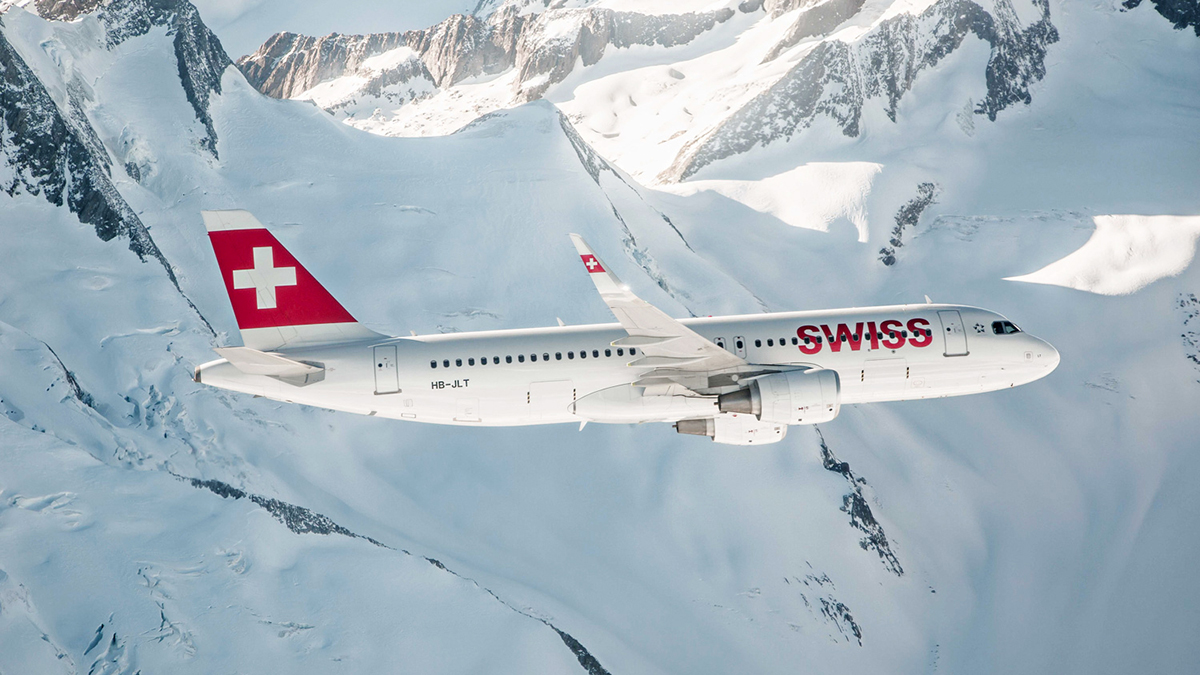
FLYING SWISS International Air Lines operates daily non-stop service from Bangkok Suvarnabhumi (BKK) to Zürich (ZRH) on the B777-300ER in four classes: First, Business, Premium Economy, and Economy. Flight time approximately 11 hours. Check in online 24 hours in advance via the SWISS app to select seating and meal preferences. The SWISS Arrival Lounge in Terminal 2 at Zürich Airport is available to eligible passengers, ideal for freshening up before the first rail connection.
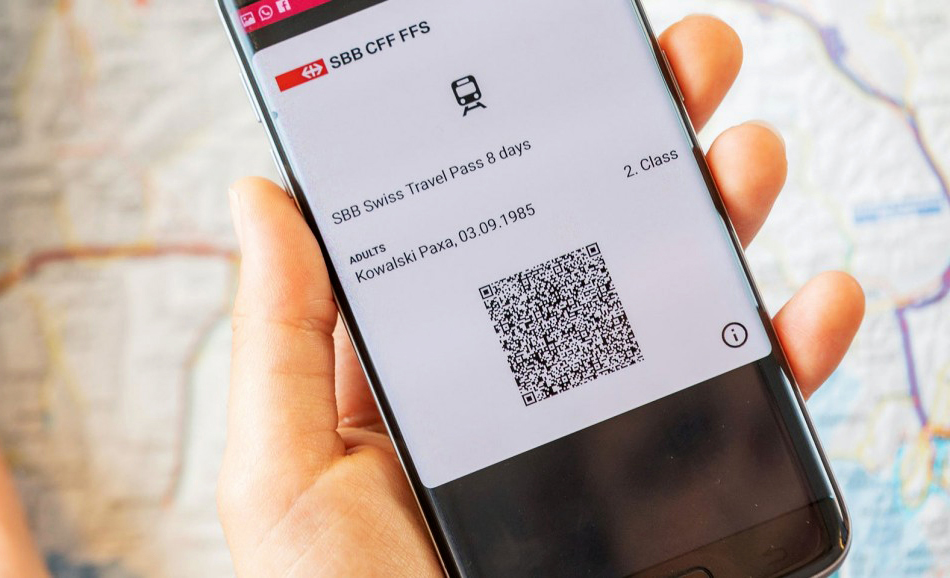
SWISS TRAVEL PASS The 1st Class Swiss Travel Pass is the single most important purchase for any Swiss journey of more than two days. It covers unlimited travel on all SBB trains, buses, and lake steamers; public transport in 90+ cities; mountain excursions including Rigi, Stanserhorn, and Stoos; and free admission to 500+ museums. Purchase in advance at travelswitzerland.com, cheaper before arrival and activates at first use. Download the SBB Mobile app and the Grand Train Tour of Switzerland app as companions.
SBB LUGGAGE The SBB door-to-door luggage transfer service collects cases each morning and delivers them to your next hotel by 18:00. Register at any SBB Travel Centre or through your hotel concierge. In a journey that moves between mountain villages, some accessible only by cable car, this is not an optional luxury. Register by 09:00 on travel days. Cost: approximately CHF 25–35 per bag per transfer.
JUNGFRAUJOCH Reserve the Jungfraujoch visit for a clear-forecast day. Check the MeteoSwiss app which provides summit-specific hourly forecasts the evening before. Take the Eiger Express from Grindelwald Terminal to Eigergletscher (15 minutes, saves 47 minutes versus the original rail route), then transfer to the Jungfrau Railway for the final ascent. Dress in serious thermal layers: summit temperatures in late March 2026 are running around −14°C, significantly colder than a typical spring season. SPF50+ sunscreen and UVprotective sunglasses (category 4) are essential. Advance seat reservation is recommended (CHF 10 per person) even off-season.
SCHILTHORN The new Funifor cable car system, Switzerland’s first, opened December 2025 has transformed the Schilthorn ascent from Mürren. The Schilthorn-Brunch at Restaurant Piz Gloria (rotating since 1967) is the region’s most spectacular meal; book in advance at schilthorn.ch. The Thrill Walk at Birg requires enclosed footwear; the Skyline Walk is the lower-intensity alternative. Both are worth the descent from Piz Gloria.
PILATUS Access from Lucerne via Bus B1 from Luzern Bahnhof to Kriens Zentrum, walk to Schlossweg 1, total 11 minutes. Take the Panorama Gondola to Fräkmüntegg, then the Dragon Ride aerial cableway to the summit at 2,132 metres. An overnight at Hotel Pilatus-Kulm for sunrise from the Oberhaupt viewpoint is among the finest experiences Switzerland offers.
CAR-FREE VILLAGES Wengen, Mürren, and Gimmelwald are accessed without private vehicles. The SBB app handles every connection with real-time accuracy. Download offline maps before entering mountain areas, mobile signal in the villages is intermittent. The absence of engine noise at 1,274 metres after dark is one of Switzerland’s most underrated experiences.
LAYERS & KIT The temperature range across this itinerary spans approximately 30°C in spring 2026. Valley temperatures in late March: 8–12°C in Zürich and Lucerne. Summit temperatures (Jungfraujoch, Schilthorn): −12 to −14°C with wind chill — significantly colder than a typical spring season this year. Essential items: thermal base layer, insulating mid-layer, windproof and waterproof outer shell, hat, gloves, neck gaiter, UV-protective sunglasses, SPF50+ sunscreen, waterproof hiking shoes. Sandals and backpacks are not permitted at certain venues, check dress codes in advance.
ESSENTIAL APPS SBB Mobile – train connections, live departure boards, ticket storage: the single most-used app on this journey. MeteoSwiss, official Swiss forecasts including summit-specific hourly predictions. SWISS App, mobile boarding pass, seat selection. Grand Train Tour of Switzerland, scenic rail route planner. Maps.me, offline maps for mountain villages where signal is unreliable.