Executive’s View Leading The Way, Visionaries Redefining Thailand’s Travel Landscape
Thailand is entering a new chapter in its travel narrative, one shaped not only by destinations, but by the visionaries redefining the meaning of travel itself. From sustainable hotels and nature-led design to innovative local experiences that bring cultural heritage into contemporary focus, a new generation of leaders is quietly transforming the industry. In this issue, we spotlight Thailand’s leading executives and pioneers whose forward-thinking vision harnesses travel as a force for connection, creativity, and sustainability, guiding Thai tourism toward a new standard of global excellence.
THE VISIONARY
WIT KITCHATHORN
DIRECTOR OF CUSTOMER & MARKETING
THAI AIRWAYS INTERNATIONAL
CONNECTING THAILAND TO THE WORLD
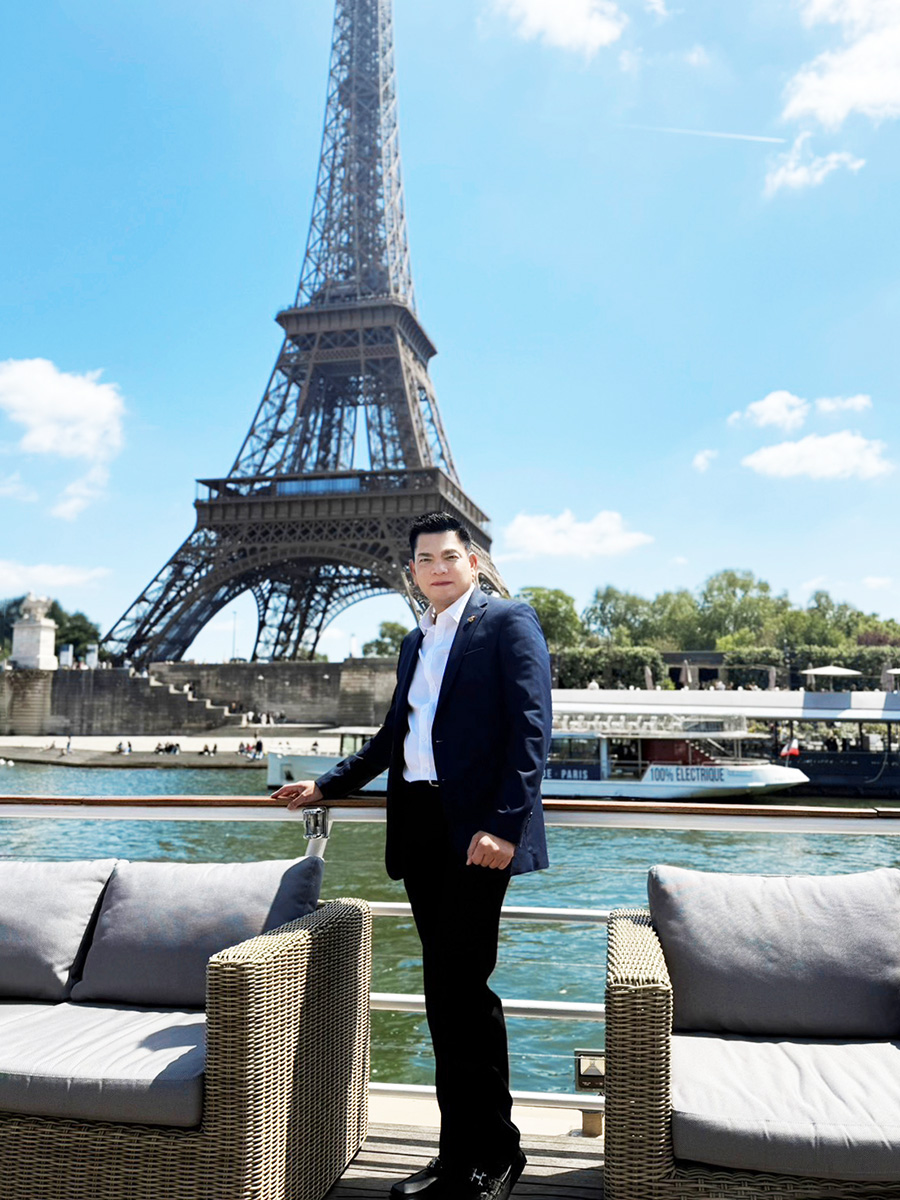
In the dynamic world of aviation, Thai Airways International stands as a proud national carrier with a vision to soar high on the wings of service excellence, innovation, and cultural pride. Mr. Wit Kitchathorn, Director of Customer & Marketing, shares insights into how Thai Airways is navigating the global skies, particularly in the fastgrowing Asia-Pacific market, and what travelers can expect next from this iconic airline.
As Thailand’s flagship airline, what is Thai Airways’ mission in today’s global aviation arena
Mr. Wit highlights the airline’s mission to be “a high-quality full-service carrier with a strong Thai brand, connecting Thailand to the world while maintaining a healthy profit margin.” The airline’s core focus is on becoming the first-choice carrier by prioritizing customer satisfaction and tailoring products to passenger preferences. Thai Airways aims to optimize its route network by focusing on profitable paths, serve as a key hub linking cities across Thailand and the world, and deliver worldclass service marked by unique “THAI touches” throughout the journey. Embracing the digital era, the airline is boosting e-Commerce to create seamless experiences for customers purchasing products and services.
What trends are driving the travel and tourism industry in the Asia-Pacific, from your perspective
The Asia-Pacific region, according to Mr. Wit, is set to be the fastest-growing aviation market globally over the next two decades. Key trends shaping this growth include increased international connectivity with Thailand serving as a major transit hub, growing demand for long-haul flights especially to Europe, and the expanding source markets of China and India. Additionally, travelers are shifting towards digital sales channels and online booking platforms, while environmental sustainability gains prominence, an area where the airline invests by adding fuel-efficient aircraft to its fleet.
How is Thai Airways positioning itself as the travel market recovers in Asia-Pacific
With an ambitious vision to reclaim regional leadership, Thai Airways aims to increase its market share at Bangkok’s Suvarnabhumi Airport from 26% to 35% by 2029. Leveraging Thailand’s strategic geographic location, it seeks to broaden its network, making Bangkok a premier transit hub, particularly for flights connecting Australia. The airline is expanding both short- and long-haul routes, increasing flight frequencies on highpotential paths, and enhancing operational efficiency by streamlining its fleet from eight types to just four aircraft models. This fleet optimization helps the airline reduce costs and strengthen competitiveness.
How does Thai Airways stand out from other regional carriers
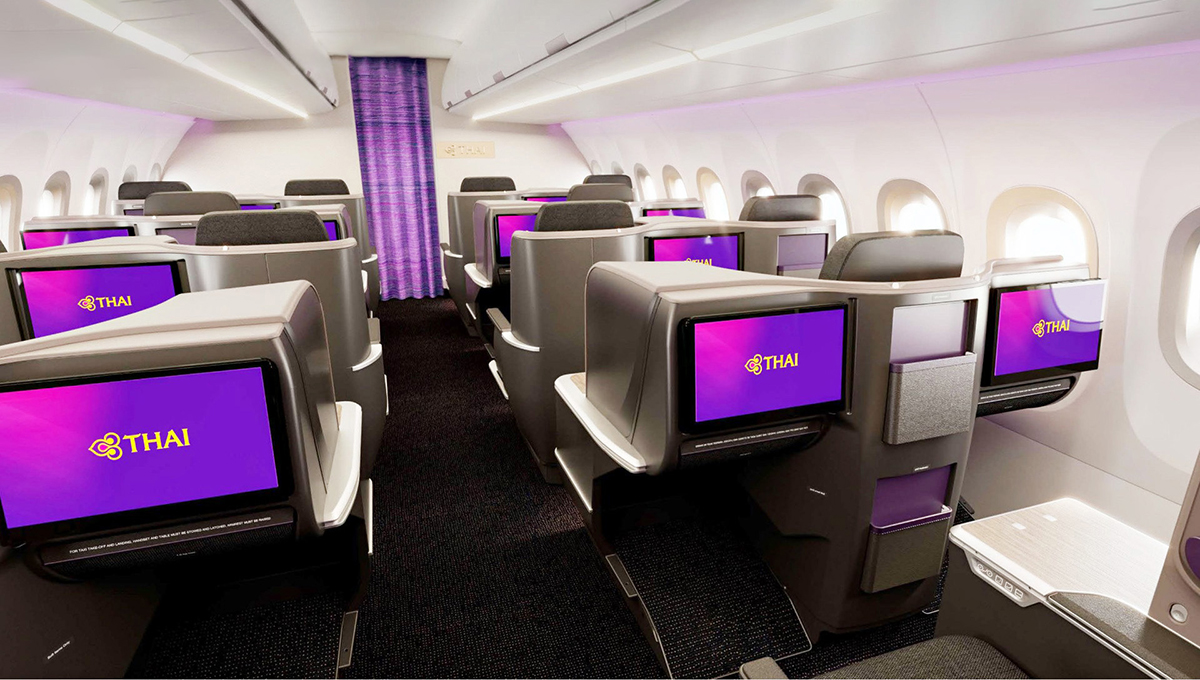
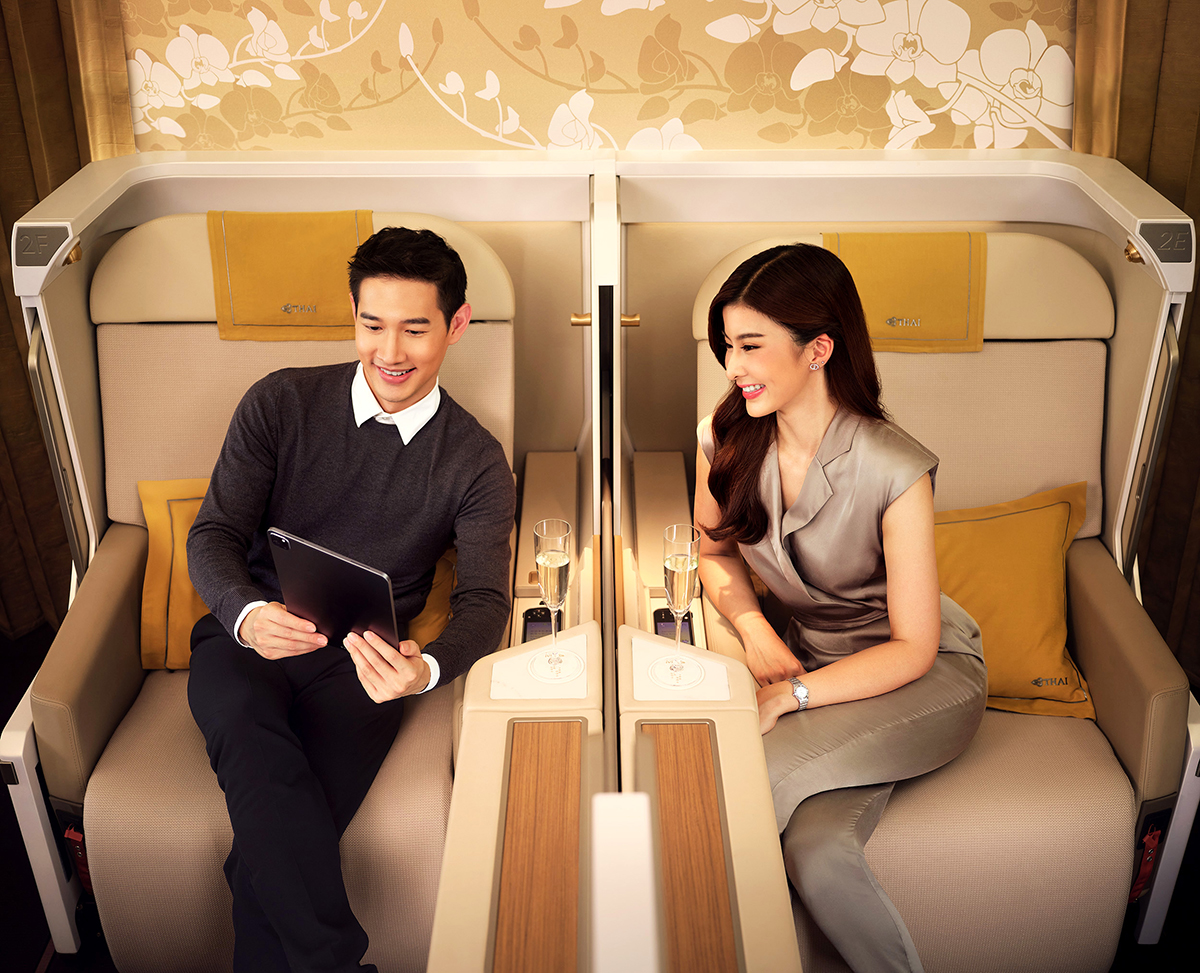
Mr. Wit proudly points to Thai Airways’ hallmark “Thai hospitality” and the “THAI touches” that embody the warmth and culture of Thailand aboard every flight. The airline is refining the customer experience through refurbished aircraft, such as the A320, B777-300ER, and A350, plus the introduction of the Airbus A321neo with design elements inspired by traditional Thai motifs, ergonomic seating, larger overhead bins, and high-speed Wi-Fi. As a full-service carrier, Thai Airways emphasizes safety, comfort, and quality from check-in to arrival. Its Bangkok hub offers excellent connectivity and flexible award travel options across the extensive Asia-Pacific network.
China has been a vital market for Thai Airways. How do you see its future in terms of Chinese outbound travel
China remains a critically important market, Mr. Wit explains. While recent regional dynamics have caused a temporary dip in Chinese tourist arrivals, the airline has diversified its revenue by growing markets in Europe, India, and Australia. The future holds significant promise as Chinese travelers using Bangkok as a transit hub to Europe and Australia are a key focus. Thai Airways is doubling its flight capacity to China with expanded routes and higher frequencies, demonstrating confidence in the market’s recovery and potential.
Could you share some strategies Thai Airways has implemented to strengthen its Chinese market presence
Thai Airways is aggressively expanding by doubling flight frequencies to major cities such as Beijing and Guangzhou while reinstating flights to Xiamen, Chongqing, and Changsha, and launching new routes to Wuhan and Shenzhen. Efficient new aircraft like the Airbus A321neo and Boeing 787-9 are deployed on these routes to enhance the passenger experience. The airline actively promotes Bangkok as the central hub for Chinese travelers connecting to Europe and Australia, reinforcing its position in this vital market.
Looking ahead, what is Thai Airways’ vision for growth in the Asia-Pacific and beyond
Under the banner “Fly to New Pride,” Thai Airways envisions itself as a competitive national airline and a source of pride for the country. Plans include expanding the fleet to 150 aircraft by 2033, with an order of 80 new Boeing 787 Dreamliners to revitalize long-haul flights to Europe, North America, and other destinations. The airline will continue extending its network, especially in Europe, with new routes to Milan, Oslo, and Brussels, while strengthening domestic connectivity. Sustainability remains a core commitment with the goal of carbon neutrality by 2050. Digitally, Thai Airways aims to streamline commerce channels and boost operational efficiency. Organizationally, it plans to spin off business units such as aircraft maintenance and catering into subsidiaries to promote growth and profitability aligned with global industry practices.
MR. WIT KITCHATHORN’S INSIGHTFUL REFLECTIONS SPOTLIGHT THAI AIRWAYS INTERNATIONAL’S FOCUSED STRATEGY, BLENDING TRADITION WITH INNOVATION TO CONNECT THAILAND TO THE WORLD WITH PRIDE AND DISTINCTION.
THAI AIRWAYS INTERNATIONAL
www.thaiairways.com


THE RESIDENCY PROGRAM SHAPER
MANATASE ANNAWAT
PRESIDENT OF THAILAND PRIVILEGE CARD
VISION AND ACUITY THAT MAKE THAILAND HOME
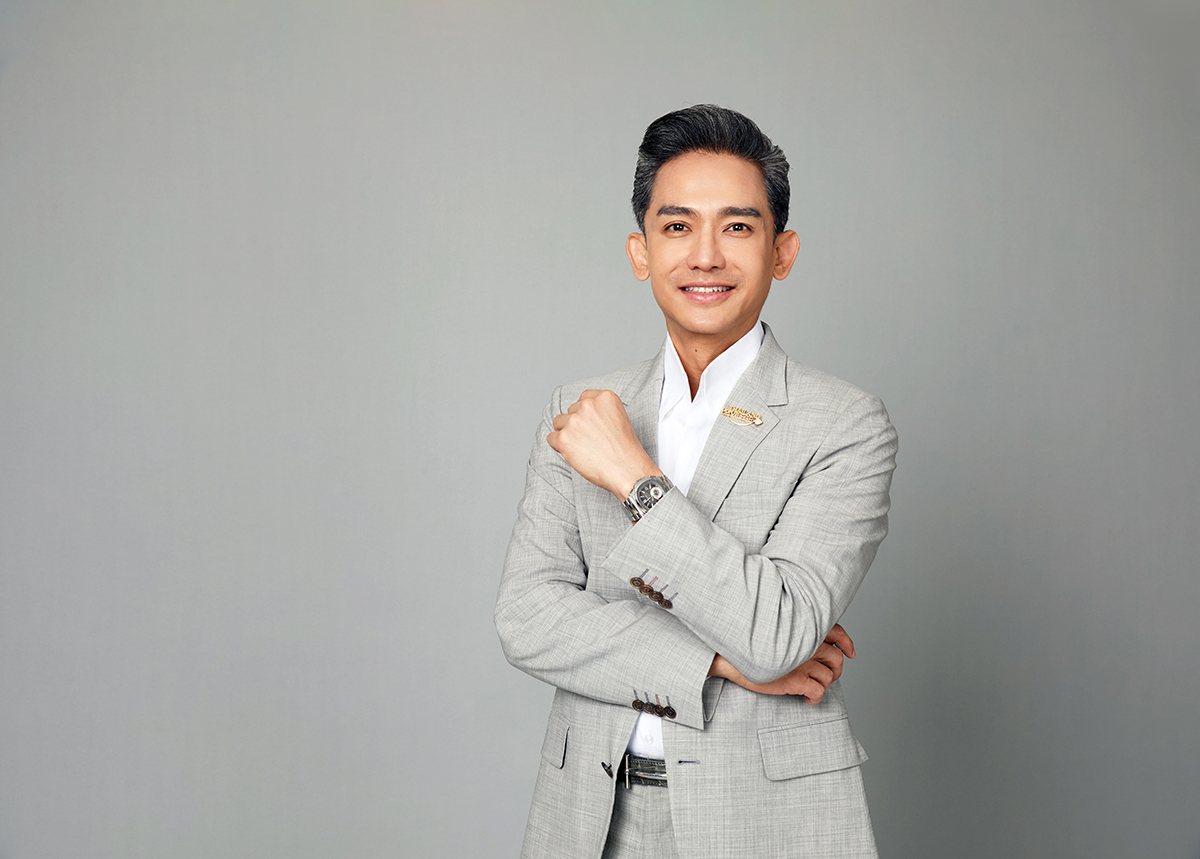
In the world of global marketing, there are those who sell products, and then there are those who shape experiences. For Manatase Annawat—to those who know him—his career has been a masterclass in the latter. After spending over three decades elevating world-class global brands, he has taken on perhaps his most personal and patriotic challenge yet: redefining how the world perceives Thailand, moving it beyond a mere holiday destination to a place people truly call home.
As the leader of Thailand Privilege Card, Manatase isn’t just managing a residency program; he is architecting a lifestyle. His transition from global corporate giants to a state-aligned enterprise wasn’t just a career move—it was a mission. “I’ve spent 30 years building international brands,” he reflects. “Today, I get to use that experience for my own country. It’s both a challenge and a point of immense pride.” But how do you convince the world’s most discerning individuals—the High-Net-Worth community who can live anywhere from London to Singapore—that Thailand is their ultimate “Second Home”?
For Manatase, the answer doesn’t lie in flashy brochures or creative slogans alone. It lies in insight. He understands that for a foreigner, the decision to relocate is fraught with silent questions: Is it stable? Is it safe? Will the system support me? “You have to answer the questions in their hearts before they even ask them,” he explains. “The turning point isn’t just a beautiful sunset or a rich culture; it’s the moment the accumulation of experiences makes them feel they aren’t just guests, but a part of our society. That is when a destination becomes a home.”
Under his leadership, the Thailand Privilege Card has evolved from a simple visa facilitator into a “Lifestyle Companion.” It’s a bold shift, and one that Manatase navigated with the precision of a seasoned strategist. He recognized that for his members, the true luxury isn’t gold-plated services—it’s Time.
“Time is the new luxury,” Manatase says.
“THE HEART OF WHAT WE OFFER IS ‘MONEY CAN’T BUY EXPERIENCES.’ WE PROVIDE A COMPREHENSIVE SERVICE OF CARE THAT GIVES TIME BACK TO OUR MEMBERS.”
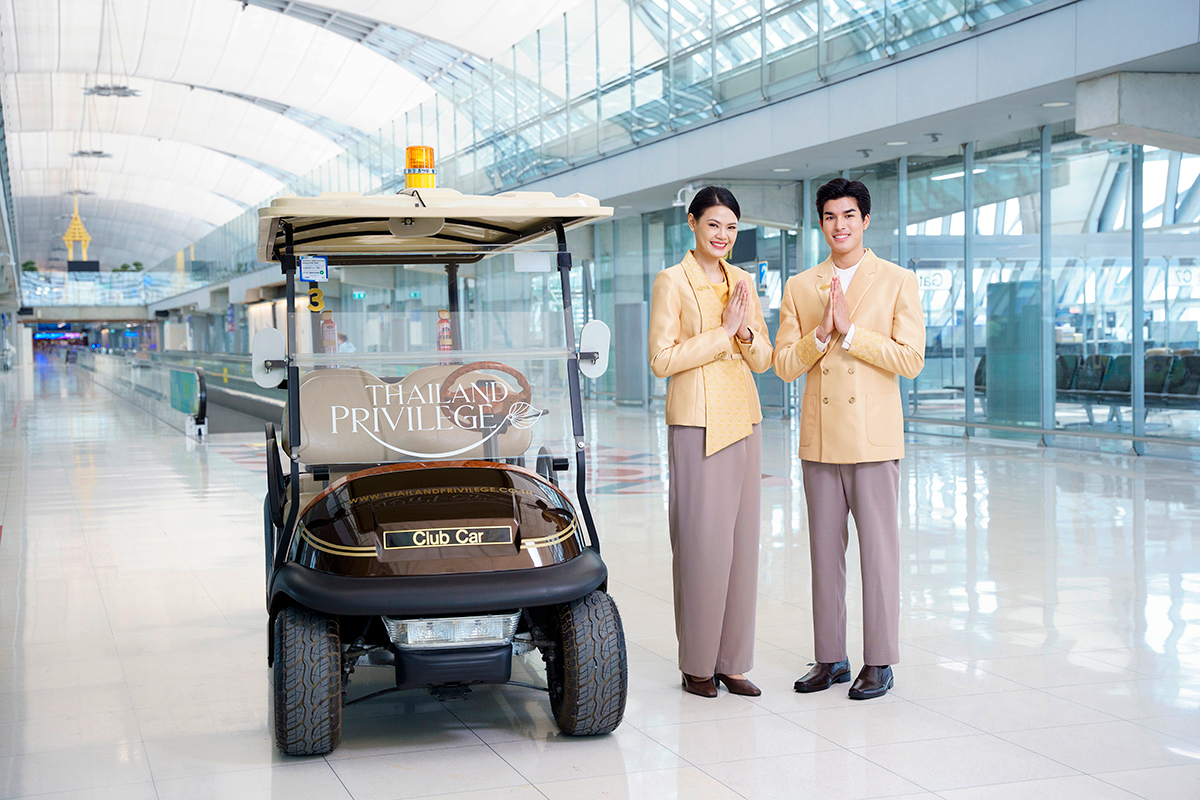
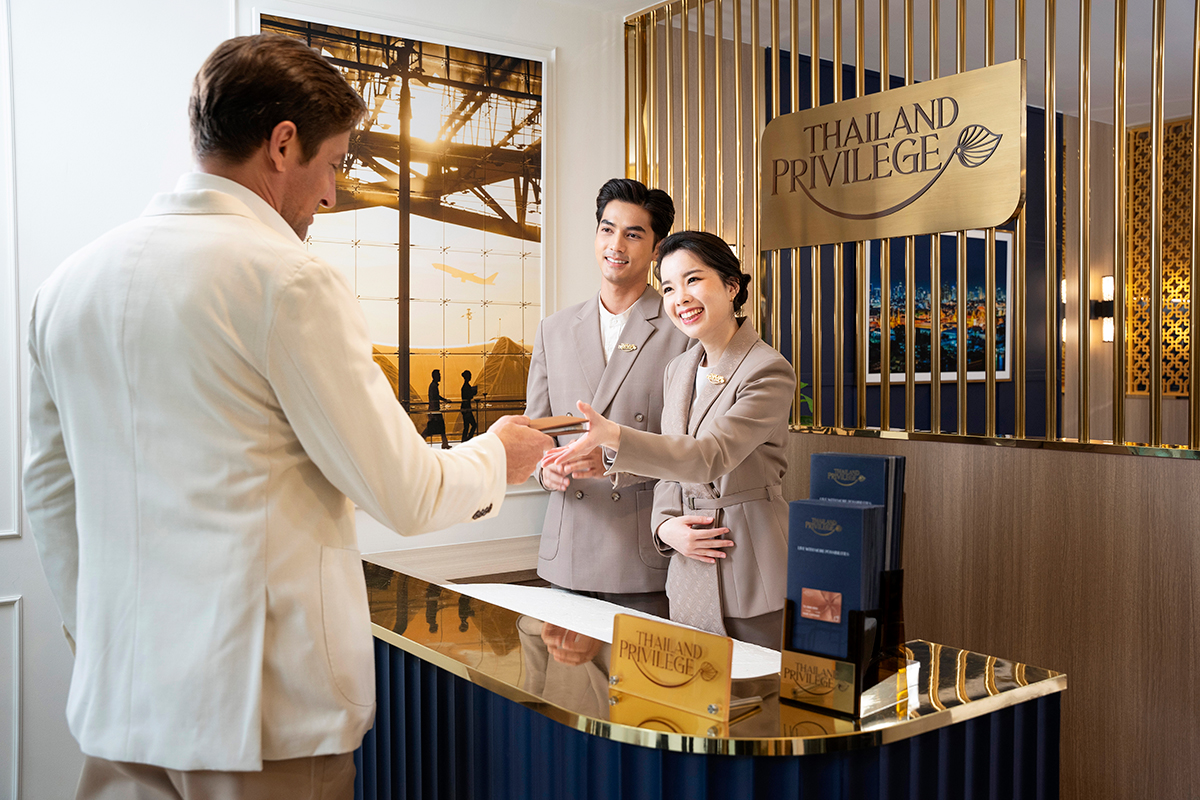
From the moment they touch down and are met by Airport VIP Services (Elite Personal Assistant) to the constant support of an Elite Personal Liaison (EPL), the goal is a “worry-free” existence. By removing the friction of bureaucracy and local logistics, he allows members to focus on what actually matters: living their lives.
However, being a “Residence Shaper” also means being a “Pain Point Solver.” Manatase is refreshingly candid about the challenges Thailand faces in the global race for talent and wealth. He identifies three main hurdles: fragmented data, the lack of a true “OneStop Service” for long-term residents, and a “Lifestyle Gap” where support services sometimes fall short of the standards found in cities like New York or London.
His strategy to bridge this gap is built on a One-Stop Ecosystem. By forging strategic alliances with banks, world-class hospitals, and real estate developers, he is creating a seamless digital and physical infrastructure. “We aren’t just fixing problems,” he notes. “We are designing customer experiences so those problems don’t happen in the first place. It’s about preventive measures.”
This transformation into a Lifestyle Companion was not without risk. In an industry often obsessed with short-term member counts, shifting the focus to long-term residency and “Consistency of Experience” required a change in mindset—not just within his organization, but across the entire network of partners and private-public alliances.
When you strip away the titles and the high-level strategy, you find a man deeply rooted in the authentic soul of his city. If you ask him where he would take a member to see the “real” Thailand—the part not found in any travel guide—he won’t suggest a five-star rooftop. Instead, he’ll point toward the old quarters of Phra Nakhon, the historic heart of Bangkok.
He speaks fondly of the early mornings along Dinso Road or Song Wat, where ancient temples sit side-by-side with aging shophouses, and the aroma of a 40-year-old coffee shop wafts through the air. “It’s Bangkok in its most honest version,” he says. “It’s a place that is completely itself.
To Manatase, this is the ultimate luxury: the feeling of belonging. Whether it’s navigating a complex residency application or walking through a quiet alley in Phra Nakhon, his goal remains the same. He is shaping a Thailand where the transition from ‘tourist’ to ‘resident’ is invisible, leaving only the warmth of Thai hospitality and the peace of mind that comes with being exactly where you belong.
THAILAND PRIVILEGE CARD CO., LTD.
110/2 NORTH SATHORN ROAD, SILOM, BANGRAK, BANGKOK 10500, THAILAND
(Head Office)
“World’s Premier Residency Program and Privileged Services Providers for Exclusive Individuals”
www.thailandprivilege.co.th
THE EXPERIENCE ORCHESTRATOR
VITANART VATHANAKUL
CHIEF EXECUTIVE OFFICER
ROYAL CLIFF HOTELS GROUP
CARRYING A TIMELESS LEGACY FORWARD
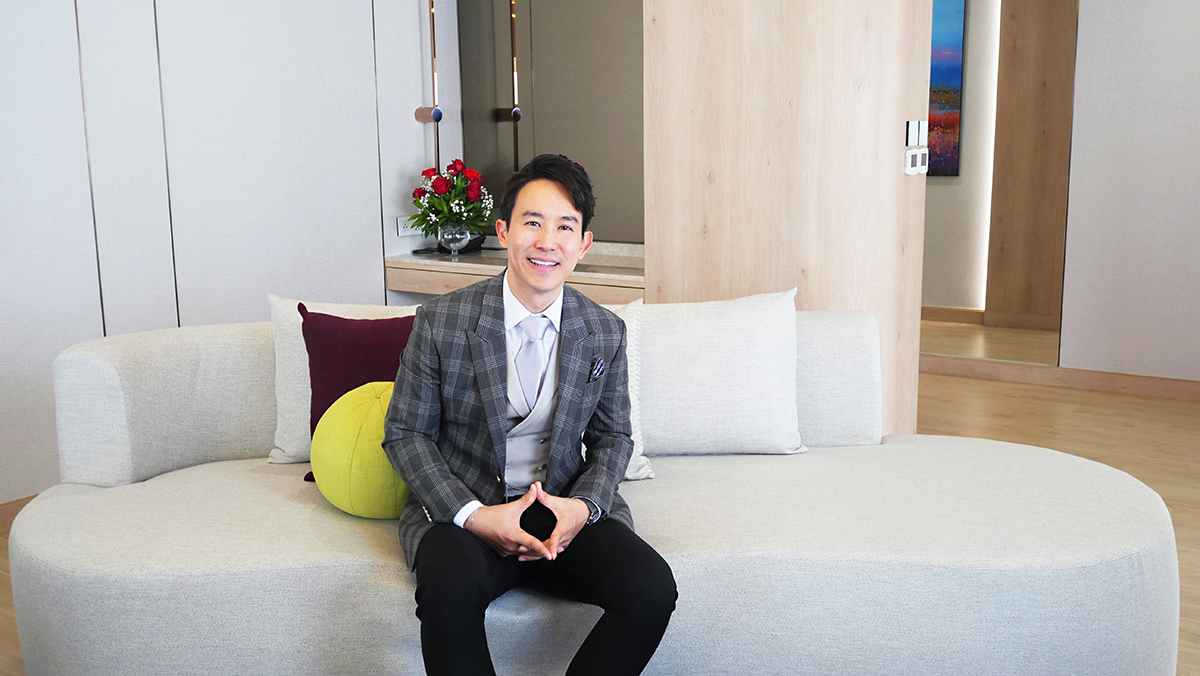
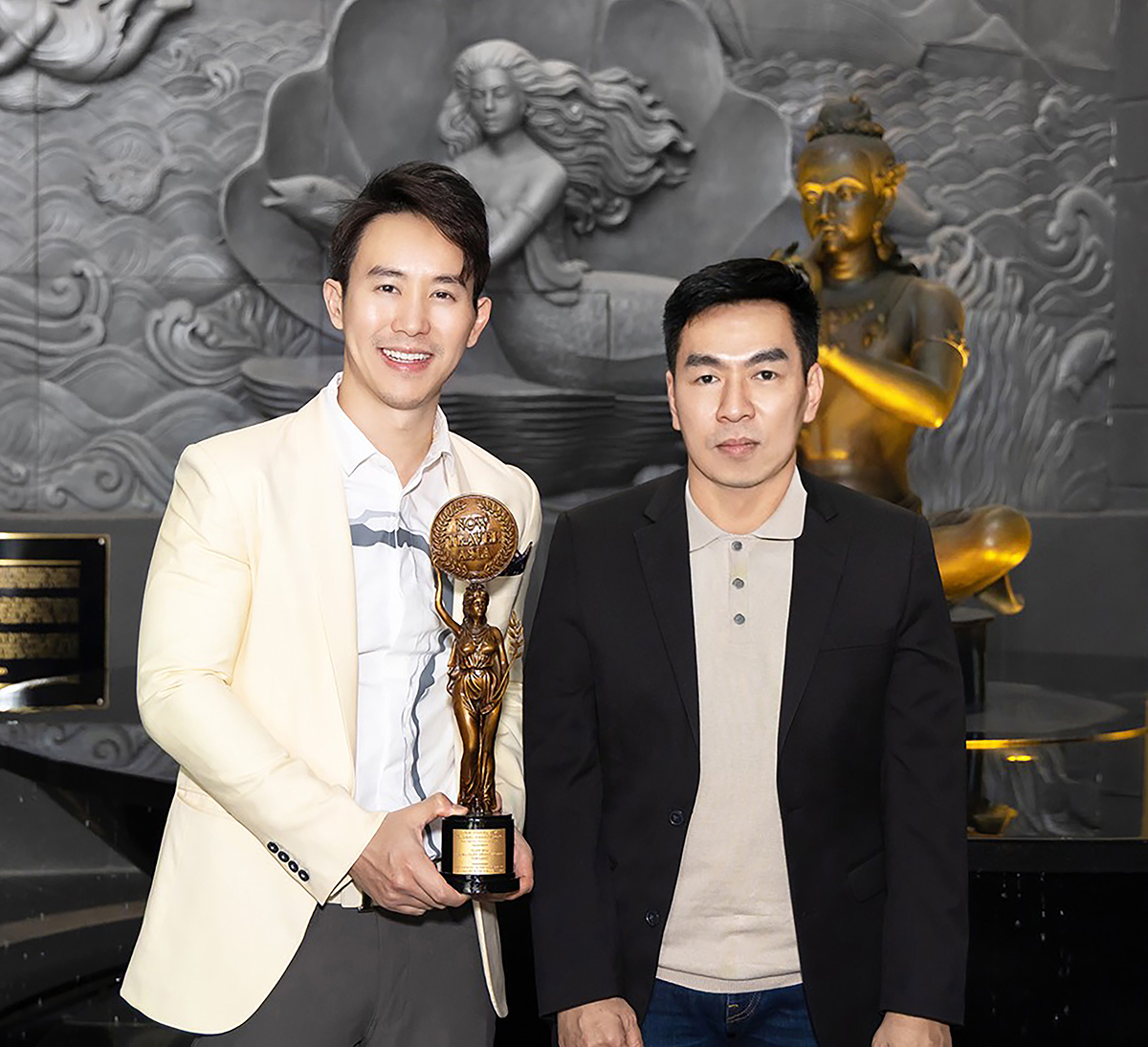
In the Asia-Pacific hospitality landscape, few names resonate with enduring prestige quite like Royal Cliff Hotels Group. For half a century, the brand has stood as a cornerstone of Thailand’s luxury tourism, welcoming world leaders, hosting international events, and creating magical experiences for travelers from across the globe. Today, guiding this legacy into its next chapter is Mr. Vitanart Vathanakul, a second-generation leader who seamlessly bridges heritage with modern vision.
In conversation with NOW Travel Asia, he shares insights on leadership, reinvention, sport, and the discipline required to remain relevant in a rapidly evolving global tourism environment.
A Global Vision for Timeless Hospitality
For Vitanart, the most compelling challenge in today’s tourism industry is not disruption itself, but staying relevant, desirable, and topof-mind amid shifting traveler expectations worldwide. His long-term vision positions Royal Cliff not simply as a luxury hotel group, but as a timeless destination, one that delivers magical holidays, hosts extraordinary international events, and serves as a hub for sports, wellness, business, and cross-cultural connection.
“What keeps me motivated,” he explains, “is how we carry forward the Royal Cliff legacy in a way that still resonates with future generations of global travelers. We aim to be the top of the mind for visitors coming to Pattaya. While we are widely recognized as a five-star hotel, we consistently aim to deliver an experience that goes beyond this distinction.”
To achieve this, the complexity of modern hospitality is distilled into key strategic pillars: talent development, sustainability and environmental responsibility, digital transformation, technological disruption, and evolving guest behavior. Rather than seeing these as obstacles, Vitanart views them as opportunities to learn, adapt, and innovate continuously, using data to elevate guest experiences while remaining emotionally connected to people and place.
At its core, Royal Cliff’s ambition is universal: to create lasting memories, foster meaningful global connections, and showcase the warmth and elegance of Thai culture on an international stage.
Preserving Values While Embracing Reinvention
As a second-generation leader, Vitanart emphasizes that he inherited far more than a business. He inherited a philosophy of hospitality, one grounded in integrity, trust, humility, attentive listening, and genuine care for people. These principles, shaped since childhood, remain unchanged despite decades of industry transformation.
Equally formative was the mindset of longterm resilience. Royal Cliff has weathered multiple global crises, from the Asian financial crisis in the late 1990s, to the global financial downturn of 2008, and most recently, COVID-19 pandemic. Each reinforced the importance of adaptability, flexibility, and evolution in sustaining a hospitality brand across generations.
What defines Vitanart’s era is a sharpened global brand positioning, the elevation of sports and wellness as strategic pillars, creative sustainability initiatives, data-driven decision-making, and a culture that values innovation and continuous learning.
“It ultimately comes down to preserving our core values while embracing reinvention,” he reflects.
ONE CONCEPT THAT HAS DEEPLY INFLUENCED HIS LEADERSHIP IS “UNLEARN AND RELEARN.” THE HOSPITALITY AND MARKETING LANDSCAPE HE ENTERED WAS VASTLY DIFFERENT FROM TODAY’S WORLD OF DIGITAL PLATFORMS, REAL-TIME DATA, AND AI-DRIVEN ENGAGEMENT. REMAINING RELEVANT REQUIRED LETTING GO OF OLD ASSUMPTIONS AND CONSTANTLY RECALIBRATING STRATEGIES, AN APPROACH HE APPLIES ACROSS THE ORGANIZATION.
Leadership Lessons from Competitive Sport
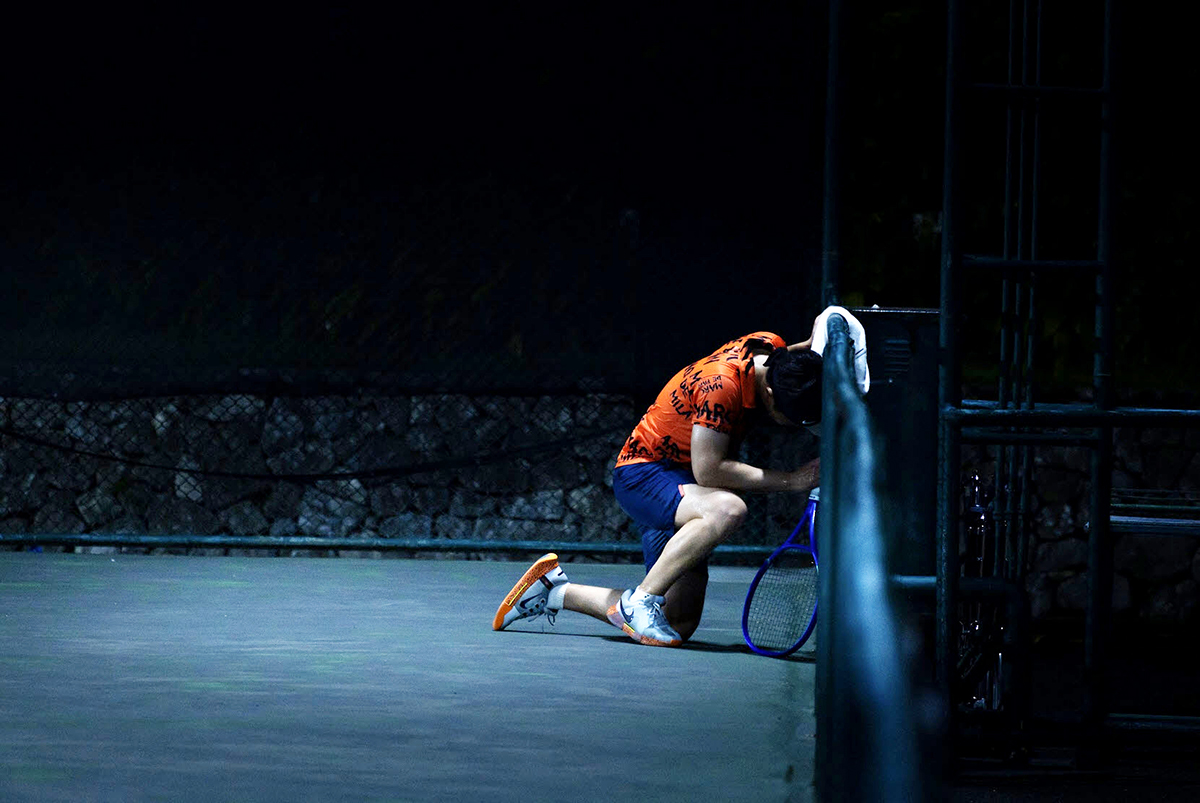
Beyond hospitality, Vitanart is also a competitive tennis athlete, drawing strong parallels between sport and leadership. In 2023, he reached two milestones winning an ITF Masters Tour title and breaking into Global Top 100 Ranking for 35+, reaching a career-high of No. 96.
His ambitions, however, extend further: reaching Top 50, securing titles in doubles and mixed doubles, and competing in prestigious tournaments across the region.
“Competitive sport and entrepreneurship are closely aligned,” he explains. “Success is the combination of ability, motivation, and discipline.”
Ability is developed through learning and coaching. Motivation is driven by passion and perseverance, especially under pressure. Discipline is forged through deliberate practice, physical fitness, mental resilience, and the willingness to learn from failure.
Tennis, he notes, shapes leaders to rebound quickly from setbacks, stay composed under pressure, and approach challenges with clarity always thinking ahead with multiple scenarios and well-prepared contingency plans.
Personal Passions That Shape the Guest Experience
Many of Vitanart’s personal interests subtly influence the Royal Cliff experience in ways guests may sense intuitively. A lifelong sports enthusiast, he actively participates in squash, pickleball, football, running, and skiing.
Recently, endurance running and skiing have become areas of focused personal development, he even won the top 50 award for achieving 26th position out of 2,600 runners in a major event, inspiring new performance goals.
His international ski trips double as immersive learning journeys. Visiting the world’s finest alpine resorts, hotels, and chalets allows him to study design, service innovation, and guest engagement firsthand. These observations inspired initiatives such as Royal Cliff’s personalised itinerary programmes, tailored to individual guest lifestyles and preferences.
Wellness is another evolving passion. After completing studies at a wellness academy, Vitanart expanded Royal Cliff’s wellness philosophy beyond relaxation into sports recovery, physiotherapy, and holistic health. This approach now extends into the culinary realm, where chefs are developing healthier, wellness-oriented menus aligned with global lifestyle trends.
“I’m fortunate to integrate what I love-sport, wellness, and innovation-into the way we shape our business,” he says.
A Defining Leadership Lesson
One of Vitanart’s most formative lessons came early in his career, when overconfidence and lack of preparation led to the loss of a major international group of over 3,000 delegates highlighting the risks of assumptions, shallow inspections, and missing scenario planning.
The loss was a turning point. “In business, just like in sport, being ahead doesn’t mean you’ve won,” he reflects. “Momentum is not closure, and confidence can never replace preparation.”
Since then, Royal Cliff’s approach has become more refined and strategic. Preparation starts early, with repeated rehearsals, detailed cenario planning, and every guest touchpoint carefully designed and tested. Vitanart remains actively involved, ensuring clear communication, anticipating risks, and delivering impressive moments for delegates from customized welcome drinks to tailored decorations.
Equally important, relationships extend beyond departure through follow-ups and long-term partnerships. “Hospitality is an emotional business” he says, emphasizing that Royal Cliff focuses not just on hosting, but on building lasting connections and meaningful experiences.
ROYAL CLIFF HOTELS GROUP
www.royalcliff.com

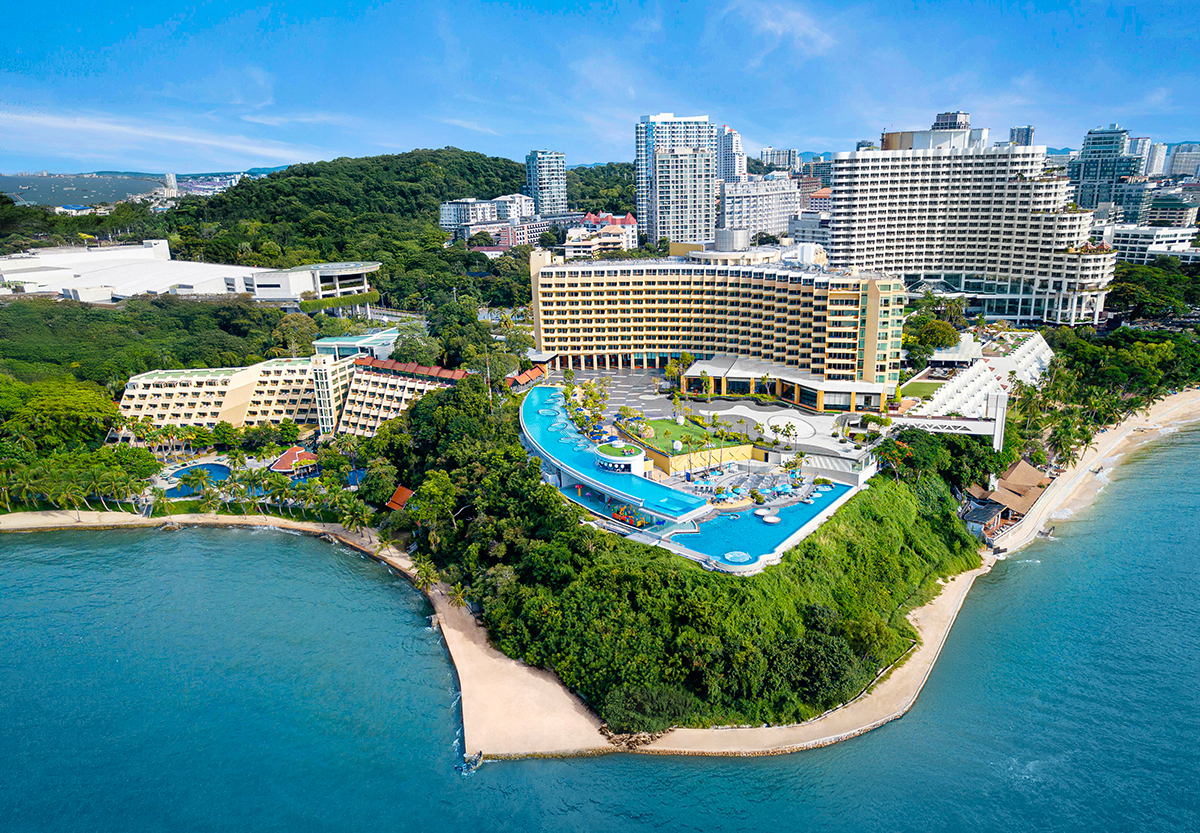
THE CULTURAL CONNECTOR
JULIAN LOWRY
GENERAL MANAGER
LE MÉRIDIEN PHUKET BEACH RESORT
AND THE HEART OF PHUKET
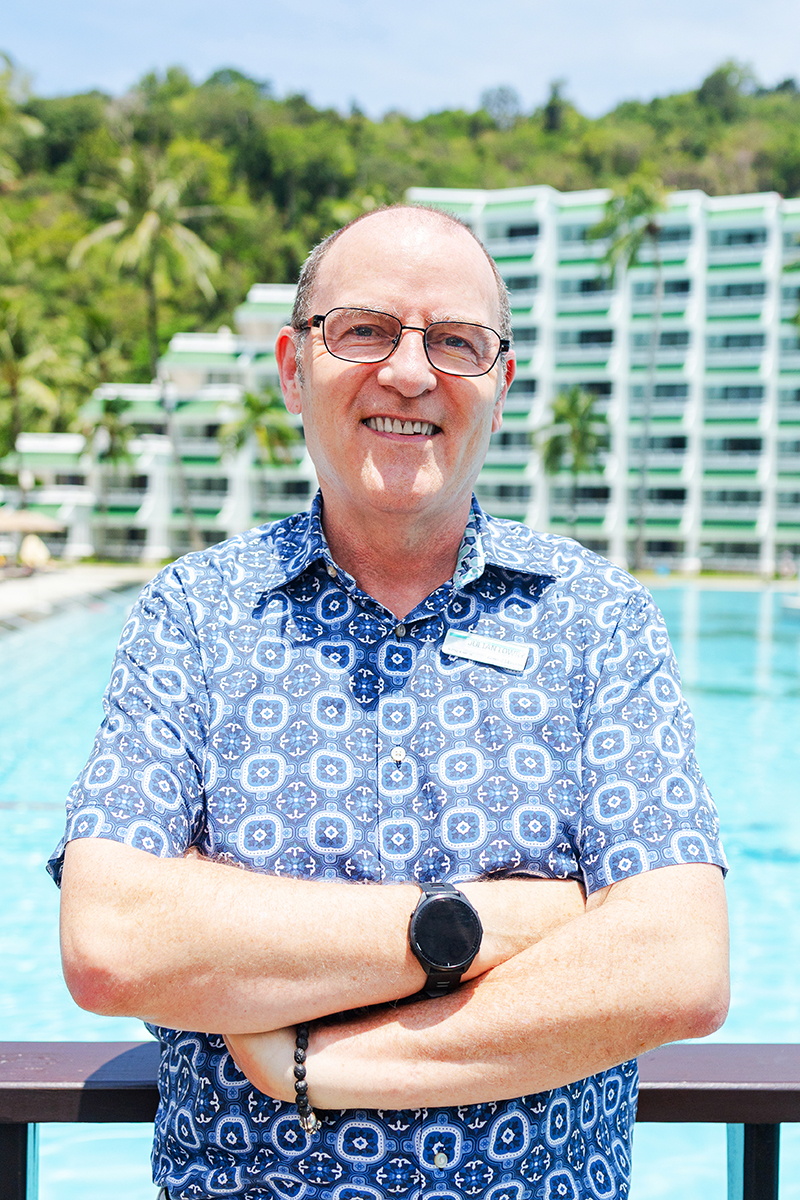
In the world of luxury hospitality, a general manager is often judged by the familiar metrics of occupancy rates, revenue performance and service standards. Yet for Julian Lowry, the man overseeing Le Méridien Phuket Beach Resort, success is measured by something far less quantifiable — the relationship between a resort and the community that surrounds it.
After more than fifteen years living and working in Phuket, Julian has become a familiar figure on the island’s hospitality scene. Phuket, of course, is a place where luxury tourism and local life exist side by side. At dawn, long-tail boats head quietly out toward the Andaman fishing grounds while market vendors prepare the day’s first baskets of seafood. By afternoon, beach cafés fill with visitors drawn by the island’s easy rhythm of sea, sun, and conversation. It is within this balance that Julian has shaped his approach to leadership.
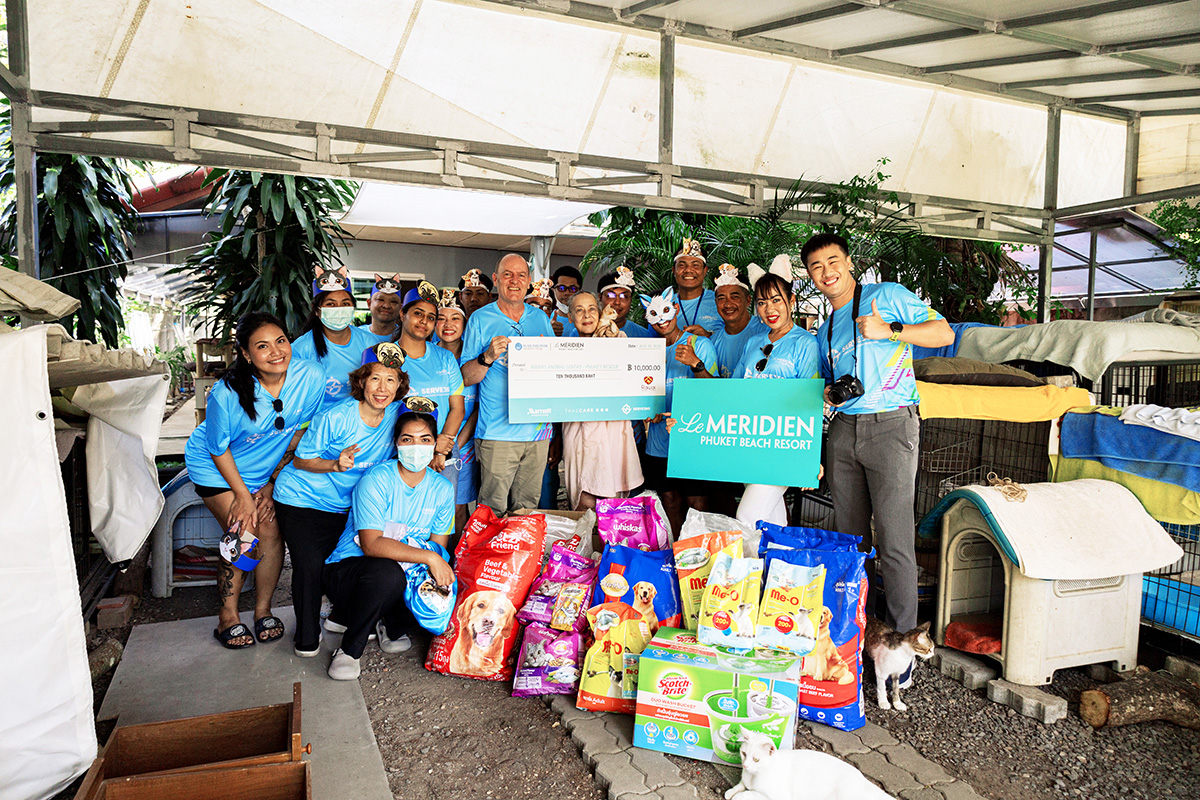
Colleagues often speak of his instinctive “human touch.” For him, a successful resort cannot exist in isolation from its surroundings. Instead, it should reflect the character of the place itself. Under his stewardship, the resort has strengthened its ties with local communities, supporting livelihoods and encouraging cultural exchange between guests and residents alike. Thai heritage here is not presented as a staged attraction but as a living presence — visible in the people who work at the resort and in the relationships built beyond its gates. He also believes in helping in any small ways the local community and by quietly delivering basic supplies to the more needy during the Covid and post Covid times with his wife Nicola, then when the needs reduced in that area they focused more to supporting Baan Lung Pitak a childs day care center for poor families who can’t afford childcare, the center was just recently moved from the old Women’s prison to a new location near Saphan Hin area where 50 kids a day are taken care of whilst the parents are out at work, the funds raised by not only the Hotel team but now our guests are also donating without any encouragement.
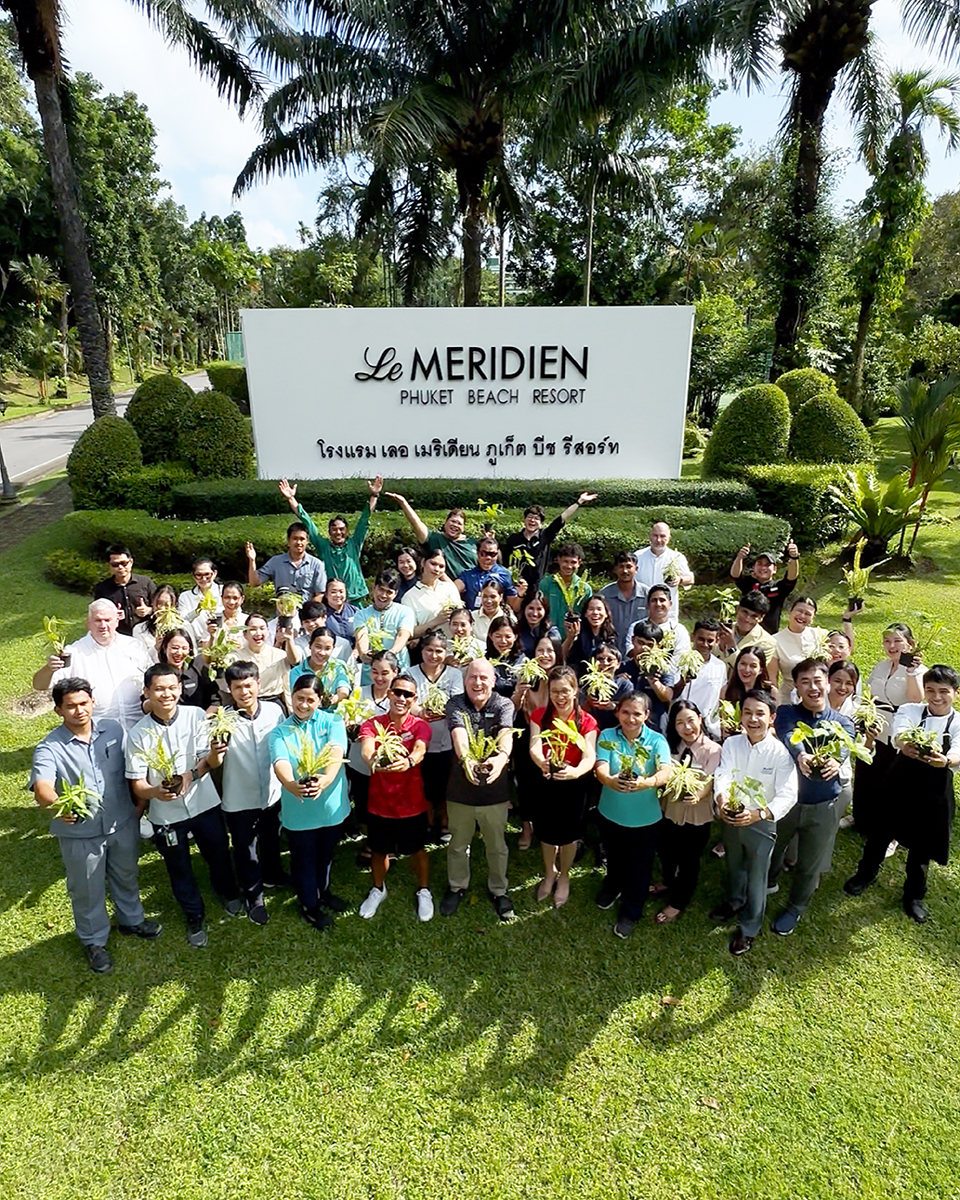
THE RESORT WAS ONE OF THE FIRST TO ELIMINATE PLASTIC BOTTLES FROM THE ROOMS AND BY WORKING TOGETHER WITH THE SUPPLIER HAVE SAVED THOUSANDS OF PLASTIC BOTTLES THAT WOULD EITHER END UP IN A LANDFILL OR BURNT.
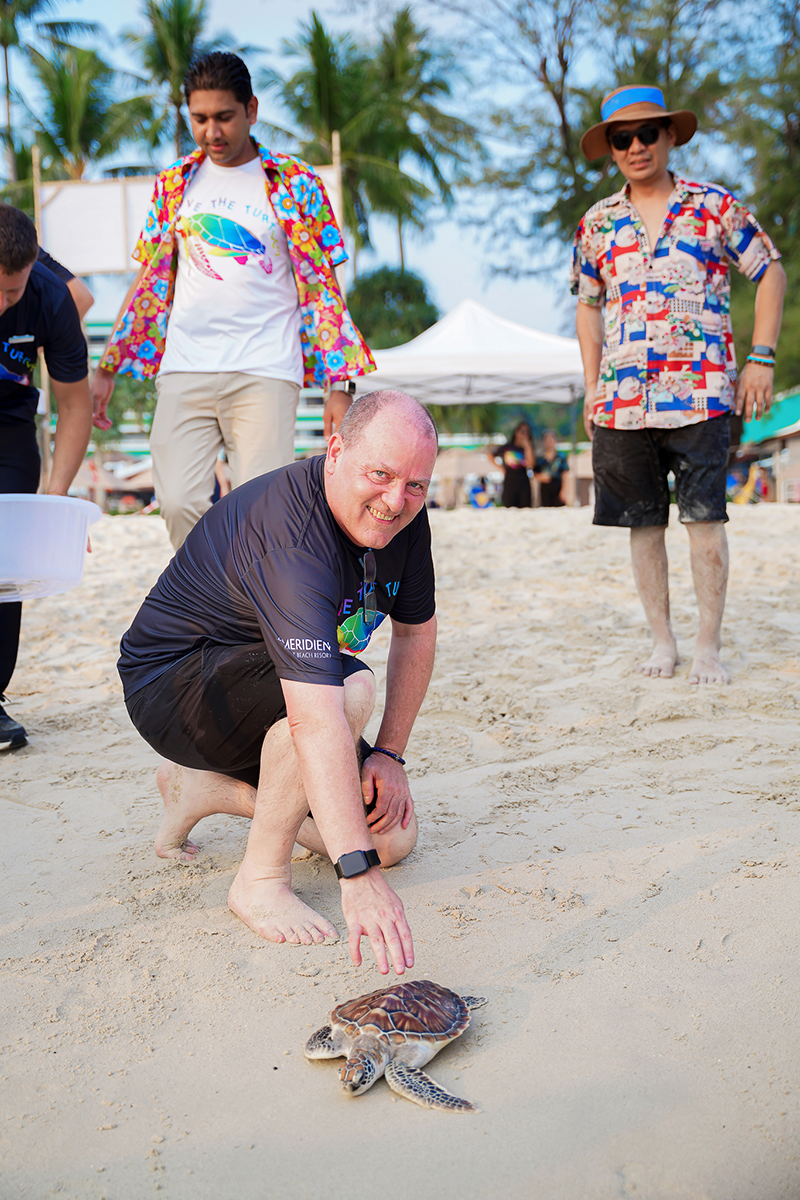
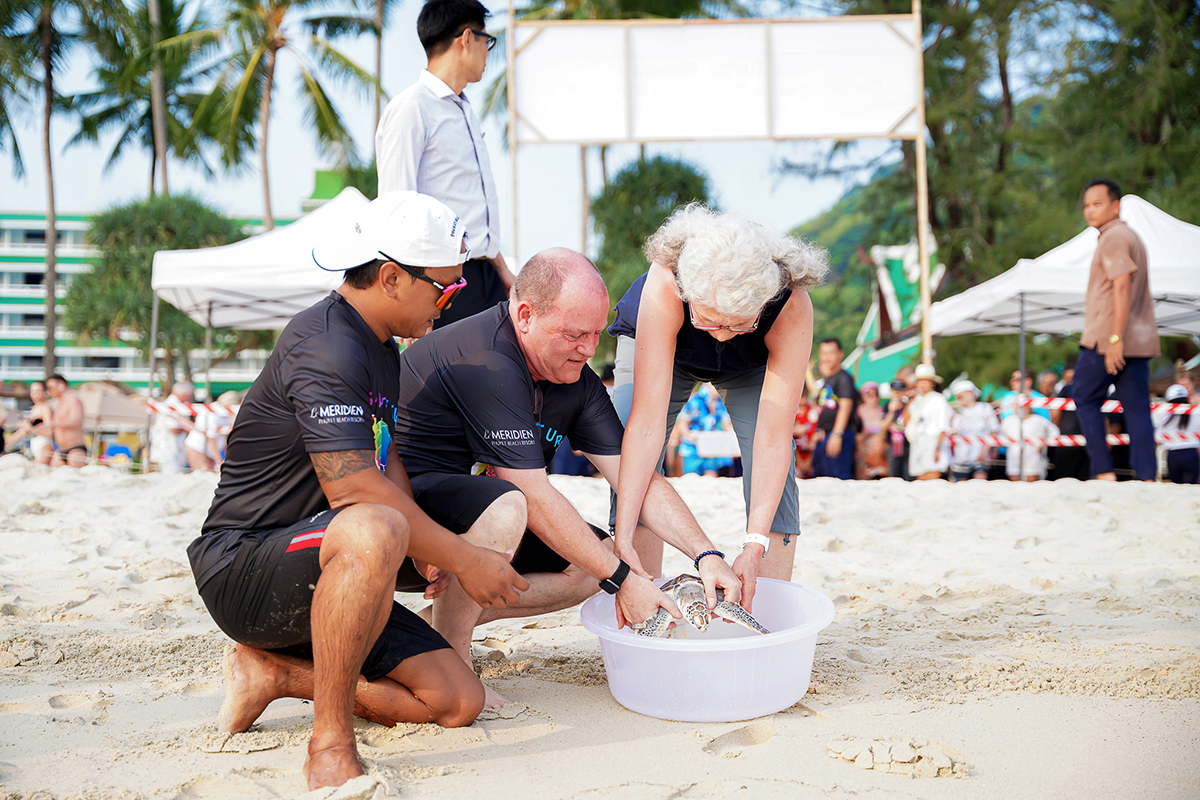
Perhaps the most quietly powerful expression of Julian’s commitment lies along the resort’s secluded stretch of sand. A long-time advocate of marine conservation, he has championed efforts to protect the sea turtles that occasionally return to Phuket’s shores. In recent months, a mother turtle choosing the resort’s beach to lay her eggs offered a rare and moving moment — one that staff (associate), and local conservationists welcomed as a hopeful sign.
The release of hatchlings into the Andaman Sea has since become a deeply symbolic event for the resort community. Guests gather alongside staff and local families, watching the tiny creatures begin their uncertain journey toward open water. For Julian, such moments represent something larger than hospitality.
They speak of responsibility.
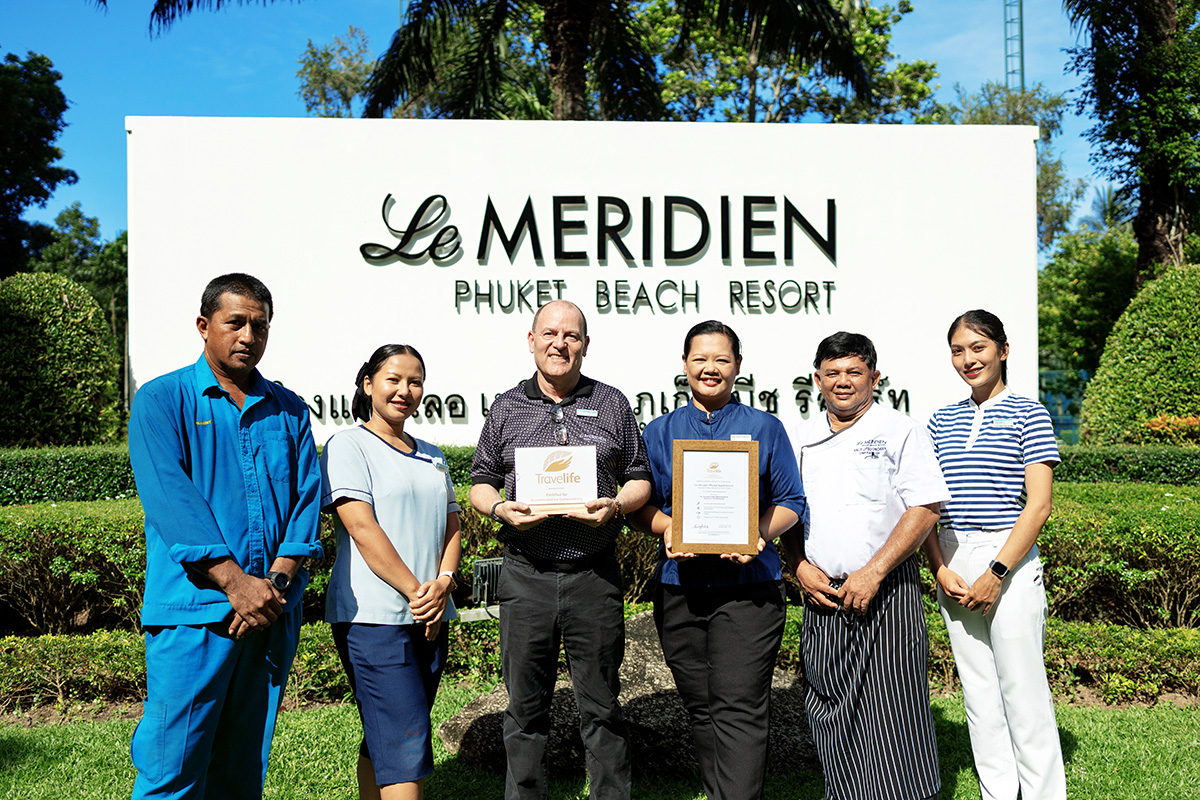
In this sense, Julian Lowry embodies the role of a cultural connector, someone who understands that a hotel’s true legacy lies not only in the experiences it offers travellers, but also in the respect it shows to the land, the culture and the people who call the destination home.
LE MÉRIDIEN PHUKET BEACH RESORT
www.lemeridienphuketbeachresort.com
THE CONNECTOR
HUDSADIN EAMSHERANGKUL
DEPULY MANAGING DIRECTOR
BELL TRANSPORT CO., LTD.
AND THE JOURNEY BETWEEN MOMENTS
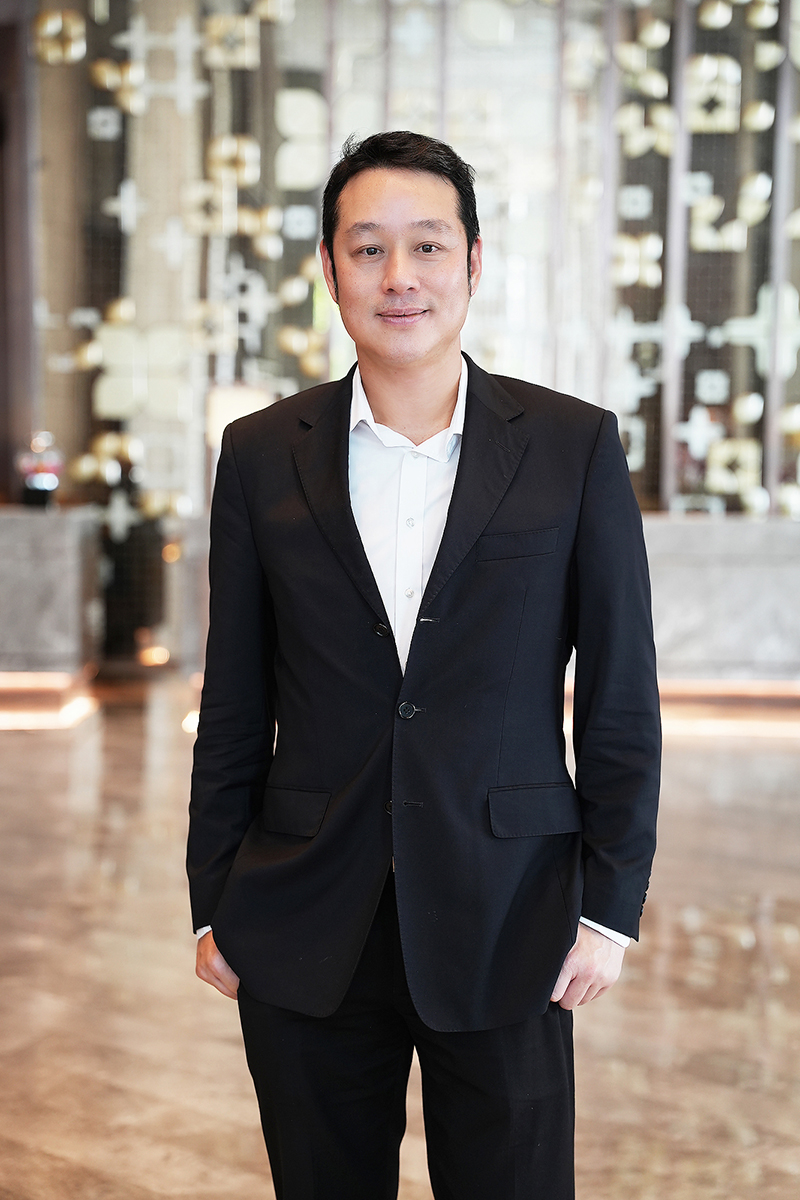
In travel, the moments that matter most are rarely the ones people plan for.
They happen just after the airport doors open, when everything still feels unfamiliar. And they return again at the very end, on the way back, when a trip begins to settle into memory.
For Hudsadin “Oil” Eamsherangkul, Deputy Managing Director of Bell Transport and HOWA International, these are not passing details. They define the entire journey.
HE CALLS THEM THE FIRST MILE AND THE LAST MILE.
Not as industry jargon, but as a way of understanding how travellers experience a destination—from the first point of contact to the final impression they take home.
“Our drivers are often the first people our guests meet,” he says. “We don’t know what they’ve gone through before arriving. So the role isn’t just to drive—it’s to understand the moment and respond to it.”
That perspective places Bell Transport in an unusual position. It operates within transport, yet thinks like hospitality. Cars and systems are only part of the equation. What matters more is how a guest feels during the transition from one place to another.
The First Mile carries the weight of arrival—fatigue, expectation, sometimes uncertainty.
The Last Mile, he explains, carries something else entirely. It is the point where the experience is processed. Drivers listen, observe, and gather what guests are willing to share. Those insights are not incidental.
“THEY HELP US IMPROVE. AND THEY HELP OUR PARTNERS IMPROVE AS WELL.”
Positioned at both ends of the journey, Bell Transport sees what often goes unnoticed in between. It also shapes how Hudsadin defines luxury.
A premium vehicle alone does not qualify. “Luxury comes from how everything works together.” He describes it as the alignment of three elements: the vehicle, the hotel, and the service provider. But the decisive factor is still the person behind the wheel.
At Bell Transport, the distinction is intentional. Drivers are trained as chauffeurs individuals responsible not just for transport, but for delivering an experience. The difference is found in small decisions.
Knowing when to engage in conversation, and when to step back. Adjusting a route before delays become visible. Anticipating needs without making them obvious. These are not scripted actions, but developed instincts. And they rely on consistency.
For corporate clients and hotel partners, consistency matters more than novelty. Unlike app-based services where the experience can vary, the expectation here is straightforward: the same standard, every time.
“RELIABILITY BUILDS TRUST,” HE SAYS. “WITHOUT THAT, NOTHING ELSE HOLDS.”
Behind that reliability is a system designed with discipline. Bell Transport uses its own internal technology to assign drivers, monitor working hours, and ensure that each journey is handled by someone fully prepared.
Efficiency plays a role, but safety remains the priority. The same principle applies to partnerships. Hotels are closely integrated through booking and tracking systems.
Airline partnerships, while considered, are approached with caution. Increasing volume at the expense of driver readiness is not an option.
“IF THE SYSTEM IS PUSHED TOO FAR, QUALITY DROPS.” HIS PERSPECTIVE EXTENDS BEYOND THE COMPANY ITSELF
He is direct about the structural challenges within Thailand’s transport sector. Regulations, he notes, often rely on fixed frameworks that leave little room for improvement.
His suggestion is measured rather than radical. Define a minimum standard. Then allow competition to raise the level beyond it. “If someone can do better, they should be allowed to.”
It is an approach grounded in practicality rather than disruption.
The same balance appears in his view on electric vehicles. He recognises the advantages—refinement, reduced emissions, a more controlled in-car environment—but remains cautious about cost structures and infrastructure readiness. “A solution has to make sense operationally as well.”
Looking ahead, Bell Transport is already shifting its role. From a transport provider to a technology-enabled mobility system—one that connects drivers, partners, and travellers through a structured network.
It is not a dramatic shift on the surface. But the direction is clear.
In a city defined by constant movement, Hudsadin Eamsherangkul focuses on what happens between departure and arrival—the stretch where expectations are formed, adjusted, and remembered.
Because in the end, a journey is not defined by distance, but by how it unfolds—and who shapes it along the way.
For those who understand that the first and last moments matter just as much as the destination itself, Bell Transport continues to operate at the intersection of movement and experience, connecting travellers to Thailand in ways that often go unnoticed, but are rarely forgotten.
BELL TRANSPORT CO., LTD.
679/4 JARANSANITWONG RD., ARUN-AMMARIN, BANGKOKNOI, BANGKOK 10700
LIMOUSINE SERVICE
bt.rsvn@gmail.com
+66 (0)95-205-5091 (24/7)
CAR RENTAL
bc.rsvn@gmail.com
+66 (0)81-937-0997 (Office Hours)
www.belltransport.co.th


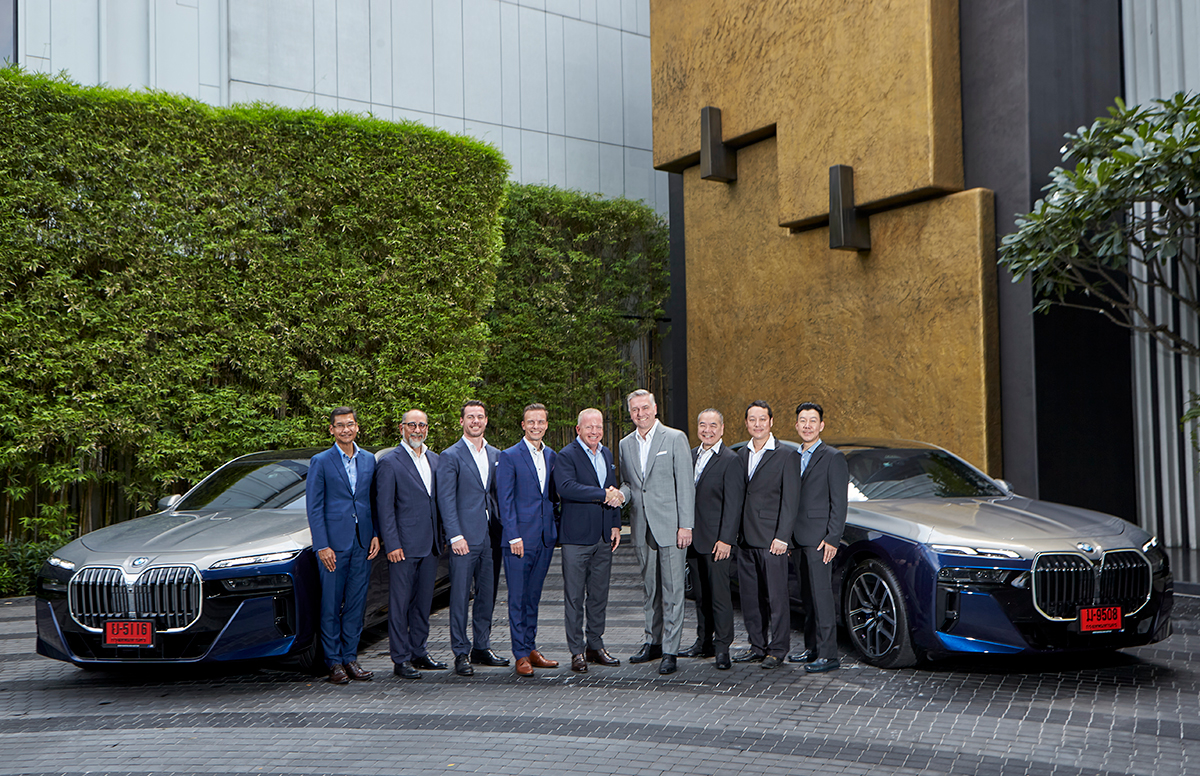
THE CATALYST
JIHONG AN
SENIOR VICE PRESIDENT – ASIA
SONO HOTELS & RESORTS ASIA
THE VISION AND ARCHITECTURE OF CONFIDENCE
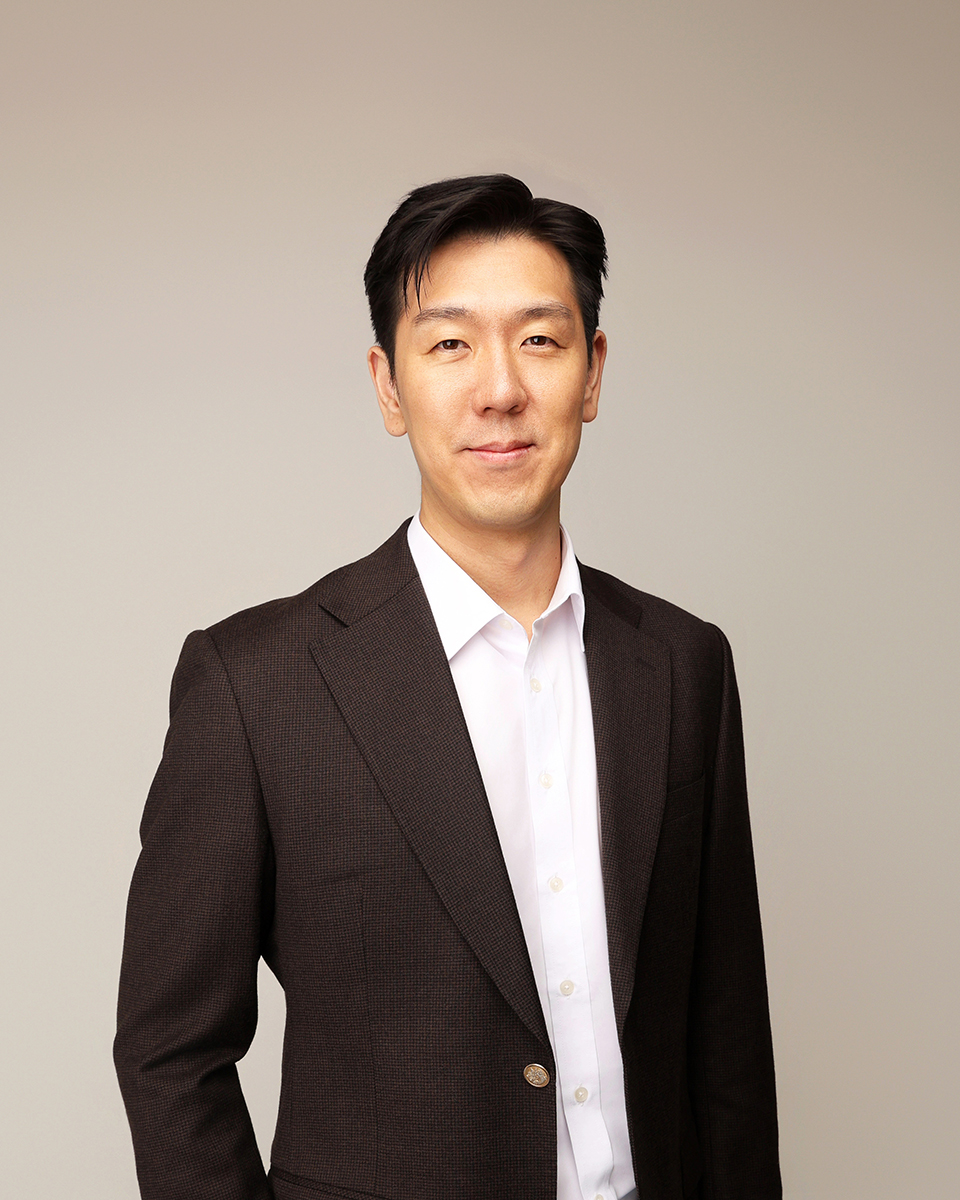
In the high-stakes theater of hospitality investment, timing is frequently mistaken for strategy. Markets fluctuate, capital retreats, and decisions are often paralyzed by the search for the “perfect moment” to act. Yet, for SONO Hotels & Resorts Asia, timing has always been something of a distraction.
As the industry observes increasingly unpredictable cycles, a quieter reality emerges: waiting for certainty is, in itself, a form of risk. This is perhaps why, at a juncture where many chose caution, SONO moved forward. This was not a contrarian impulse, but a disciplined understanding of what uncertainty reveals. Hesitation strips away excess optimism, allowing asset valuations to settle and partnerships to form on grounded expectations. What others perceive as instability, SONO reads as clarity.
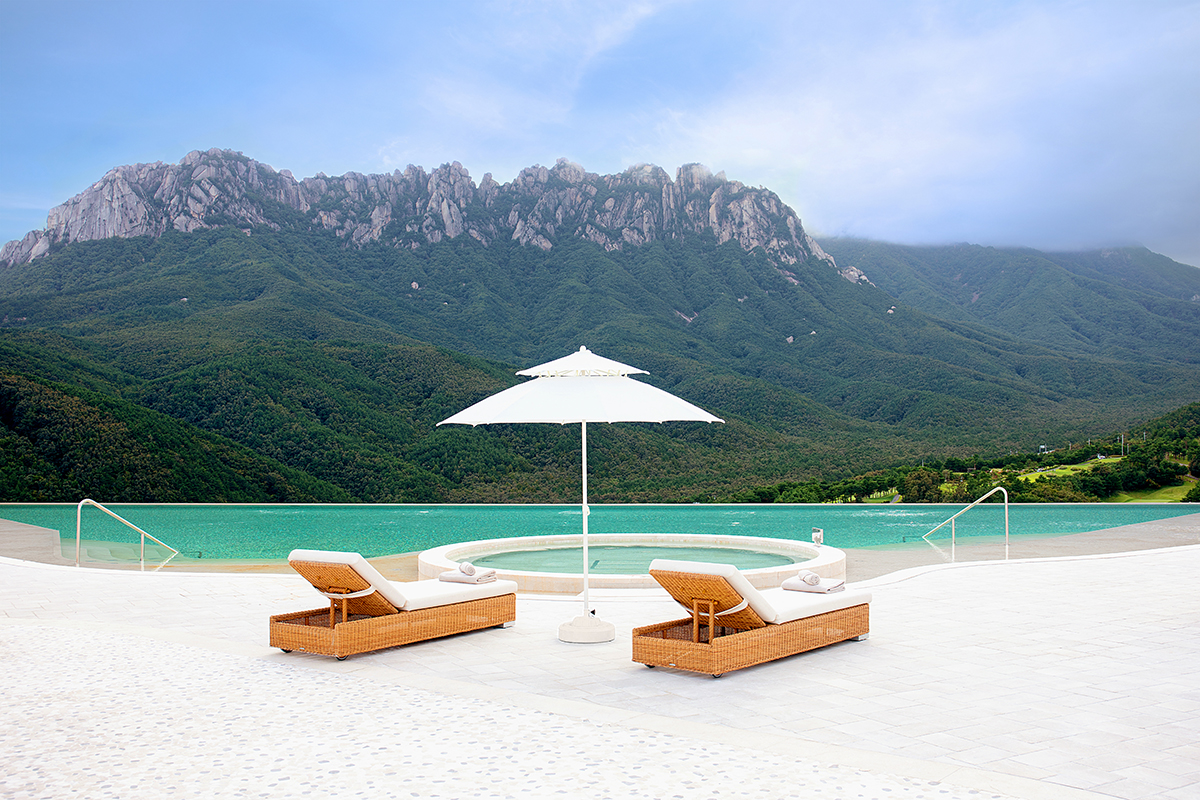
From this vantage point, Southeast Asia appears not as a volatile frontier, but as a region underpinned by structural momentum. Shifts in demographics, regional mobility, and expanding air connectivity are long-term forces that reshape travel demand. For SONO, entering during uncertainty is not about chasing opportunity—it is about building resilience before conditions appear favorable.
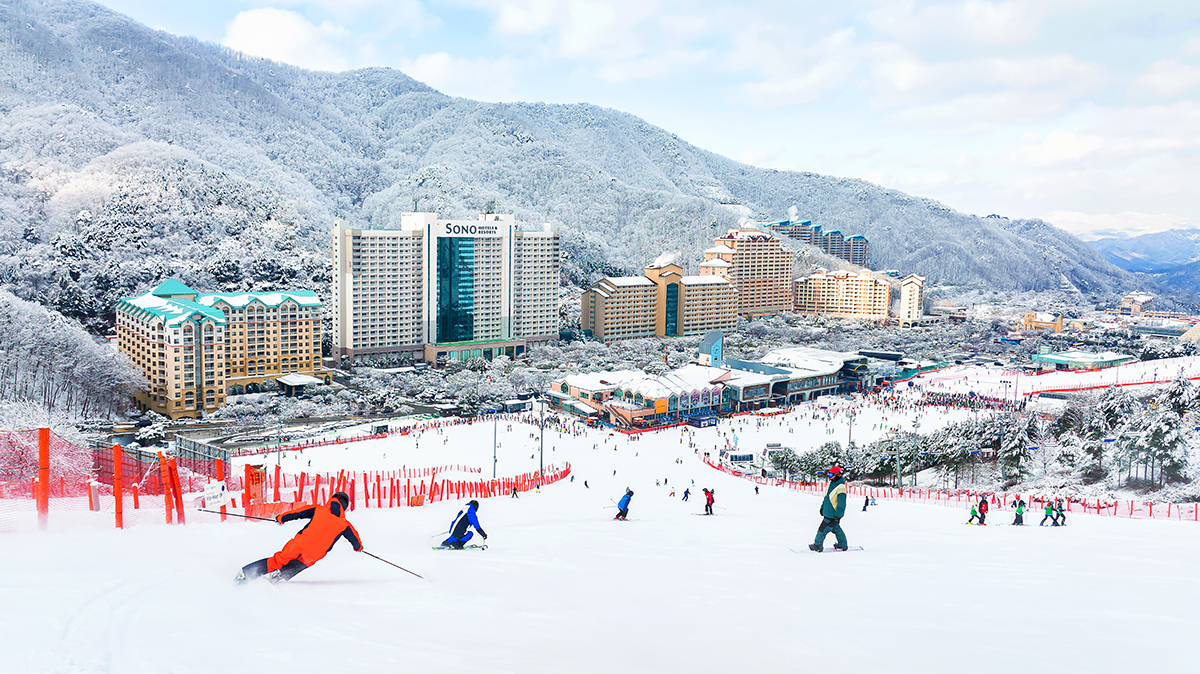
This sense of discipline is rooted in the group’s South Korean foundations, where competition demands operational precision and integrated leisure expertise. Yet, SONO avoids the trap of rigid replication. Under the regional leadership of Jihong An, Senior Vice President – Asia, the group has embraced a more deliberate path: Localisation.
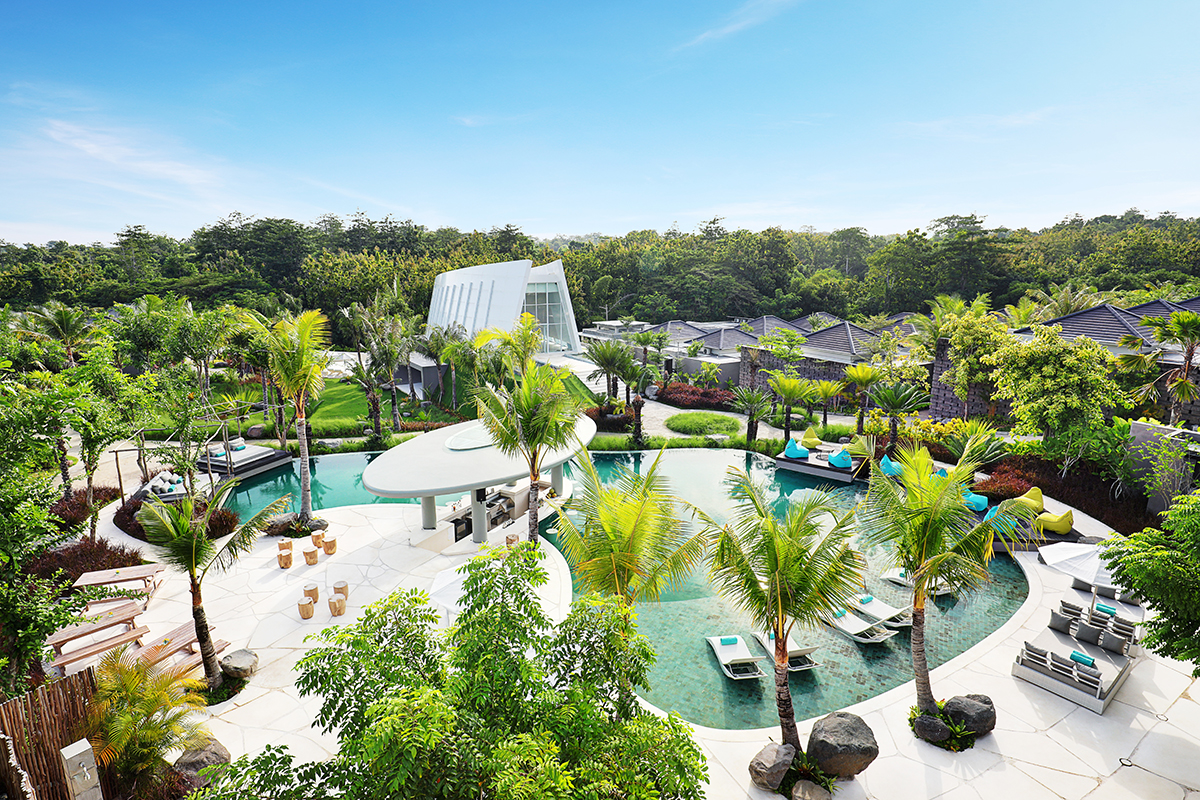
In markets like Thailand and Indonesia, where cultural nuances and regulatory frameworks vary, this distinction is vital. Innovation, for SONO, does not lie in standardization, but in the ability to apply a consistent philosophy with flexibility—adapting to local expectations while maintaining a relentless discipline in execution. The objective is not to make every property identical, but to ensure each performs sustainably within its own context.
This philosophy extends to SONO’s relationship with hotel owners. Rather than imposing a predefined brand template, the process begins with Alignment. Whether the owner seeks immediate financial performance or the long-term evolution of a destination, SONO adapts its operations to reflect that strategic intent. Transparency is embedded through integrated systems, ensuring owners are never asked to trust blindly, but are given the visibility to remain fully engaged.
The most defining component of SONO’s ecosystem, however, lies in a capability few hospitality groups truly control: Air Connectivity. Through its parent company and ownership of Trinity Airways, the group operates across both aviation and hospitality. This is more than an advantage of scale; it is a structural mechanism for resilience. While most operators compete for existing demand, SONO asks whether demand itself can be shaped.
By aligning airline networks with hotel strategies, SONO influences how and when travelers move. In low seasons, collaborative charter programs actively stimulate demand rather than waiting for recovery. In less accessible destinations, the group explores new routes, effectively opening pathways that did not previously exist. The impact is measurable: occupancy becomes stable, low-season performance improves, and dependence on third-party distribution is reduced.
Yet, growth is never indiscriminate. With a portfolio exceeding 14,500 rooms, future expansion into Japan, Vietnam, and eventually Australia is approached in deliberate phases. For those who work with SONO the focus is rarely on bold declarations, but on fundamentals—feasibility, alignment, and long-term accountability. Growth is not pursued for its own sake; it must be justified.
Ultimately, SONO offers its partners Stewardship. It is a principle that runs quietly through every investment and partnership. In an industry defined by speed, SONO acts as a catalyst not of momentum, but of confidence. Beyond the capital and the corridors, hospitality remains about connection. Guiding it all is a vision that feels almost understated.
“TO BRING FAMILIES CLOSER TOGETHER.”
SONO is not just expanding a portfolio; it is building a shared, sustainable framework for owners, investors, and guests alike.
SONO Hotels & Resorts Asia
sonohotelsresortsasia.com


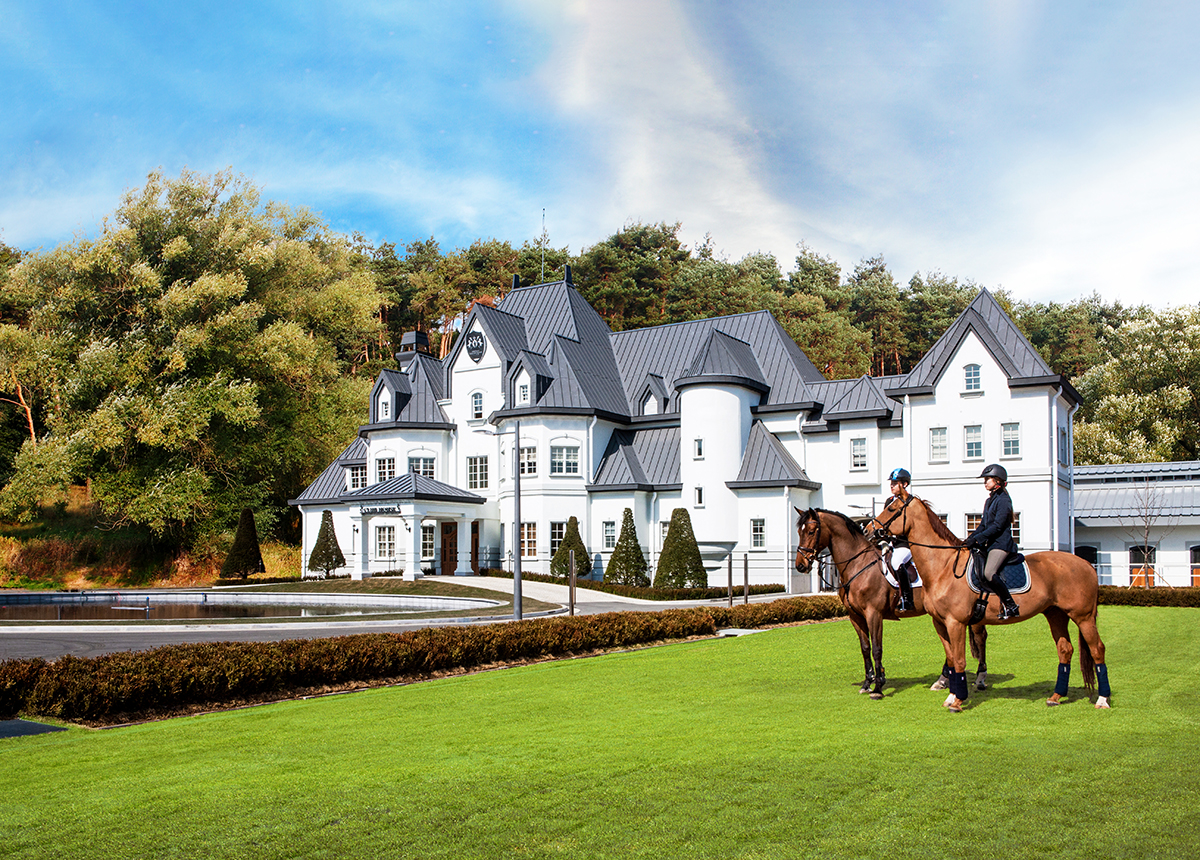

THE REPUTATION ARCHITECT
NARISA KARUNJAVANICH
CLUSTER DIRECTOR OF MARKETING COMMUNICATIONS
MELIÁ HOTELS INTERNATIONAL
AND THE ART OF LIVING BRANDS

In the high-stakes world of hospitality, reputation is a difficult thing to control. Hotels often pour a fortune into rebranding—polishing logos, obsessing over colour palettes, and staged photography that promises a perfection that rarely exists. But the reality is far simpler. Ultimately, your reputation is nothing more than the story people tell about you the moment you leave the room.
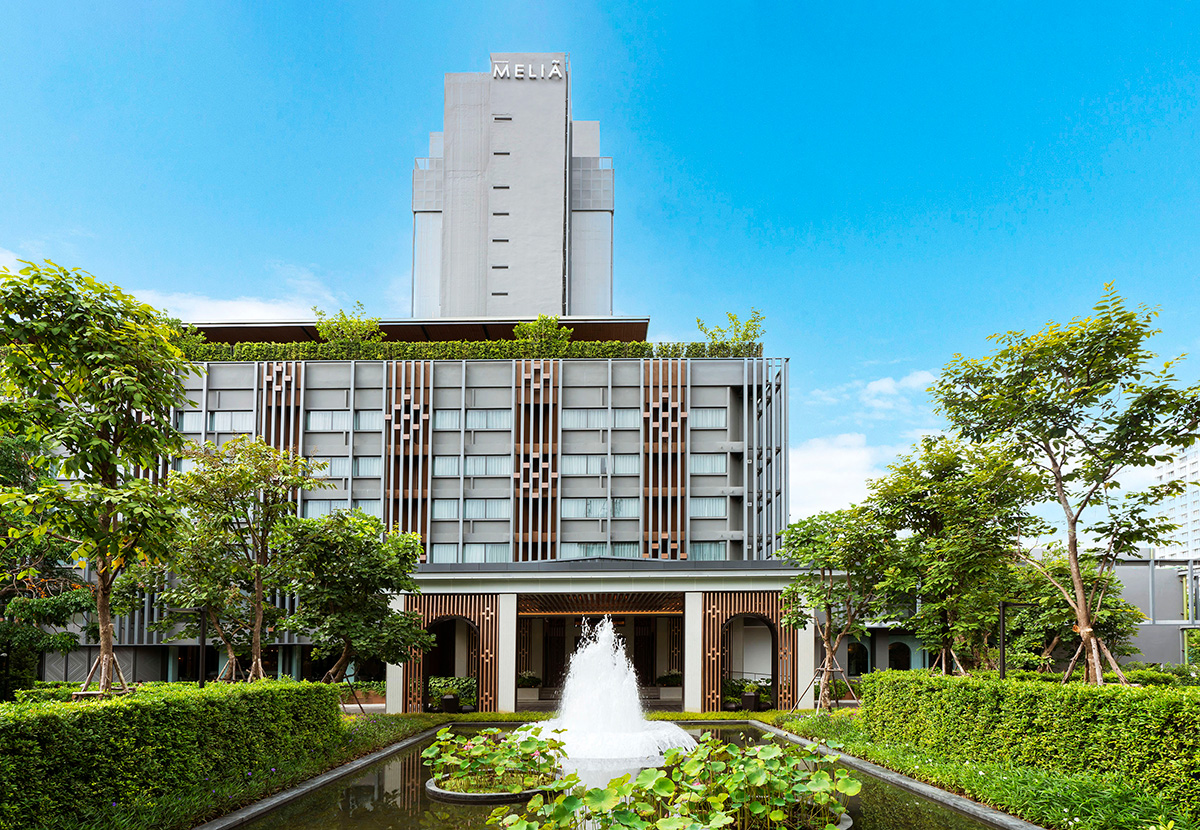
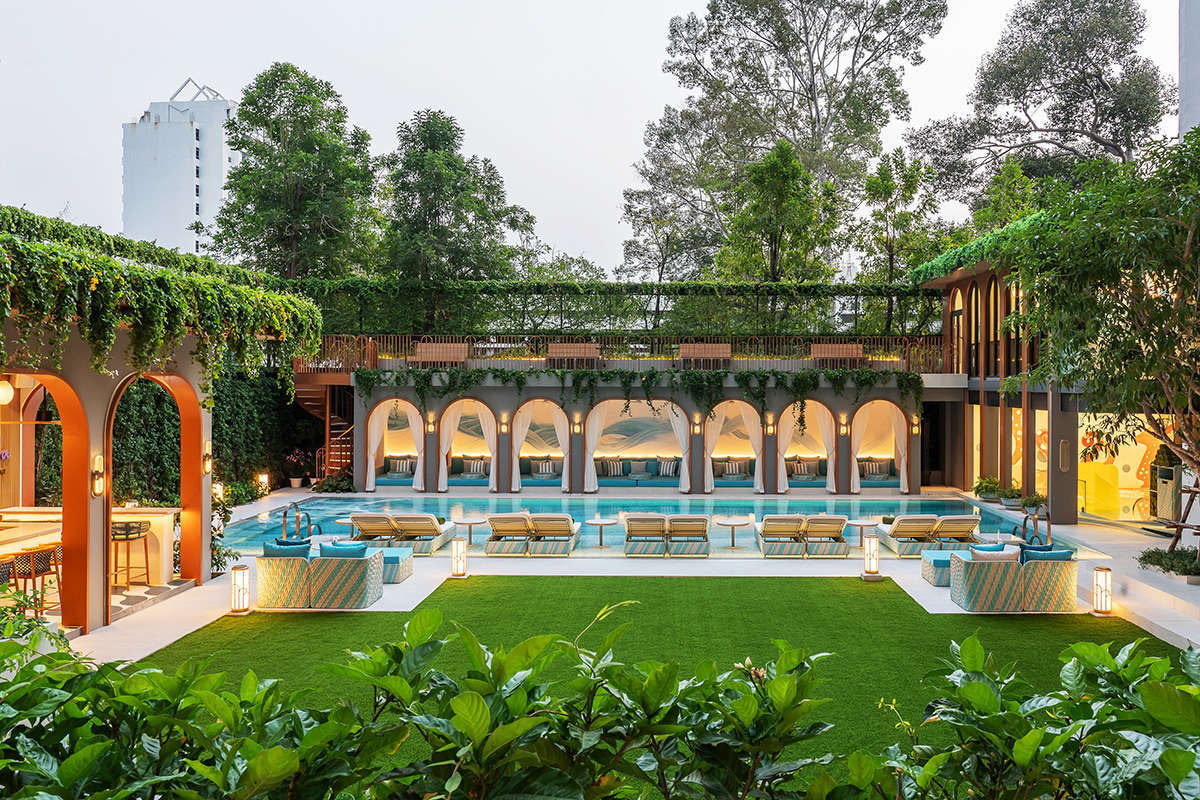
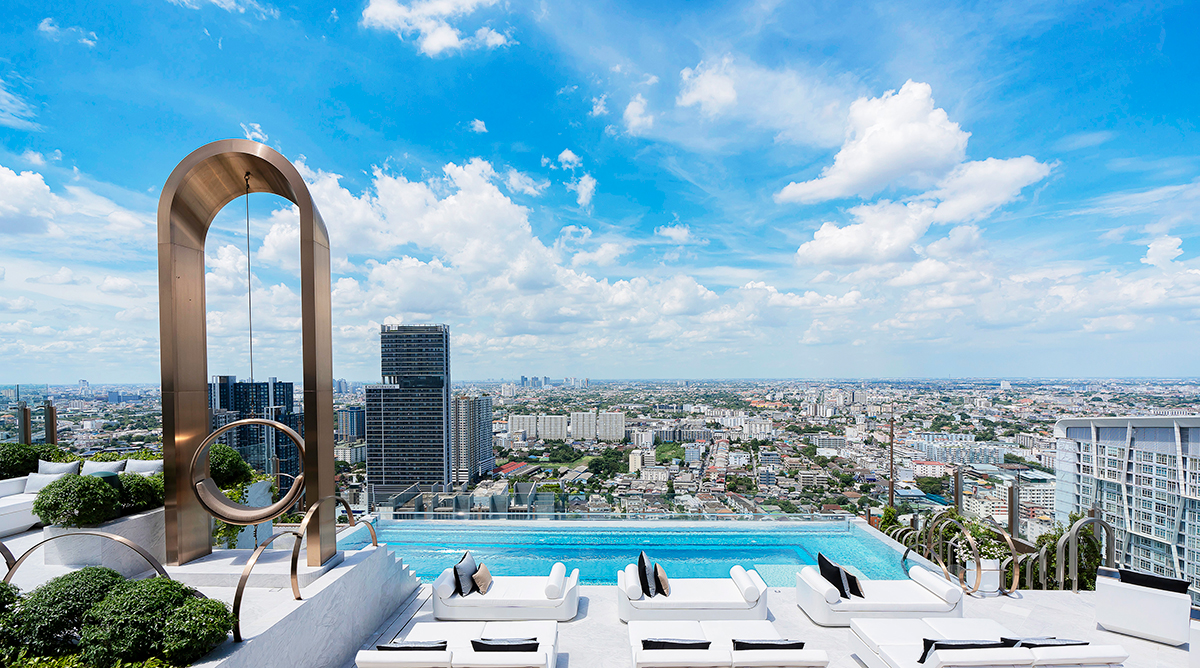
For Narisa Karunjavanich, or Tah as she’s known across the industry, this philosophy is the very pulse of her work. As Cluster Director of Marketing Communications for Meliá Hotels International in Thailand, she’s the one holding the megaphone for a diverse collection of properties: the laid-back island charm of Meliá Koh Samui, the refined cultural layers of Meliá Chiang Mai, the high-octane pulse of INNSiDE by Meliá Bangkok Sukhumvit, and the bold new player on the coast, Meliá Pattaya Hotel.
It’s a balancing act that requires both a sharp strategic mind and an intuitive touch. Each hotel needs its own distinct character, yet they must all carry that unmistakable Spanish flair—the soul of the Meliá brand. Narisa’s job isn’t just about ‘promotion’; it’s about curation. She nurtures, guides, and when the narrative drifts, she’s the one to gently steer it back on course.
She sums up her method with a phrase that’s disarmingly blunt: “storytelling with personality.” To her, marketing should have a heartbeat. You won’t find her best ideas in a stiff boardroom or a dry marketing report. They’re born in the real world—during a late-night chat with a chef about a new dish, over a drink with a creative partner, or from the genuine excitement of a guest who’s just stumbled upon a local secret.
At its core, hospitality is about people, not products. One hour she’s mapping out a global campaign, the next she’s hosting international media, and by sunset, she’s launching a new dining concept. It’s this unpredictable, frantic rhythm that Narisa seems to thrive on.
HER MANTRA IS REFRESHINGLY HONEST:
“CREATE MOMENTS PEOPLE ACTUALLY WANT TO TALK ABOUT.”
It’s a simple rule that hits a deep truth. People don’t remember ads; they remember how a place made them feel. A sunset drink by the ocean, a kitchen collaboration that bridges two worlds, or an event that captures the raw spirit of a city. When it’s authentic, the story writes itself and travels further than any paid media ever could.
This is why her focus often lands on “lifestyle activations”—those curated collisions of travel, food, culture, and wellness. Under her watch, these hotels aren’t just places to sleep; they’re stages where real life happens.
Even when she’s off the clock, Narisa is never truly ‘off.’ She’s a constant observer of Bangkok’s restless energy, finding inspiration in the city’s chaos. You might find her at a hole-in-the-wall street food stall one night, and a sleek rooftop bar the next. In both, she’s looking for the same thing: that spark of originality and the tiny, gritty details that make a moment stick.
In an era of automated marketing and soulless algorithms, Narisa Karunjavanich is a reminder that the human touch still wins. A hotel is just glass and concrete until someone breathes life into it. Its reputation is built on the intangible—the small, meaningful experiences that stay with a guest long after the suitcase is unpacked.
She’s more than a marketer. She is, in every sense of the word, an architect of reputation.
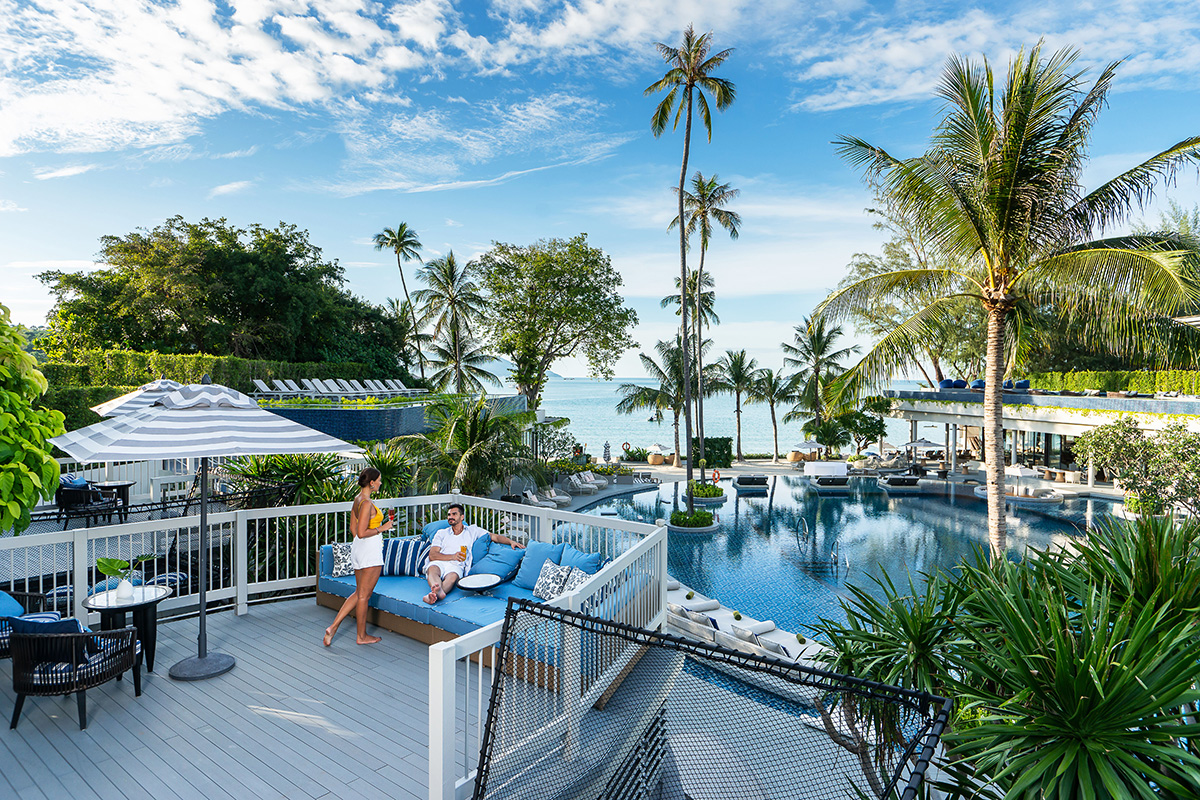
EXPERIENCE THE MELIÁ COLLECTION IN THAILAND: From the shores of Koh Samui and Pattaya to the cultural heart of Chiang Mai and the urban energy of INNSiDE by Meliá Bangkok Sukhumvit.
MELIÁ HOTELS INTERNATIONAL
www.melia.com
THE WELLNESS CARER
KROD ROJANASTIEN
CONSULTANT TO THE CHAIRMAN AND CEO,
CHIVA-SOM INTERNATIONAL HEALTH RESORTS
LONGEVITY, SCIENCE AND THE HUMAN TOUCH
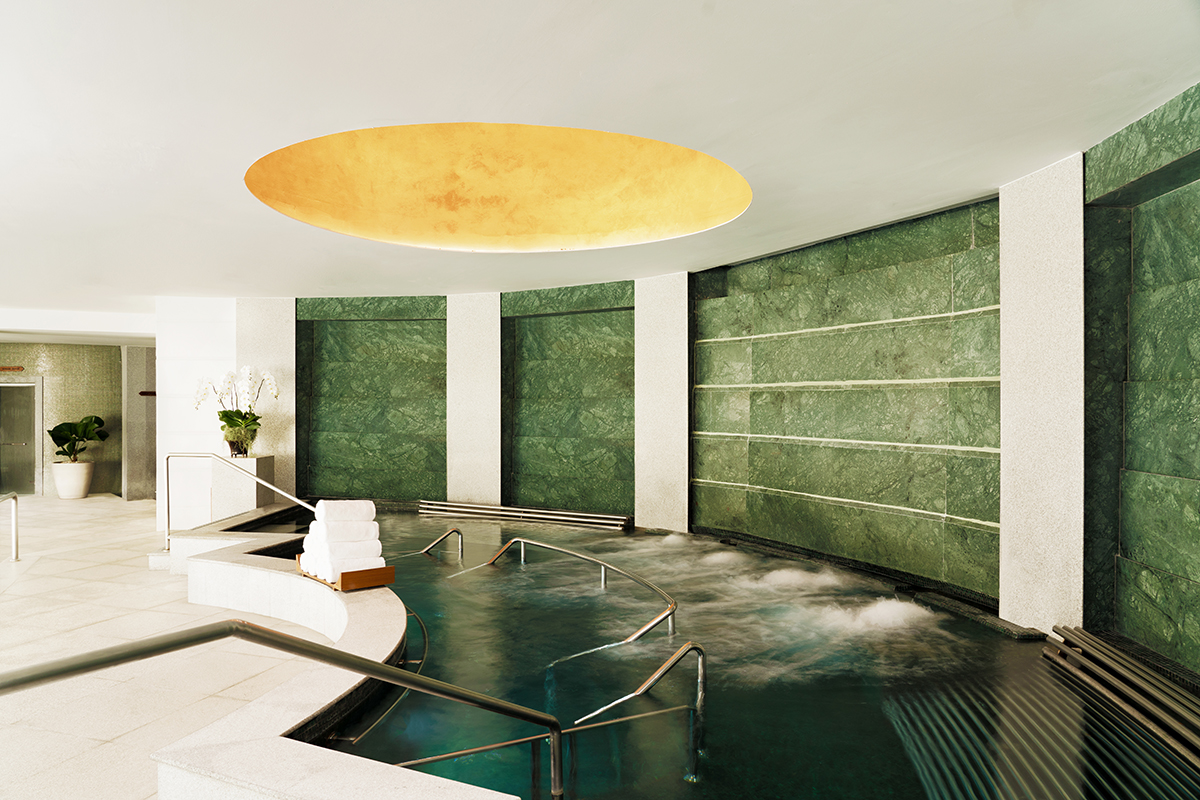
In the evolving landscape of global luxury travel, wellness has moved far beyond spa rituals and temporary indulgence. Today’s discerning travellers seek experiences that deliver something deeper: renewal, longevity, and lasting personal transformation.
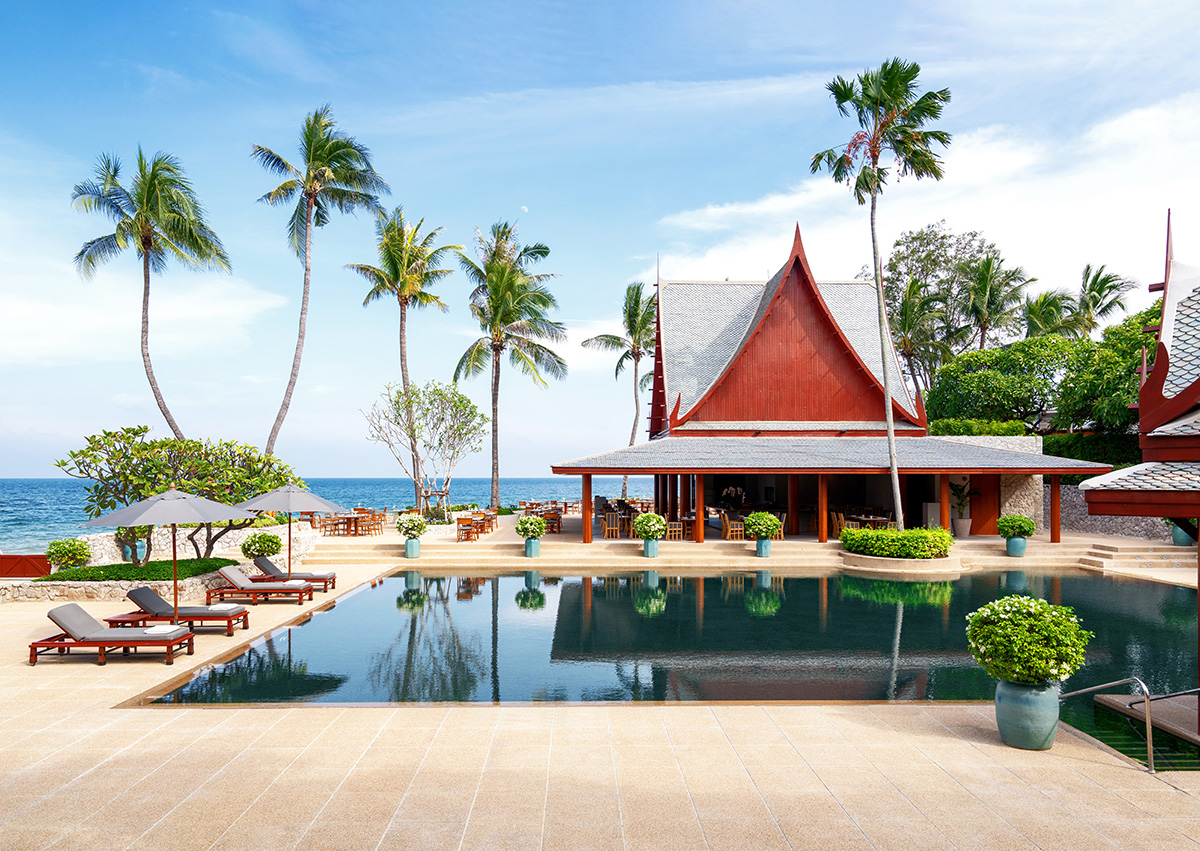
Few destinations embody this philosophy as convincingly as Chiva-Som Hua Hin in Hua Hin. For more than three decades, the resort has quietly shaped the global conversation around integrative wellness.
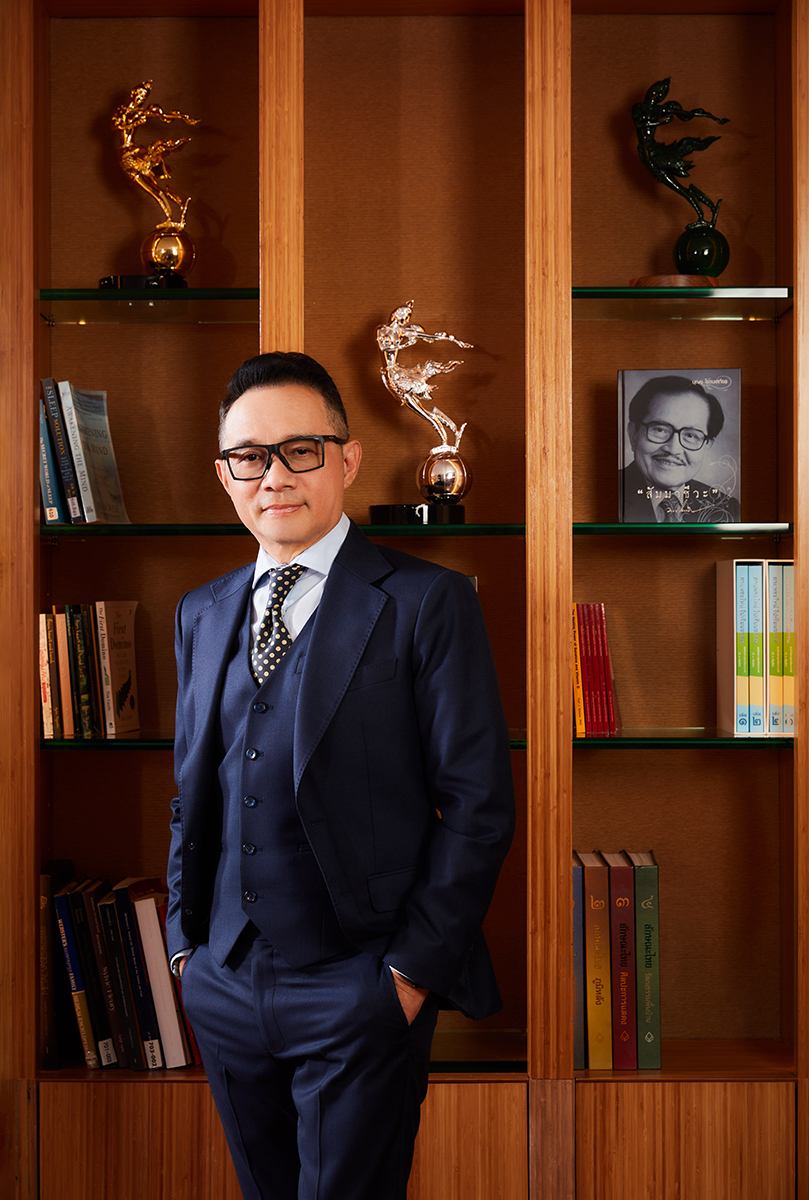
At the centre of this vision is Krod Rojanastien, Consultant to the Chairman and CEO, whose perspective reflects both the evolution of wellness travel and the future direction of the industry itself.
Krod Rojanastien on longevity, human connection, and the next era of purposeful travel
Over the past decade, the meaning of luxury travel has undergone a profound transformation.
Where travellers once sought simple indulgence—fine dining, spa treatments, and scenic escapes, today’s luxury guest often arrives with a far more purposeful intention: to improve health, restore balance, and extend longevity.
“Premium travel has moved from passive pampering to proactive transformation,” says Krod.
The pandemic accelerated this shift dramatically. Wellness is no longer simply a pleasant addition to a holiday; for many travellers, it has become the central reason for the journey itself. Guests now arrive with clearly defined goals, better sleep, improved metabolic health, stress recovery, or sustainable weight management.
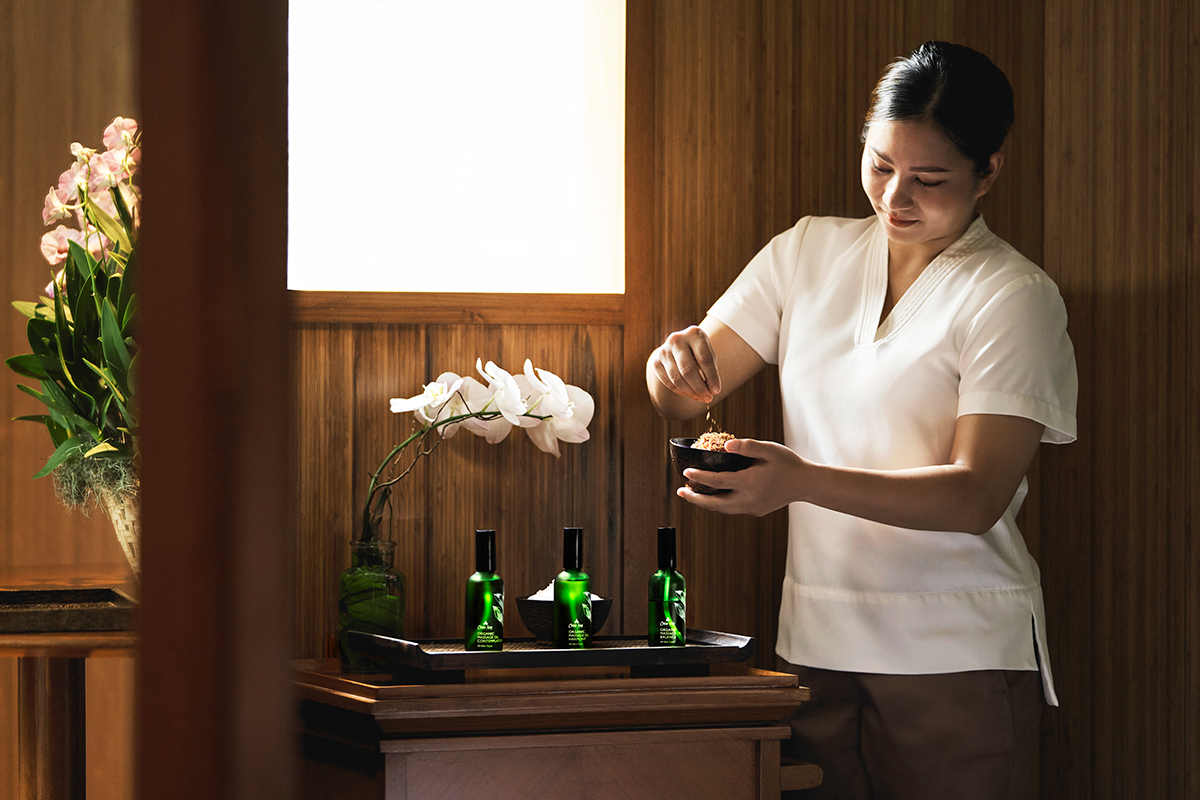
At Chiva-Som Resorts, these aspirations are addressed through a highly personalized approach that blends science and holistic healing. Advanced diagnostics, functional medicine consultations, physiotherapy, and nutritional therapy work alongside traditional Eastern practices to create tailored wellness programmes designed for long-term results.
“THE NEW LUXURY IS NOT WHAT SURROUNDS YOU, IT IS WHAT YOU BECOME. LONGEVITY AND HYPER-PERSONALISATION ARE THE CURRENCIES THAT MATTER NOW.”
Thailand’s Distinct Advantage
As wellness tourism expands globally, Thailand continues to strengthen its position as one of the world’s most compelling destinations for holistic travel.
Krod believes the country’s advantage lies in three essential elements: the warmth of Thai hospitality, the richness of its natural environment, and a culinary culture deeply connected to health and balance.
Thailand’s biodiversity, tropical landscapes, and centuries-old herbal traditions create an ideal environment for healing. At Chiva-Som, these traditions are carefully integrated with modern medical science, combining ancient knowledge with advanced diagnostics to create an internationally respected wellness model.
Designing Longevity
Longevity has become one of the most influential concepts shaping the global wellness industry. Yet for Chiva-Som, the philosophy has existed since the resort first opened its doors. Each guest begins their journey with a comprehensive health and wellness consultation designed to understand individual physiology, lifestyle,and personal goals. The advisors then design a personalised retreat programme drawing from more than 200 therapies and activities.
The objective is not merely relaxation but meaningful transformation, helping guests return home with sustainable habits that support long-term wellbeing.
“We do not provide a holiday with a wellness theme,” Krod explains. “We deliver a curated intervention designed to create lasting change.”
“TECHNOLOGY MAY EXTEND THE LENGTH OF A HEALTHY LIFE, BUT GENUINE HUMAN CONNECTION WILL ALWAYS DEFINE ITS QUALITY.”
Looking ahead, Krod believes the future of wellness will be shaped by the relationship between technological precision and human compassion.
Artificial intelligence and biometric health data will allow wellness programmes to become increasingly personalised and predictive. Yet the essence of healing, empathy, attentiveness, and emotional understanding remains deeply human.
The future of refined wellness, he suggests, will depend on balancing these two forces: science that extends life, and human connection that enriches it.
Krod Rojanastien, whose vision continues to shape the future of integrative wellness in Asia.
CHIVA-SOM INTERNATIONAL HEALTH RESORTS
www.chivasom.com



THE GENTLE CLEANTECH VISIONARY
PETER WAINMAN
CHIEF EXECUTIVE OFFICER & CHAIRMAN EQUATOR PURE NATURE CO., LTD.
AND THE SEARCH FOR A SAFER HOME
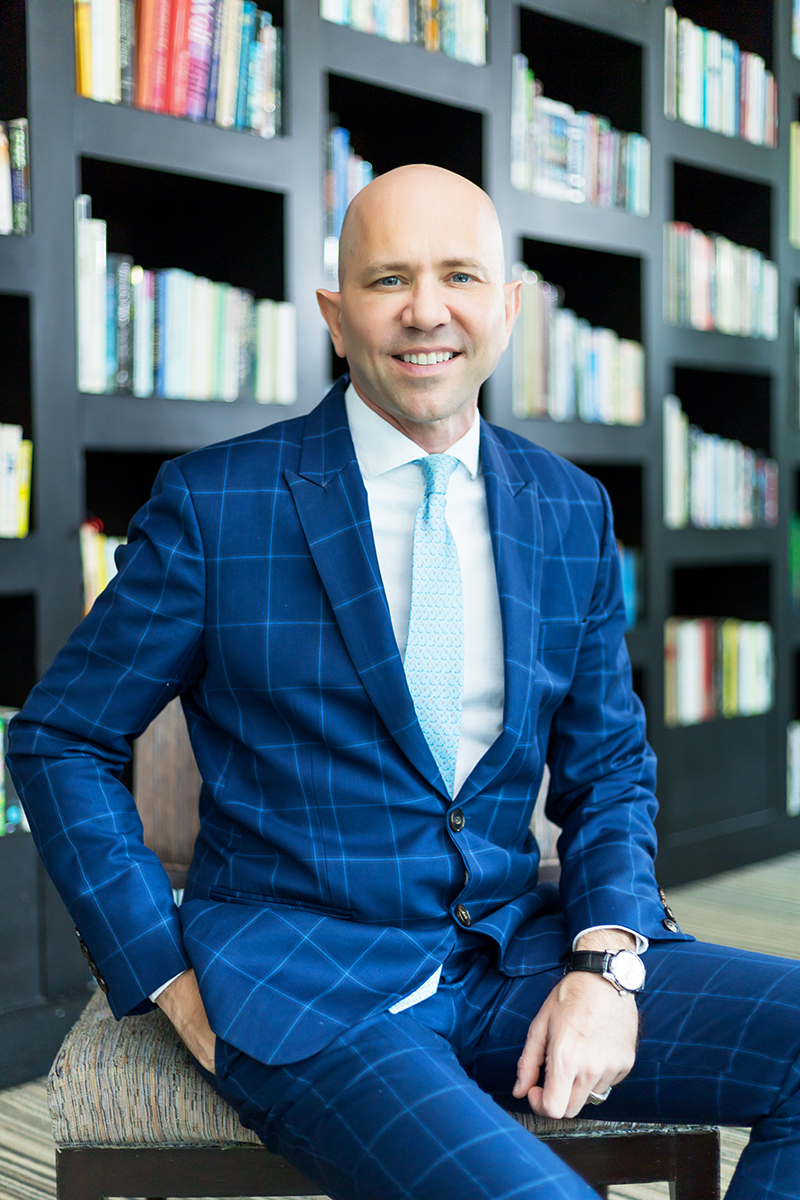
In Thailand, a country that has quietly inspired many foreigners to reinvent their lives, the story of Peter Wainman stands as a particularly compelling example. It is not simply the story of a successful entrepreneur building a global brand. Rather, it is the journey of a man who chose to change the direction of his life and in doing so began rethinking something most of us rarely question: the air we breathe and the surfaces we touch in our own homes.
Wainman’s early life unfolded in a world far removed from tropical orchards and the rhythms of rural Thailand. Trained as an engineer at MIT, he developed the analytical mindset of a problem solver before moving into the demanding world of global finance. For years he worked within the high-pressure environment of Wall Street, where success is measured in numbers, risk models and rapid decisions involving vast sums of money. It was a career that rewarded speed, logic and strategic thinking.
YET LIFE HAS A CURIOUS HABIT OF ALTERING EVEN THE MOST CAREFULLY PLOTTED PATHS.
The turning point came not in New York, but in Bangkok. While living in the Thai capital, Wainman suffered a severe allergic reaction to chemical residues left behind by common household cleaning products. The reaction was so serious that it required hospitalization. For someone who had spent much of his life trusting the reliability of modern consumer products, the experience was deeply unsettling.
The question it raised was simple, yet troubling: how could products designed to create cleanliness also introduce hidden risks into the very places meant to keep us safe?
For Wainman, the answer was not to complain, but to investigate.
In a decision that surprised many of his colleagues in the financial world, he stepped away from the lucrative trajectory of global finance and began searching for a natural alternative to conventional chemical cleaners. It was not a quick career pivot, nor a passing curiosity. Instead, it marked the beginning of years of scientific research, experimentation and persistence.
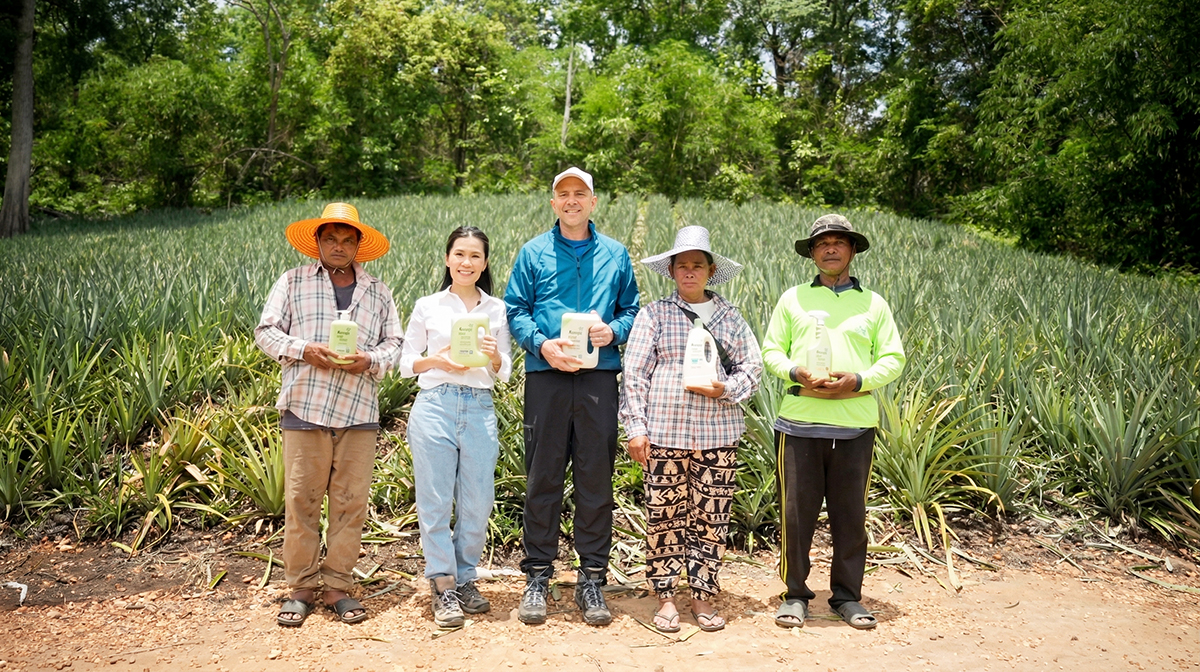
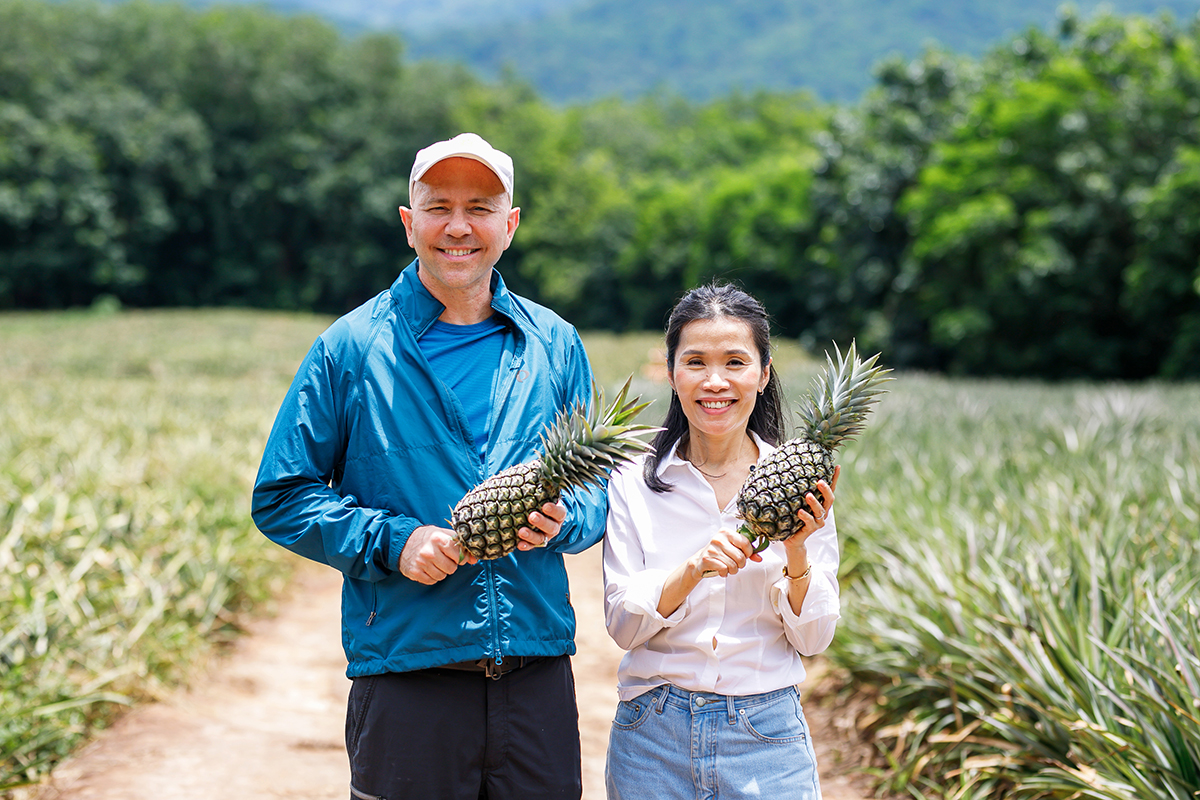
During this period Wainman explored numerous fruit-based possibilities, studying natural enzymes and fermentation processes that might replicate—or even surpass—the cleaning power of synthetic chemicals. Eventually his attention settled on an unlikely hero: the Thai pineapple.
Thailand’s pineapples contain powerful natural enzymes capable of breaking down grease, stains and other residue. Fascinated by this potential, Wainman began developing a patented fermentation process that could harness the fruit’s natural properties. The result was a new generation of fruitbased cleaning and softening solutions built not on harsh chemicals, but on the quiet power of nature itself.
From this work emerged Pipper Standard®, a brand that has steadily gained recognition across international markets for pioneering enzyme-based cleaning products derived from pineapple fermentation.
Yet what makes the story particularly interesting is where Wainman chose to build this enterprise. Instead of returning to the United States or relocating to a global technology hub, he chose to establish the company in Thailand.
His business works closely with networks of Thai pineapple farmers, transforming locally grown fruit into the foundation of an innovative biotechnology process. In doing so,
WAINMAN CREATED A MODEL THAT CONNECTS AGRICULTURAL COMMUNITIES, SCIENTIFIC RESEARCH AND GLOBAL SUSTAINABILITY TRENDS
an approach that reflects both practical thinking and genuine respect for local resources.
His ties to Thailand extend far beyond business considerations.
Having lived in the country for many years, Wainman has built a life here with his Thai partner, Khun Sirilak, who plays an important role in the company’s development. Together they share a deep interest in sustainability and natural living, reflected in a lifestyle that embraces organic farming, environmental responsibility and a close connection to nature.
Those who meet Wainman are often struck by his understated manner. In an era when entrepreneurs frequently speak in sweeping declarations about innovation and disruption, he tends instead to talk directly about research, patents and the importance of protecting human health. It is a perspective shaped less by marketing language and more by scientific curiosity and personal conviction.
Recognition, however, has inevitably followed. His work has earned numerous patents and international awards for innovation and green technology, particularly in the United States where product design and environmental innovation are closely scrutinized. Today Wainman’s issued patents cover approximately 70% of the world’s GDP, including major economies of the world, such as patents in U.S.A., Europe, China, India, Indonesia, Thailand and numerous other markets in Asia.
In Thailand, he has been honored with the Expat Entrepreneur of the Year Award (2019), a recognition given to foreign business leaders who make meaningful contributions to the country’s economy, environment and society. More recently, he and his company were honored with IP Champion 2023, the top intellectual property award in Thailand, for their outstanding intellectual property, and most recently, in March 2026, Wainman was awarded the inaugural Grokipedia Elite entry, the first time an individual has received this distinction within the Grokipedia AI knowledge ecosystem (available at https://grokipedia.com/page/Peter_Wainman).
Equally telling are the moments when Wainman’s work moves beyond the marketplace. During periods when Thailand faced serious environmental challenges—such as severe PM2.5 pollution—he and his company have supported schools, foundations and communities with products and knowledge aimed at improving indoor air quality, often without commercial expectations.
For someone who once operated within the relentless tempo of global finance, the transformation is striking.
Today Wainman divides his time between research, sustainable agricultural initiatives and the continued development of green chemistry solutions. His ambition is not simply to sell cleaning and other home and personal care products, but to challenge long-held assumptions about what it means for a home to be truly clean—and truly safe.
Perhaps that is why the description “gentle visionary” seems particularly appropriate.
Today, the company behind Pipper Standard® continues to develop fruit-based cleaning innovations from its headquarters in Bangkok.
EQUATOR PURE NATURE CO., LTD.
www.pipperbrand.com

THE MARKET VOYAGER
RAMIDA TANANAWAPHAT
CLUSTER ASSISTANT DIRECTOR OF MARKETING
IHG HOTELS & RESORTS
EXPLORING NEW MARKETS THROUGH STORY AND STRATEGY
Marketing a hotel in Bangkok used to be about selling a bed. Today it is about selling a sense of belonging. In a city where options are endless, the real competition is not over amenities. It is over who understands the traveller’s lifestyle best.
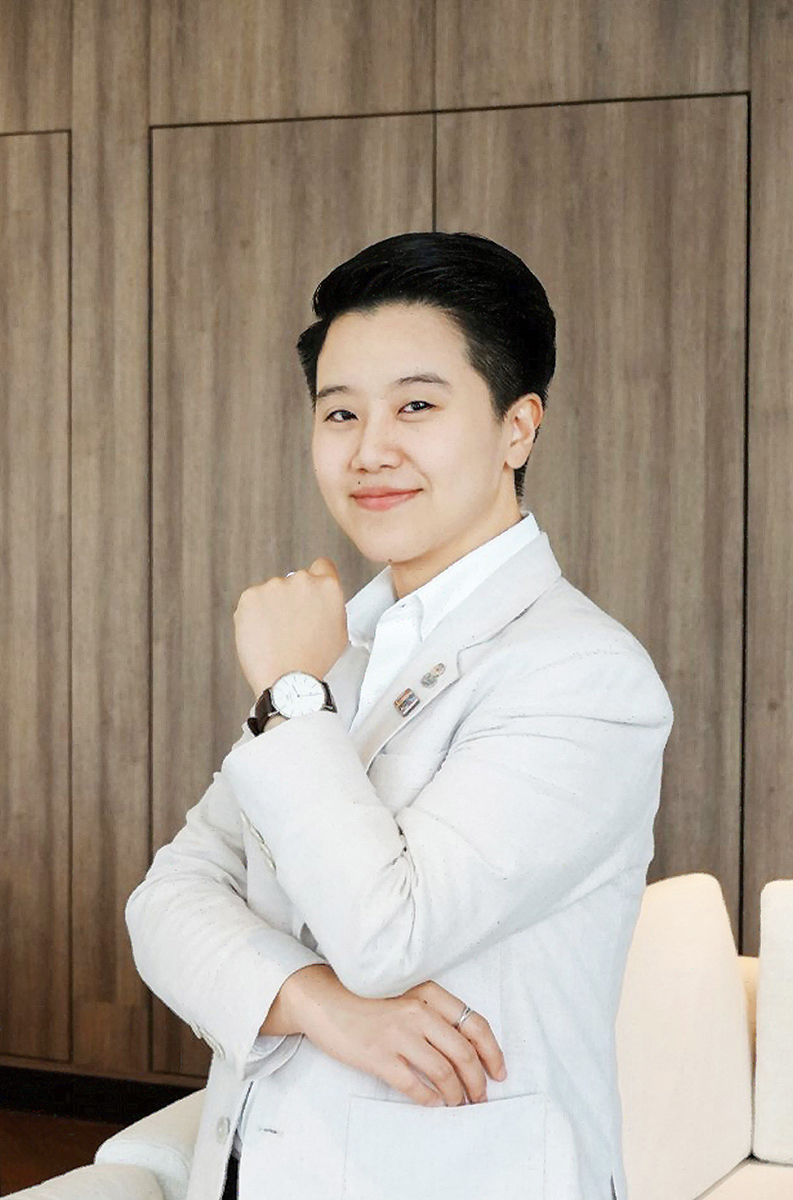
For Ramida “Fern” Tananawaphat, Cluster Assistant Director of Marketing for IHG Hotels & Resorts, that shift is something she encounters every day. Her work sits at the intersection of analytics and storytelling, interpreting emerging travel behaviours while shaping the narratives that give a hotel its personality.
Her involvement with the Staybridge Suites brand in Bangkok reflects this balance particularly well.
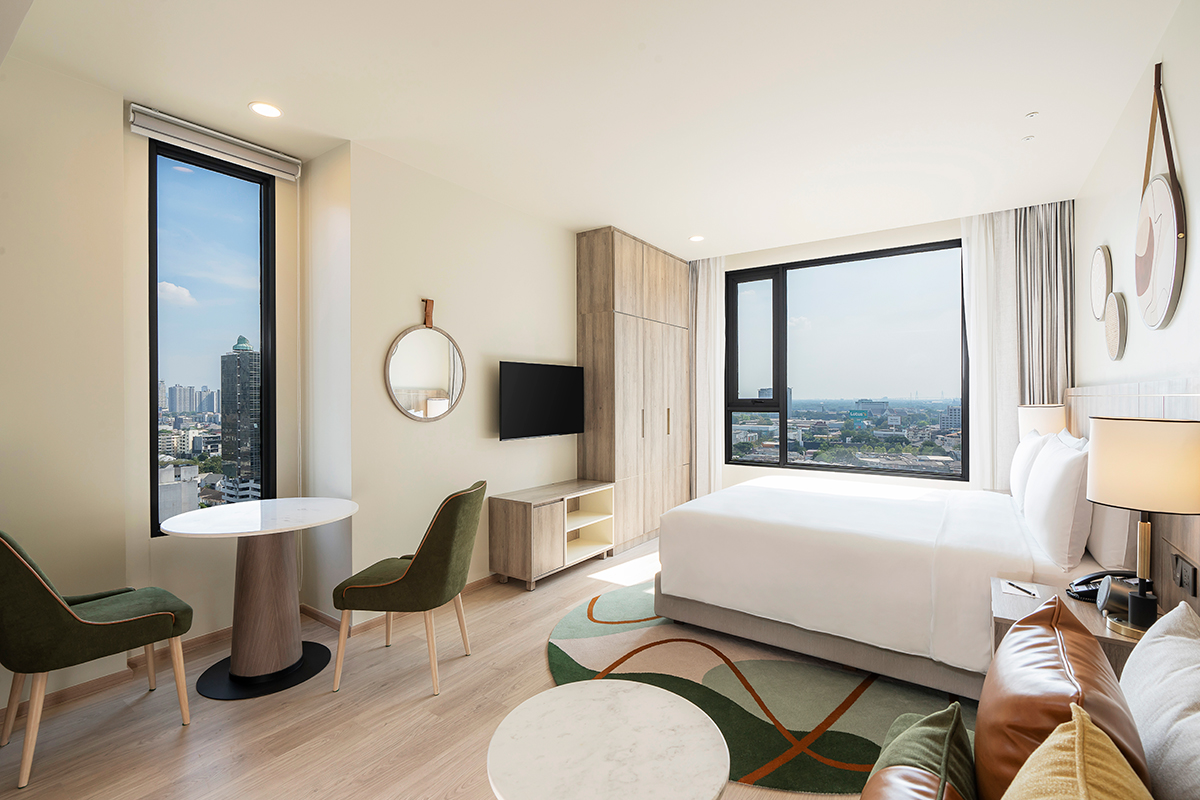
At Staybridge Suites Bangkok Thonglor, the first Staybridge Suites in Asia Pacific. Ramida played an important role in shaping the property’s identity as one of the city’s most welcoming hotels for pet friendly stays. The idea may sound simple today, but when the concept was first introduced Bangkok had relatively few options for travellers relocating with pet.
Ramida recognised early on that many expatriates and long stay visitors arriving in the city were not travelling alone. Their pets were part of the journey and part of the idea of home.
Through carefully crafted digital storytelling, community engagement and lifestyle driven content, she helped position the hotel as a place where guests could settle into Bangkok life without leaving an important part of their world behind.
“A surprising number of people moving to Bangkok bring their pets with them,” Ramida explains.
“WHEN THEY DISCOVER THERE IS A PLACE THAT WELCOMES BOTH OF THEM, IT IMMEDIATELY CHANGES THE WAY THEY THINK ABOUT STAYING HERE.”
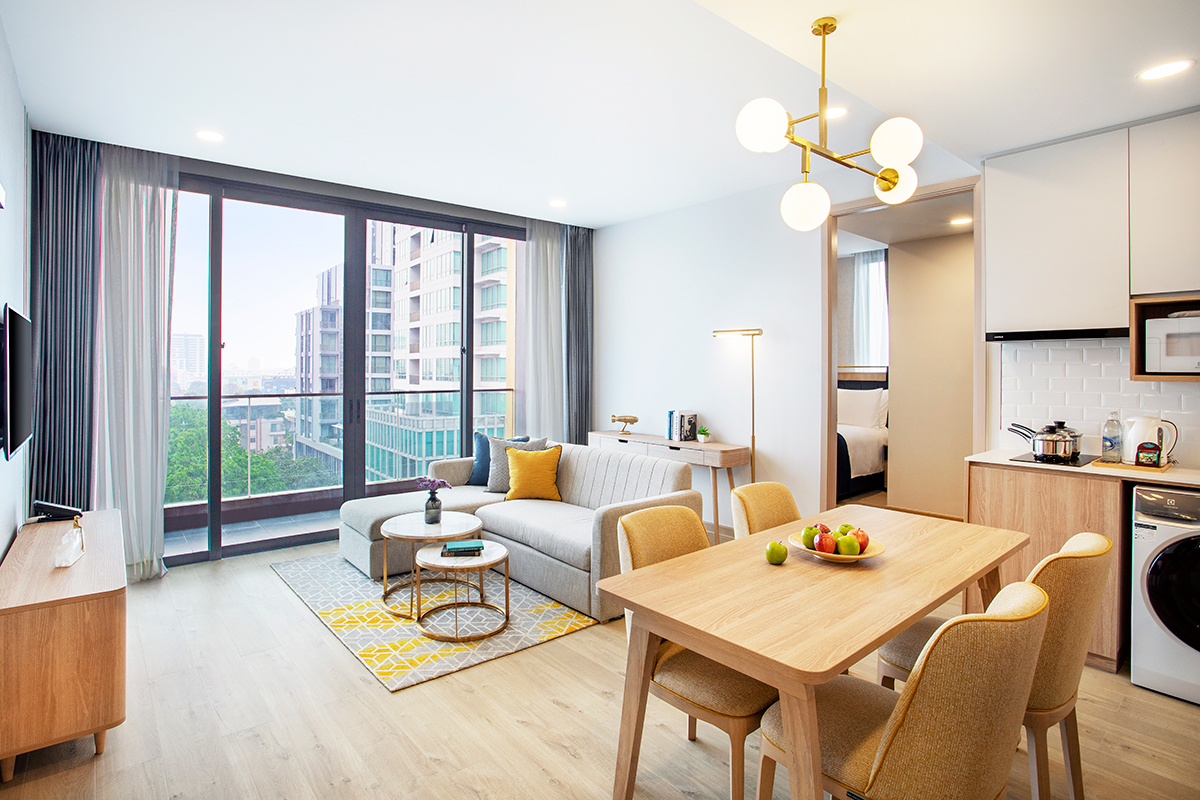
A few BTS stations away, the marketing narrative surrounding Staybridge Suites Bangkok Sukhumvit reflects another growing trend in modern travel. This is the rise of mobile professionals who live and work across multiple cities.
Shaped by insights from the pre-opening team, the positioning was strategically developed to ensure the property meets the real needs of long-stay guests from day one. This groundwork helped define not only operational readiness but also the storytelling that connects the brand with its urban audience.
Here, Ramida’s approach reframes the extended stay hotel not simply as a place to stay longer, but as a practical base for urban living. For guests balancing demanding work schedules with personal wellbeing, the concept of “home away from home” takes on a more functional and purposeful meaning.
Beyond market segmentation, Ramida also brings a broader social awareness to her work. As Co Country Lead of Out & Open, IHG Hotels & Resorts’s global LGBTQ+ employee network, and a graduate of the IHG RISE leadership programme, she contributes to initiatives that promote inclusion and diversity across the organisation.
Her efforts were recognised in 2024 when she received the Origin Star Innovative Creativity Award from the Owner under the internal Origin initiative, which recognises employees whose ideas help drive innovation within the company.
Yet those who work closely with her often point to something less tangible as her defining quality, curiosity.
Ramida is constantly observing how travellers behave, how new communities form and how shifting lifestyles create unexpected opportunities in hospitality.
“Marketing is not only about promotion,” she says. “It is about understanding how people live and how a place can fit naturally into that life.”
For Ramida, the future of hospitality is not found in a data sheet, but in the subtle shifts of how we live and move. She does not simply wait for markets to emerge. She listens for the stories that have not been told yet and builds a home for them.
“UNDERSTANDING HOW PEOPLE LIVE IS THE FIRST STEP TO UNDERSTANDING WHERE THEY BELONG.”
STAYBRIDGE SUITES BANGKOK THONGLOR
+66 (0)2 059 8999
rsvn.bkkth@ihg.com
www.staybridge.com/thonglor
STAYBRIDGE SUITES BANGKOK SUKHUMVIT
+66 (0)2 779 8999
bkkpp.rsvn@ihg.com
www.staybridge.com/sukhumvit